
AzCATI and KAUST collaborative research develop genetically engineered algae to produce orange-red pigments that make sea food healthier
Researcher’s at Saudi Arabia’s King Abdullah University of Science and Technology (KAUST) have collaborated with the US based Arizona Center for Algae Technology & Innovation (AzCATI) at Arizona State University (ASU) are genetically engineering algal species to produce therapeutic antioxidant pigments unavailable naturally in nature.
An Collaboration between AzCATI and KAUST aims to develop an orange-red antioxidant pigment from fully sequenced algae Cyanidioschyzon merolae incorporated with a gene encoding the pigment. These antioxidants are chemicals called carotenoids, which are yellow-orange-red pigments responsible for the colour of tomatoes and carrots, as well as the pink color of salmon and flamingos through diet.
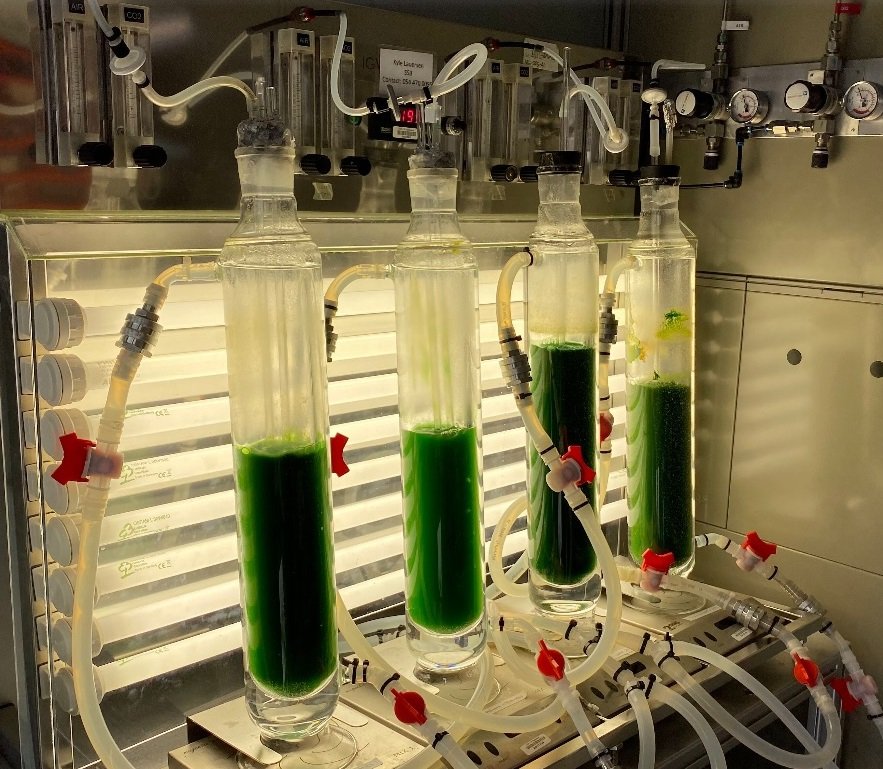
The genetic modification causes the blue-green coloured alga to produce orange-red antioxidants like canthaxanthin and astaxanthin. Astaxanthin is a powerful antioxidant and has numerous health benefits and has the potential to make seafood healthier. Introducing astaxanthin to the diets of animals such as farmed shrimp can improve their health and enhance their red colour. The carotenoid pigments can also be used as natural dyes for textiles and have wide nutraceutical and biopharmaceutical applications.
The alga also contains a light-capturing blue pigment called phycocyanin which is used as a blue food colouring in confectionery and drinks. The scientists found production of canthaxanthin and astaxanthin did not reduce phycocyanin in the alga, meaning both blue and orange-red pigments can be produced together at once.
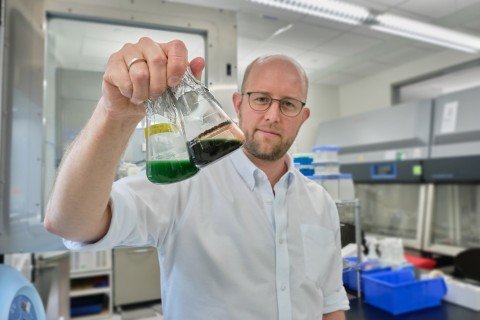
Dr. Kyle J. Lauersen, Assistant Professor of Bioengineering at KAUST and senior author of the study, says: “For the first time, genetic engineering has been used to change natural carotenoid pigments in a red alga. Genetic engineering of algae can help produce important natural chemicals like carotenoids sustainably. Algae has untapped potential as a sustainable solution which could benefit both the food and health industry, and the science shows it is possible to scale.”
Growing algae requires optimal levels of sunlight, trace nutrients and carbon dioxide (CO2). The engineered algae in the study demonstrated tolerance to high levels of CO2 and high temperatures, which is relevant for growing in specific environments, for example, hot urban areas during summer months in Saudi Arabian or American deserts. As Cyanidioschyzon merolae is natively found in extreme environments with high temperatures, it is a promising candidate for local production in these areas.
Dr. Peter J. Lammers, Research Professor at the School of Sustainable Engineering and the Built Environment at ASU and co-corresponding author of the study, adds: “These acid-loving red algae have great potential for safe and innovative industrial applications. Their ability to grow in acidified waste afford options for circular economics and renewable materials that could sustain future generations. Together with KAUST, our long-term goal is to eliminate waste and use bioengineering to benefit humans and nature simultaneously. This study is the first of many that will harness biochemical pathways to generate renewable options for chemicals used every day.”
