
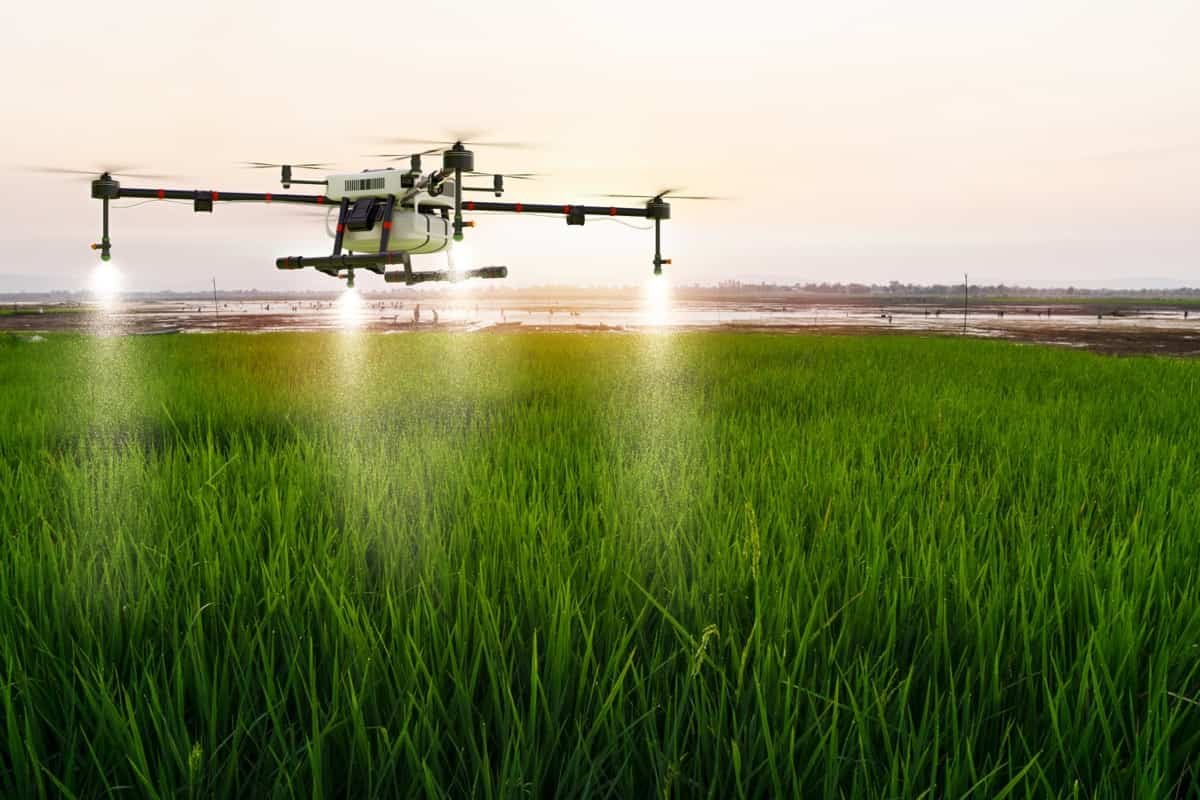
New “Green Shield” model integrates regulatory safeguards and crop-specific intelligence to standardise farm advisory systems across major crops
China has unveiled its first open-source large language model for crop protection, “Green Shield”, developed by Nanjing Agricultural University in collaboration with the National Key Laboratory of Agricultural Biosafety and more than 30 industry institutions, marking a significant step toward AI-driven agricultural decision support systems.
The model is designed to provide scientifically validated agricultural guidance, particularly in pest management and pesticide usage, addressing rising concerns over pest outbreaks, pesticide resistance, and inconsistent advisory quality in rural farming systems.
Specialised Agricultural AI Built on Large-Scale Domain Corpus
Green Shield has been trained on a proprietary agricultural dataset comprising over 2.5 billion tokens, drawn from academic research papers, patents, national standards, and field reports. The dataset spans major crops including rice, wheat, soybeans, vegetables, and fruit trees, integrating pest monitoring systems, green control methods, and pesticide registration data.
Developers said the model is designed to move beyond general-purpose AI systems by focusing specifically on plant protection science and regulated agricultural inputs.
Precision Advisory and Crop Diagnostics Capability
According to researchers at Nanjing Agricultural University, the model is capable of identifying crop types, growth stages, and disease symptoms with high precision. It generates integrated crop protection strategies tailored to specific field conditions, aiming to improve early detection and reduce crop losses.
The system is also designed to improve consistency in agricultural decision-making by standardising advisory outputs across regions and crop types.
Built-in Regulatory Safeguards for Pesticide Safety
A key feature of Green Shield is its automated compliance layer, which cross-references China’s national pesticide registration database before generating recommendations. Any pesticide that is banned, unsuitable for a crop, or exceeds dosage limits is automatically flagged and blocked, with the system self-correcting outputs to prevent misuse.
Developers said this built-in safeguard is intended to reduce risks associated with incorrect pesticide guidance, a known limitation in general-purpose AI models.
Addressing Real-World Agricultural Constraints
Project leaders at Nanjing Agricultural University noted that frequent pest outbreaks and pesticide resistance remain major challenges in China’s agricultural system. They highlighted that while general AI models often struggle with plant protection queries, domain-specific training significantly improves accuracy and safety in advisory outputs.
Next Phase: Field Testing and Iteration
The university confirmed that Green Shield will undergo continued field testing and iterative improvements, with the goal of developing an AI system that is “understandable, usable and effective” for farmers. The long-term objective is to integrate digital intelligence across the agricultural value chain, enabling data-driven crop protection at scale.
The launch of Green Shield reflects China’s broader push to integrate artificial intelligence into agricultural biosafety systems, with a focus on reducing chemical misuse, improving productivity, and strengthening real-time decision support for farmers through open-source, domain-specific AI infrastructure.
