
India's popcorn industry is at an inflection point, with the opportunity to move beyond import substitution towards building an integrated, domestically controlled value chain spanning seed genetics, farm production, post-harvest management, processing and branding. However, achieving this transition will require more than expanding acreage. It calls for sustained investment in indigenous breeding, assured farm economics, quality-led procurement and processing infrastructure capable of meeting the consistency requirements of organised food companies and cinema chains.
In an exclusive interview with AgroSpectrum, SBP Pattabhi Rama Rao, Managing Director, Gourmet Popcornica Pvt. Ltd, outlines the structural constraints confronting India's popcorn maize ecosystem and explains why seed sovereignty must anchor the country's self-reliance ambitions. He discusses the development of India's first non-GMO, high-expansion popcorn maize hybrids, Krisna459 and Godari234, the Gourmet Popcornica Model's engagement with 17,500 farmers across eight states, and the company's expanding cultivation footprint of approximately 40,000 acres. The conversation examines the economics of specialty maize cultivation, the role of contract farming and FPOs in building dependable supply chains, persistent post-harvest quality gaps and the investments needed to strengthen domestic processing. Looking towards 2027 and beyond, Rao makes the case for a commercially viable, farmer-centred popcorn industry that can first replace imports and subsequently establish India as a credible global supplier.
What does "self-reliance" actually mean for popcorn?
Replacing imports is the starting point, not the destination. If we only swap an imported bag of kernels for a domestic one, we have changed the origin and left the dependency in place. For us, self-reliance means India controls every link from seed to shelf: the genetics, the farm, the post-harvest handling, the processing and the brand. In any crop, the seed is where the dependence is usually the deepest. Whoever owns the genetics sets the quality, the cost and the pace of improvement for everyone downstream. That is why our first investment was in breeding. We have launched India's first non-GMO, high-expansion popcorn maize hybrid seeds, Krisna459 and Godari234, so that Indian farmers grow Indian-bred genetics.
The measure of success is whether an Indian-grown, Indian-processed kernel can match the best in the world on popping quality, do it reliably and at a viable price. That is aatmanirbhar Bharat applied to a specialty crop.
What are the biggest structural constraints?
Acreage and productivity are key. Farmers, typically, tend not scale a crop they cannot grow profitably; yield stability and the share of the crop that makes the quality grade are what decide whether they stay with it. Post-harvest handling is the quiet quality killer – this is where moisture control, drying and storage decide whether a good field becomes a good kernel. Processing and grading infrastructure has to meet the specifications of organised buyers, and farmer economics ties all of it together. If the numbers don't work for the grower, nothing else holds. However, as we are now aware, none of these is a single-point fix. We have worked on the productivity and the farmer relationship together – the Gourmet Popcornica Model – with 17,500 farmers across eight states, because fixing one without the other doesn't enable the system to develop and progress.
Can India's seed ecosystem compete with imported hybrids?
The Indian ecosystem has all the ingredients to compete; however, it has to be built deliberately. Popcorn is judged on kernel expansion, moisture, uniformity and popping quality. Those traits are not a by-product of ordinary maize breeding. Our hybrids, Krisna459 and Godari234, are the result of focused, multi-location breeding and field trials aimed at those commercial traits, and they are non-GMO. This creates a clear advantage for buyers and consumers who want traceable, clean-label ingredients, and it positions Indian popcorn well against imports.
India has the scientific talent, the agro-climatic diversity and the maize breeding base. What it has lacked is a dedicated, commercially driven popcorn programme sustained over years. Competing with imported hybrids is a matter of continuing that investment through new generations of hybrids, not of stopping at a first launch.
What needs to change at the farm level? Can popcorn compete with other maize and crops?
In order to choose to cultivate popcorn maize, it has to be the better decision for the farmer. This decision, typically, rests on three things:
Price certainty: Farmers need to know the price and the buyer before they sow. A crop with an assured offtake is a different proposition from one sold in an open market.
Agronomy support: Right seed, right spacing, right harvest window, right drying – all these are important aspects of the final output. Quality comes from the field, so support has to start there – even before the first seed is sown.
Net returns: The comparison that matters is net income per acre against competing maize and other crops, not the headline price per quintal.
The understanding of these requirements of farmers was instrumental in the creation o the Gourmet Popcornica Model. Our model focusses on bringing the farmer into the system as a partner, not to treat them as a supplier of last resort. The growth of our cultivation base to roughly 40,000 acres shows that farmers respond when the returns and the support are credible.
Where is the value chain least prepared?
We see the largest gap after the farm gate. Production can be scaled with good seed and good agronomy. Consistency, however, is much harder to ensure. Organised food companies and cinema chains buy to a specification, and they penalise variation. A lot that pops well in one batch and poorly in the next is of little use to them. The weakest areas tend to be:
Drying and moisture management, where a few percentage points decide popping performance
Cleaning and grading to uniform kernel size and quality
Storage, which can erode quality between harvest and processing
Quality assurance and traceability, which buyers increasingly demand from batch to batch
This is why value addition at source matters. Processing capacity close to where the crop is grown shortens the path to the shelf and protects quality along the way. We see investment here as the bridge between a good harvest and a reliable commercial product.
How can contract farming, FPOs and structured procurement help?
These aspects convert scattered production into a dependable supply chain. Each does a distinct job.
Contract farming gives the farmer an assured buyer and price, and gives us a predictable volume and quality. The terms have to be fair and transparent, or it will not last.
FPOs let smallholders act at scale, enabling them to aggregate produce, share equipment such as dryers and cleaners, and negotiate better terms.
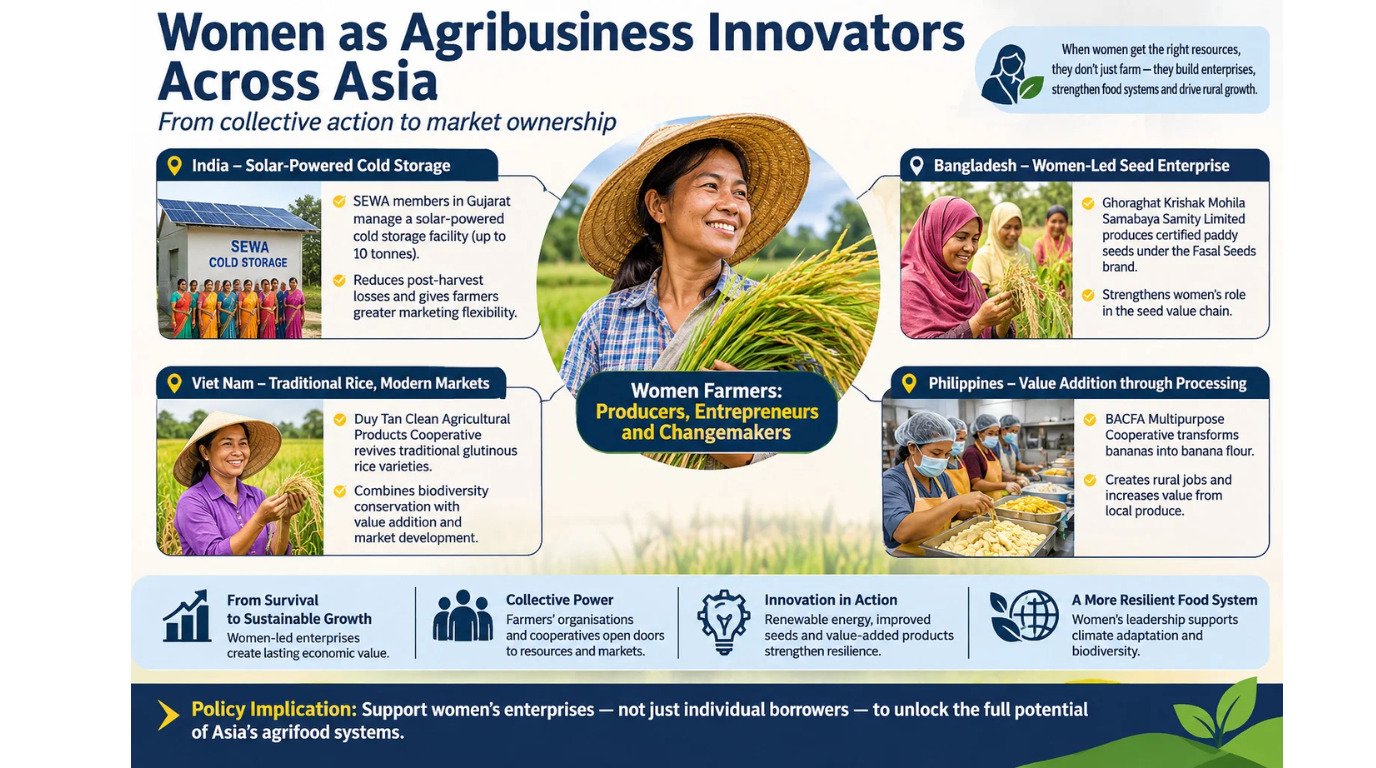
Structured procurement with clear grading and prompt payment builds trust, and trust is what keeps farmers in the system season after season. On value sharing, our principle is simple. If the domestic industry captures more value than imports did, a meaningful share of it must reach the farmer. That includes the women farmers in our network who take part in value addition. A supply chain where farmers do not benefit does not last.
Import substitution, or an export opportunity?
Both, in that order. Import substitution is the immediate priority because it builds the domestic base, the volumes and the credibility. But a competitive domestic industry will not stop at meeting local demand. India has the advantages of scale, diverse growing regions, a strong farmer base and, with non-GMO hybrids, a differentiated quality story. Those are the foundations of an export position, particularly as global buyers look for diversified, traceable sources. However, the sequence matters. Exports have to be earned through consistent quality and reliable supply at home first. At Gourmet Popcornica, we will not chase export markets before we have ensured that the domestic ecosystem is robust. Once it is, India can move from being a significant consumer to being a credible originator of popcorn maize.
What does a genuinely self-reliant industry look like in 2027 and beyond ?
We measure it against four markers.
Acreage: meaningful growth beyond today's ~40,000 acres, spread across suitable regions so supply is not exposed to a single geography.
Productivity: consistently higher yields and, more importantly, a higher share of produce meeting premium grade.
Processing capacity: drying, grading and processing built near production clusters, sized to the volumes organised buyers need.
Farmer participation: broader and deeper than today's 17,500 farmers, with FPOs and women farmers as active participants in the value chain.
The investments needed now are in continued breeding, farmer training and extension, post-harvest and processing infrastructure, and structured procurement systems. Our 2030 self-reliance goal is the benchmark. The groundwork must be laid in the next few seasons for it to be reachable.
-- Suchetana Choudhury (suchetana.choudhuri@agrospectrumindia.com)