A soybean processing by-product often relegated to waste or low-value feed could have a larger role in food formulations, according to researchers at Nanyang Technological University (NTU), Singapore, who have used oyster mushroom fermentation to improve the nutritional and sensory characteristics of okara. Okara is the fibrous pulp generated during the production of soy milk and tofu. Although it contains protein, fibre and other nutrients, its high moisture content, coarse texture, high insoluble-fibre content and relatively sour flavour have constrained its use in mainstream food applications.
In a lab-scale study conducted with Japanese food manufacturer Ichimasa Kamaboko and published in Food Chemistry: X, the NTU researchers found that solid-state fermentation with oyster mushroom mycelium increased protein content to 27.7–30.2 per cent on a dry-weight basis. Glucose concentrations also increased by as much as 6.4 times.
The process could offer food manufacturers a way to extract greater value from a material generated in large volumes by the soy processing industry, while addressing some of the characteristics that have traditionally limited okara's incorporation into consumer foods.
Fungal fermentation changes okara's composition
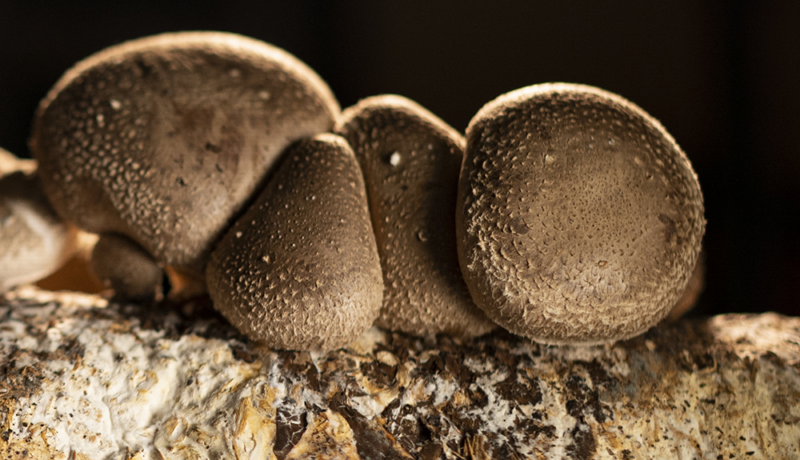
The research team used solid-state fermentation, growing oyster mushroom mycelium directly on moist okara rather than converting the material into a liquid fermentation system. As the mycelium developed, enzymes produced by the fungus broke down complex plant fibres into simpler compounds. This altered the composition of the soybean by-product and increased the availability of certain nutrients.
Beyond its nutritional characteristics, the fermented okara also showed changes in compounds associated with flavour. Researchers recorded increases in amino acids linked to savoury and umami notes, accompanied by a reduction in sourness. That combination could be particularly relevant for food and ingredient manufacturers looking to use okara in products where flavour and texture are critical to consumer acceptance.
“Okara is a soybean by-product that is rich in nutrients, but its high fiber content, short shelf life, and less appealing flavor have long limited its use in food products for people,” said Professor William Chen, director of NTU’s Food Science and Technology Programme at the School of Chemistry, Chemical Engineering and Biotechnology. The researchers believe fermentation could help shift okara from a largely underutilised processing residue towards a functional ingredient with applications in food manufacturing.
Circular food systems drive the opportunity
Okara's perishability is one of the major barriers to its wider utilisation. Its high moisture content can shorten its shelf life, while its coarse structure and relatively sour taste make direct incorporation into many food products challenging. Fermentation addresses several of these constraints simultaneously by changing the material's chemical composition and sensory characteristics. The approach could therefore create opportunities for food manufacturers to incorporate fermented okara into higher-value formulations rather than diverting the by-product primarily towards animal feed.
“Rather than treating okara solely as a waste stream, our research demonstrates that mushroom fermentation can create new, high-value opportunities to use this soybean by-product in food applications, contributing to a more circular and sustainable food system,” said Dr. Malsha Samarasiri, first author of the study and research fellow at NTU's School of CCEB.
The researchers also point to a potential opportunity involving mushrooms themselves. In separate work, the team found that oyster mushrooms grown on substrates containing okara showed enhanced nutritional value. Taken together, the findings suggest that both the soybean by-product and mushroom biomass could potentially be incorporated into more circular food production systems.
Commercial scale-up remains the next test
Despite the promising laboratory results, the technology remains at the proof-of-concept stage. Moving from laboratory fermentation to commercial food production will require further assessment of several technical and commercial variables. The NTU team plans to investigate food safety, shelf life, sensory properties, fermentation conditions, pre-treatment requirements and energy consumption, alongside process optimisation and the economics of large-scale production.
Consumer acceptance will also be important. Improving protein content and flavour does not by itself establish a commercially viable ingredient, particularly where manufacturers must balance processing costs, consistency, regulatory requirements and supply-chain logistics. The next phase of research will therefore determine whether mushroom fermentation can move beyond its laboratory demonstration and become a practical route for converting soybean processing residues into scalable food ingredients.
If successful, the approach could provide food manufacturers with another tool for valorising agricultural and food-processing by-products while supporting the development of more circular plant-based food systems.