Corteva Agriscience has expanded its biological crop protection portfolio in Brazil with the commercial launch of Amaná, a microbial nematicide designed to control the root-lesion nematode (Pratylenchus brachyurus). The product has received regulatory approval in Brazil and is intended to support integrated nematode management across crops affected by the pest.
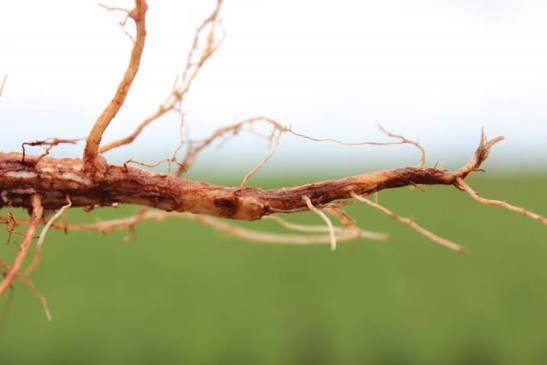
Root-lesion nematodes are a significant challenge for Brazilian agriculture because they damage plant root systems, restricting the uptake of water and nutrients and potentially reducing crop yields. According to figures cited by Corteva from the Brazilian Society of Nematology, nematodes belonging to the genus Pratylenchus were detected in more than 75 per cent of the agricultural areas assessed in a national survey.
Three bacterial strains target nematodes in the root zone
Amaná combines three bacterial strains: Bacillus licheniformis (CBMAI 2639), Bacillus velezensis (CBMAI 2618) and Priestia megaterium (CBMAI 2940). Applied in the planting furrow, the formulation acts in the rhizosphere, the soil region surrounding plant roots. The beneficial bacteria colonise the root zone and form a biologically active biofilm.
According to Corteva, the microorganisms work through several mechanisms, including competition for nutrients and space, making it more difficult for plant-parasitic nematodes to establish themselves. The company said these biological processes can also support root development and improve the ability of plants to absorb water and nutrients.
Tainá Sipos, Tactical Biologicals Leader at Corteva, said the new product extends the company's biological crop protection approach to the root system, where nematode damage can affect crop establishment and productivity.
Brazilian trials report improved nematode control and soybean yields
Corteva and its research partners evaluated Amaná during the 2024/25 and 2025/26 growing seasons in Brazil. According to the company, the trials demonstrated average control efficacy of 62.3 per cent against juvenile and adult plant-parasitic nematodes, alongside 77 per cent control and reduction of nematode egg populations.
In soybean evaluations, treatment with Amaná resulted in an average yield increase of 4.35 bags per hectare, equivalent to a 9.1 per cent improvement compared with untreated plots. These results are based on company-reported trials, and performance under commercial farming conditions may vary with pest pressure, soil conditions and management practices.
Expanding biological crop protection options
Amaná is registered in Brazil on the basis of its biological target, allowing its use in crops where Pratylenchus brachyurus occurs, subject to approved label requirements. The product is intended to complement other crop protection technologies and agronomic practices as part of integrated nematode management programmes.
The launch forms part of Corteva's broader expansion in biological crop protection in Brazil. The company has also introduced Arizium, a microbial foliar fungicide developed to manage selected crop diseases. Both products are commercially available in the Brazilian market.
The introduction of Amaná gives Brazilian growers an additional microbial option for managing root-lesion nematodes as biological crop protection products become increasingly integrated into agricultural pest and disease management programmes.