
Syngenta has secured a key regulatory win in Canada for Spiropidion, a next-generation insecticide aimed at some of agriculture’s most persistent piercing-sucking pests, opening another door for the company’s strategy to build a broader portfolio around differentiated modes of action.
The Pest Management Regulatory Agency (PMRA) of Health Canada has issued Registration Decision RD2026-16, formally approving the registration for sale and use of Syngenta’s Spiropidion Technical Insecticide and A20262 Insecticide. The products are registered for the control of aphids, whiteflies, mealybugs and two-spotted spider mites across food crops, feed crops and greenhouse crops.
The decision follows PMRA’s Proposed Registration Decision PRD2026-09, issued in June, and moves Spiropidion from the regulatory pipeline into the registered-product landscape in one of North America’s major agricultural markets. For Syngenta, the significance goes beyond another national registration. Spiropidion adds another regulatory foothold for the company’s newer piercing-sucking pest-control technology while giving IRAC Mode of Action Group 23 another important market win.
Group 23 remains a relatively specialised part of the insecticide market, but its importance is increasing as growers and manufacturers look for alternatives to heavily used insecticide modes of action and seek tools that can fit into resistance-management programmes.
A new molecule built on a proven chemical concept
Spiropidion belongs to the spirocyclic tetronic acid class of insecticides and is classified by the Insecticide Resistance Action Committee (IRAC) under Group 23, which comprises acetyl-CoA carboxylase (ACCase) inhibitors. Its mode of action is fundamentally different from conventional contact insecticides. The compound disrupts insect lipid biosynthesis by inhibiting ACCase, ultimately interfering with essential biological processes required for insect growth and survival.
Spiropidion is the fourth spirocyclic tetronic acid insecticide launched globally. The broader chemical family already includes Bayer’s spirotetramat, while spirodiclofen and spiromesifen have been positioned more strongly around acaricidal applications. That lineage matters because the chemistry is not starting from an untested conceptual base. Instead, Spiropidion extends an established spirocyclic tetronic acid platform into a new molecular configuration and pest-control profile.
At the structural level, Spiropidion shares the core scaffold of spirotetramat: a 3-aryl-substituted pyrrolidine-2,4-dione, or tetronic acid, framework with the 4-position enol esterified as an ethyl carbonate. Syngenta’s differentiation comes largely from changes to the spirocyclic portion of the molecule.
The company replaced the 4-methoxycyclohexane component found in spirotetramat with an N-methoxypiperidine, creating a 1,8-diazaspiro[4.5]decene system. It also introduced a methyl group on the amide nitrogen and altered the benzene-ring substitution pattern from 2,5-dimethyl to 4-chloro-2,6-dimethyl. Those structural changes underpin a different performance profile and help explain why Spiropidion is being positioned as more than another member of an established chemistry family.
Systemic activity is the commercial differentiator
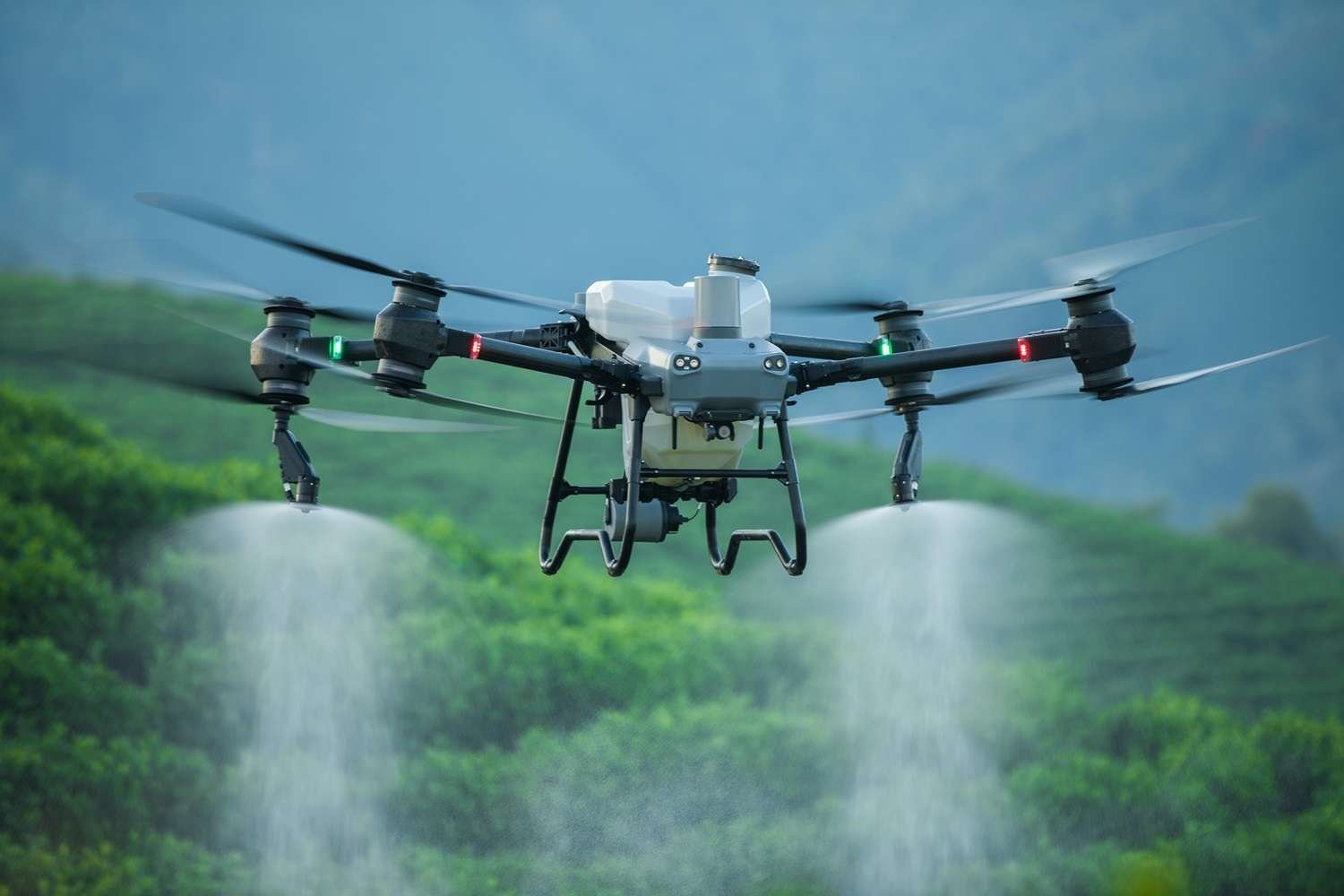
One of Spiropidion’s most important characteristics is its ability to penetrate plant tissues and move systemically after foliar application. Following application to foliage, the active ingredient can move upward toward newly developing tissues and downward toward root systems. That creates a particular advantage against piercing-sucking insects that are difficult to reach directly because they occupy tender plant parts or the undersides of leaves.
For growers, that means the value proposition is not simply whether the active ingredient can kill a pest on contact. It is whether the chemistry can reach pests through the plant after application. That distinction is particularly relevant for aphids, whiteflies and mealybugs, which frequently feed in locations that are difficult for conventional contact sprays to cover consistently. But Spiropidion also has a clear limitation.
The compound is predominantly stomach-acting and has extremely low contact activity. It is therefore not designed as a rapid knockdown insecticide, and speed of visible pest mortality is not its principal strength. That profile makes the molecule better suited to systemic pest management than to applications where immediate contact mortality is the primary requirement.
The distinction could become increasingly important as growers move toward more integrated resistance-management strategies, where persistence, systemic movement and mode-of-action diversity can be as important as rapid knockdown.
Two-spotted spider mites broaden the pitch
Spiropidion’s target spectrum also gives it a potentially differentiated position within Group 23. A20262 is registered against aphids, whiteflies, mealybugs and two-spotted spider mites. The inclusion of two-spotted spider mites gives the product a broader positioning than might otherwise be expected from an insecticide focused on piercing-sucking pests. Spirotetramat, another prominent Group 23 product, is also associated with mite control on certain market labels. Bayer’s U.S. Movento label, for example, includes pests such as two-spotted spider mites and apple rust mites. But the positioning is not identical.
Spirotetramat’s activity against mites has generally been characterised more in terms of suppression, while Spiropidion’s stated target spectrum gives it a clearer acaricidal positioning alongside its insect targets. That distinction could prove commercially relevant in crops where aphids, whiteflies, mealybugs and mites overlap or where growers are looking for a single chemistry capable of addressing multiple piercing-sucking pest pressures.
Canada approval points to high-value crop opportunities
The Canadian regulatory assessment also provides clues about where Spiropidion could find its strongest commercial applications. PMRA’s residue trials covered a broad range of crops, including potatoes, leafy vegetables, brassicas, greenhouse tomatoes, greenhouse peppers, greenhouse cucumbers, citrus, pome fruits, grapes and cotton.
The crop portfolio points toward a product designed for more than a narrow commodity application. Vegetables and fruit crops, particularly greenhouse production and high-value perennial crops, can face intense pressure from aphids, whiteflies, mealybugs and mites while also requiring careful residue management and targeted application strategies.
The inclusion of greenhouse tomatoes, peppers and cucumbers is particularly significant because controlled-environment agriculture can create conditions favourable to recurring pest pressure. At the same time, growers in these systems typically have limited room for error when managing resistance and residue constraints. For Syngenta, a registration spanning food crops, feed crops and greenhouse crops therefore expands the potential commercial addressable market rather than restricting Spiropidion to a single production system.
Another step in the Group 23 expansion
The Canadian registration also reinforces the broader strategic importance of Group 23. Spirocyclic tetronic acid chemistry occupies a relatively narrow space within the global insecticide market compared with some older, larger insecticide classes. Yet that narrowness is precisely what makes new molecules in the category strategically valuable.
Modern pest management is increasingly constrained by resistance. Repeated use of the same modes of action can accelerate resistance development, reducing the useful life of individual products and forcing growers to rotate chemistries. New compounds with differentiated biological and application characteristics can therefore command strategic value even when they do not immediately compete with the largest-volume insecticides.
Spiropidion brings several characteristics into that equation: a Group 23 mode of action, systemic movement, activity against key piercing-sucking pests and a target spectrum extending to two-spotted spider mites. Its low contact activity and slower knockdown profile mean it will not replace every conventional insecticide application. Instead, its commercial role is likely to depend on how effectively growers can integrate it into broader pest-management programmes.
Registration is not the same as market supply
The Canadian approval should also be viewed through the correct regulatory lens. PMRA’s RD2026-16 represents the formal registration decision following the proposed decision issued in June. It establishes the regulatory basis for sale and use in Canada, but registration itself does not mean that full commercial supply has immediately reached growers. The next stage is market execution: product availability, launch timing, grower adoption, distribution, crop-specific positioning and integration into resistance-management programmes.
That distinction matters because the value of a new active ingredient ultimately depends not only on regulatory approval but on how effectively it can be translated into field-level performance and commercial demand. For Syngenta, however, the direction is clear. Spiropidion gives the company another differentiated tool for managing economically important piercing-sucking pests and extends the reach of spirocyclic tetronic acid chemistry into another major agricultural market.
For the broader crop-protection industry, the Canadian decision is another indication that innovation is increasingly moving toward molecules designed around specific biological targets, systemic behaviour and resistance-management needs rather than simply chasing faster knockdown. The market for insecticides may be crowded, but the competitive battleground is becoming more specialised. Molecules that can combine a distinct mode of action with useful systemic movement, broader target coverage and fit within integrated resistance strategies are likely to carry disproportionate strategic value. Spiropidion now has another regulatory market in which to prove that proposition.