
Europe's efforts to formalise carbon removal through enhanced rock weathering (ERW) have entered a new regulatory phase, with the European Commission placing draft certification provisions before its Carbon Removals Expert Group and inviting industry feedback on the proposed framework. Presented on November 10, the draft provisions could form the basis of an EU methodology for certifying enhanced rock weathering under the Carbon Removals and Carbon Farming Certification Framework (CRCF). The Commission's written feedback process will remain open until December 10, 2026.
The discussions mark a shift in the European policy debate from whether enhanced rock weathering should qualify as a carbon removal pathway to how its climate benefits should be measured, verified and safeguarded. Eight developers — Carbony, InPlanet, Lithos Carbon, MATI, Rock Flour Company, Terradot, UNDO and ZeroEx — have welcomed the progress. Ahead of the expert group meeting, they submitted a joint technical response to an issues paper prepared for the Commission by ICF, in association with Cerulogy and Ecodiversity.
The response outlines a common industry position on the scientific and operational requirements for a credible certification methodology. It also signals the developers' willingness to submit field data and published research to address outstanding questions before the consultation closes. Jim Mann, CEO and Founder of UK-based UNDO, said the debate had moved towards designing the rules for certification, with the industry prepared to contribute operational evidence to the process.
Certification hinges on measurement, permanence and environmental safeguards
Four issues are emerging as central to the proposed methodology: validation across different measurement approaches, the permanence of carbon removal, management of feedstock-related risks, and the allocation of technical requirements between the EU methodology and individual certification schemes.
For ERW developers, the challenge is to establish a methodology that can consistently quantify carbon removal while accounting for uncertainty, potential downstream losses and variations in field conditions. The joint industry response addresses several of these questions, including the establishment of baselines and control plots, the point at which carbon removals can be credited, and conservative approaches to uncertainty and potential losses.
Tony Oehm, CEO and Co-Founder of Germany-based ZeroEx, said the development of a shared standard was essential to scaling ERW projects across Europe. The company, which has been operating projects in Germany since 2023, intends to contribute its existing field data to the Commission's consultation.
Environmental safeguards are another critical component. The signatories support rigorous feedstock testing, soil monitoring and cumulative loading limits assessed against established soil protection thresholds. Silyan Ivanov, CTO of Austria-based Carbony, said feedstock quality and soil conditions must be assessed systematically, with monitoring and loading limits ensuring that the application of crushed rock does not compromise soil and water quality.
The developers have also committed to making non-commercially sensitive data available to researchers and engaging with the Commission, independent scientists and certification schemes to resolve outstanding methodological questions.
Why enhanced rock weathering matters to Europe's climate strategy
The regulatory discussions carry significance beyond the carbon removal industry. The European Climate Law establishes a target of reducing net greenhouse gas emissions by 90 per cent by 2040, compared with 1990 levels. Carbon removals are expected to contribute towards addressing emissions that remain difficult to eliminate. The CRCF provides the EU's overarching quality and certification framework for carbon removals and carbon farming. A dedicated ERW methodology would establish common requirements for project developers, agricultural stakeholders, carbon buyers and Member States.
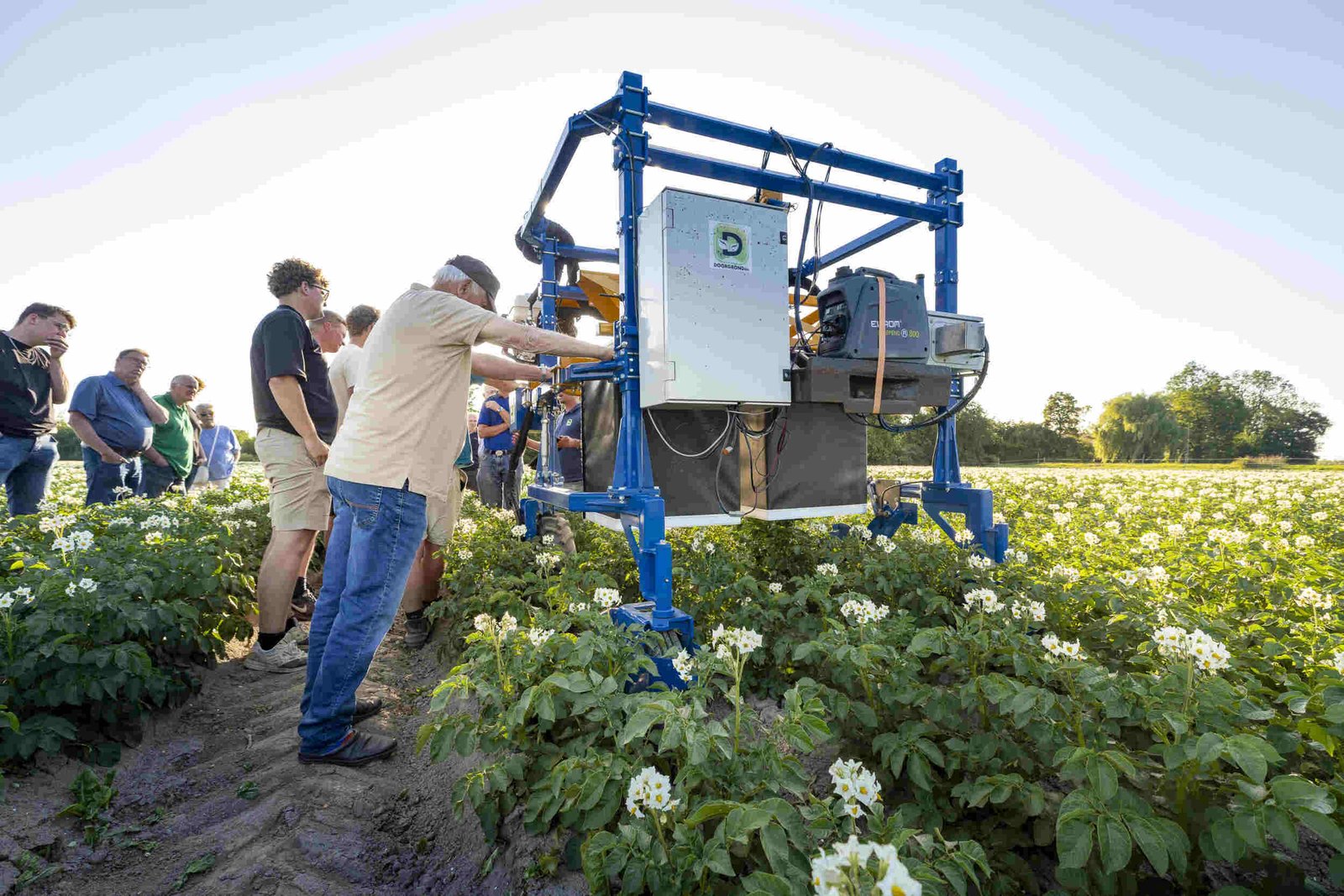
Enhanced rock weathering accelerates a naturally occurring geological process through which silicate rocks react with atmospheric carbon dioxide. Under the approach, finely crushed rock is applied to agricultural land using equipment similar to that used for conventional liming. As the minerals weather, they react with carbon dioxide and contribute to the formation of dissolved bicarbonate and carbonate minerals, which can store carbon over extended geological timescales. The durability of the resulting carbon storage depends on the specific chemical pathways and environmental conditions, making measurement and verification particularly important.
The approach is attracting attention because it can be deployed on existing agricultural land and potentially use locally available rock resources, including quarrying by-products. Published estimates by Renforth (2025) place the potential carbon removal capacity of enhanced rock weathering across EU agricultural land at 34–100 million tonnes of CO2 annually. Beyond carbon removal, the approach could improve soil conditions, particularly in acidic soils, and potentially reduce dependence on certain imported agricultural inputs.
ERW projects are already operating across Europe, Brazil, India, Africa and North America. Independent carbon registries have issued verified removal credits from projects, with corporate buyers purchasing removals through voluntary carbon markets. Felix Harteneck, CEO and Co-Founder of InPlanet, said ERW could offer Europe an additional carbon removal pathway by combining existing agricultural infrastructure with domestically available mineral resources. A CRCF methodology, he added, would provide buyers and Member States with a common basis for assessing the resulting climate benefits.
The implications also extend to emerging agricultural economies. Tom Mills, Head of Policy at MATI, which operates across the United States and India, highlighted the potential for soil remineralisation to support smallholder farmers through improved soil conditions and additional income opportunities, provided carbon markets are underpinned by credible scientific standards.
The road to December 10
The Commission's consultation, which closes on December 10, 2026, will be an important opportunity to establish the scientific and operational requirements for a future ERW certification methodology. The eight signatories intend to submit field evidence and published research addressing the four principal methodological questions. They are also seeking an indicative timeline from the Commission outlining the next stages of methodology development and the evidence required to advance the process.
Continued engagement with Member States, certification bodies and the scientific community is expected to shape the framework. James Kanoff, CEO and Co-Founder of Terradot, said a robust CRCF methodology could help translate scientific advances in enhanced rock weathering into measurable climate outcomes, provided it incorporates rigorous measurement, monitoring, environmental safeguards and verification.
For Europe, the task now is to establish a certification system that can accommodate the scientific complexity of enhanced rock weathering without compromising the credibility of carbon removal claims. The eventual methodology could also influence how the pathway is evaluated in other markets seeking to develop their own carbon removal standards.