Consider a composite, but entirely typical, rice household in the Tohoku countryside. The man who runs it is in his early seventies. He farms a little under a hectare of paddy, the same plots his father planted, and he still drives the transplanter himself each May. His son commutes to a factory job in the prefectural capital and helps at harvest weekends. Nobody in the family expects the son to take over. When the father stops, the paddies will either be rented to a larger operator down the valley or, if no one wants them, left to the weeds.
Multiply that household by several hundred thousand and you have the central fact of Japanese agriculture in 2026. According to the 2025 Census of Agriculture and Forestry, Japan’s core farmers, the people whose main job is self-employed farming, numbered about 1.02 million, the steepest five-year fall on record and a drop of roughly a quarter since 2020, as Kyodo reported when the results were released. A follow-up survey published by the farm ministry this year put the figure at 986,600, below one million for the first time. Their average age is 67.7. More than 56 per cent are 70 or older. Barely 1.2 per cent are under 30.
This is the cliff. And over the past two years it has collided with something Japanese voters care about intensely: the price of rice. What happened next, a shortage, a stockpile drawdown, a policy U-turn and then a glut, offers a stress test of how an ageing food system behaves under pressure. It also offers a preview for South Korea, Taiwan, China and Thailand, which are moving down the same curve a decade or two behind.
A workforce that is retiring all at once
The headline numbers are stark, but the shape of the age distribution matters more than the average. A workforce in which more than half are past 70 does not decline gradually. It exits in a wave, as illness, injury or simple exhaustion take whole cohorts out of the fields within a few years of one another.
There is a counter-intuitive detail buried in the census. Reporting in Japan’s agricultural press noted that the average age of core farmers fell slightly, for the first time. That is not a sign of renewal. It reflects the oldest farmers leaving faster than they can be replaced, which pulls the average down even as the total shrinks. The pipeline behind them is thin: new entrants to farming were reported at around 43,000 in 2023, down by about a third from 2015, and only a minority of those were under 50.
At the same time the structure of the industry is changing beneath the headcount. The number of farm management entities, which counts households and companies that actually operate farms, fell to 799,700 in the ministry’s 2026 survey, down 4.4 per cent in a year. Individually run farms fell faster still. Corporate farms, by contrast, rose to 40,700, and the number of executives and staff they employ climbed to just over 100,000. Average farmland per operation rose to 3.8 hectares, and to 34.6 hectares in Hokkaido, where large-scale arable farming already looks more like Europe than like the rest of Japan.
The most consequential figure of all may be this one: according to the 2025 census, farms of 20 hectares or more now hold 51 per cent of Japan’s farmland, the first time they have passed the halfway mark. Japanese farming is consolidating, and fast. The question is whether it is consolidating fast enough to absorb the land that the retiring generation is about to release.
Table: Japan’s core farmers by age, 2026 farm ministry survey
|
Age band |
Share of core farmers |
What it means |
|
Under 30 |
1.2% |
Fewer than 12,000 people nationwide |
|
30 to 39 |
3.8% |
The cohort expected to inherit consolidated farms |
|
40 to 69 |
About 38.5% (derived) |
Today’s working core and the main buyers of land and machinery |
|
70 and over |
56.5% |
Likely to exit within the next decade |
|
Average age |
67.7 years |
Fell slightly, reflecting exits rather than new entry |
|
Total |
986,600 |
Down about 50,000, or 4.8 per cent, in one year |
The 40 to 69 share is derived by subtraction from the published bands.
The rice shock: how a small shortage became a political crisis
Rice has always been political in Japan, but the two years from mid-2024 made it a cost-of-living issue that helped shape national politics.
The trigger was physical. An extreme heatwave in 2023 left a crop with far less rice of marketable quality. By August 2024 the shortfall was estimated at around 400,000 tonnes, and a Nankai Trough earthquake advisory that month set off panic buying. Supermarket shelves emptied. Wholesale prices jumped, and kept climbing.
The policy response was slow. For decades Japan managed rice supply by encouraging farmers to grow less. The state formally stopped allocating national production quotas in 2018, but subsidies for converting paddies to wheat, soybeans and feed rice kept steering output towards a tight balance with shrinking demand. That system left little slack. When the shortage hit, the agriculture ministry initially played it down, and the first release of the government’s emergency stockpile, announced in February 2025, went to auction through the JA cooperative network. It did little to bring retail prices down quickly.
The turning point came in late May 2025, when Shinjiro Koizumi became farm minister. The government switched to selling reserve rice directly to retailers, putting 5 kg bags on shelves at about ¥2,000, less than half the prevailing supermarket price, and Koizumi pledged to release the entire stockpile of around 910,000 tonnes. By June 2025, rice prices had roughly doubled from a year earlier.
Then the politics swung. In August 2025 Prime Minister Shigeru Ishiba declared that Japan would change course and boost production. His successor, Sanae Takaichi, who took office in October 2025, quickly moved policy back towards producing in line with demand. Agriculture Minister Norikazu Suzuki has said demand, including overseas demand, must be secured before output rises, warning that otherwise prices would collapse under oversupply. The ministry’s outlook for the 2026 crop put appropriate production at about 7.11 million tonnes, down from the 2025 harvest.
Farmers, however, had already responded to high prices. The 2025 harvest reached about 7.47 million tonnes, the first time output topped 7 million tonnes in four years, and the ministry’s October 2026 estimate puts this year’s crop at 7.41 million tonnes, only about 1 per cent lower. Supermarket prices peaked at ¥4,416 per 5 kg in early January 2026, then slid. By mid-September 2026, according to farm ministry data cited by nippon.com, the average had fallen to ¥2,971, the first reading below ¥3,000 in two years. Private-sector inventories at the end of July 2026 stood at 1.6 million tonnes, the highest July level since records began in 2008. In August, Kyodo reported that the ministry was planning to buy back some of the reserve rice it had released.
Table: Japan’s rice price cycle, 2024 to 2026
|
Period |
Average supermarket price, 5 kg |
Driver |
|
Before the shortage |
About ¥2,000 |
Tight but stable supply |
|
March to June 2025 |
Above ¥4,000 |
Heat-damaged 2023 crop, panic buying, slow stockpile release |
|
Early January 2026 |
¥4,416 (record) |
Prices sticky despite reserve sales |
|
Mid-September 2026 |
¥2,971 |
Larger 2025 harvest, record inventories |
The episode also exposed the cooperatives. The JA Group remains the dominant channel through which small Japanese growers buy inputs, borrow money and sell rice, and its slow handling of the first stockpile tranche drew open criticism in 2025. For the elderly household, JA is a lifeline: it supplies seed and fertiliser, arranges collection and handles paperwork that a 75-year-old farmer has little appetite for. For the larger operators now absorbing that household’s land, the calculation is different. Many already sell directly to wholesalers, restaurant chains and retailers, and the price spike gave them every reason to keep doing so. As the farm base consolidates, the cooperatives face a strategic choice between serving a shrinking constituency of smallholders and reinventing themselves as service providers to large farms, offering contract machinery work, data platforms and export logistics.
The lesson is uncomfortable. A farm sector this old cannot easily flex supply up in a crisis, yet it can still overshoot once prices signal opportunity, because the response comes from the larger, younger operators who are already expanding. The small elderly grower in our composite household does not plant more when prices rise. The 50-hectare contractor down the valley does.
Heat, varieties and the climate ceiling
The 2023 crop failure was not a one-off. Japanese summers have become hot enough to damage grain quality in the main rice belt, and growers are adapting their seed. According to reporting from the 2025 season, heat-tolerant varieties covered a record 248,000 hectares, or 18.2 per cent of the country’s staple rice area, nearly triple their share a decade earlier. In Saga prefecture they now account for about two thirds of rice acreage, and in Nagasaki and Shimane close to half. Kinumusume, Tochiginohoshi and Koshiibuki lead the list.
That shift matters well beyond Japan. Heat-damaged grains crack more readily in milling, cutting the share that can be sold as premium polished rice, which is exactly the product Japanese consumers and export buyers pay for. For seed companies and public breeding programmes across Asia, Japan’s experience suggests that varietal turnover in rice can be fast once growers see repeated losses. It also suggests that an ageing farmer base, wary of experimenting, may need prefectural extension services and cooperatives to make the switch for them.
Robots, drones and the 100-hectare farmer
If there are going to be far fewer farmers, each one has to manage far more land. That is the logic behind Japan’s smart agriculture push, and the machinery makers are moving to supply it.
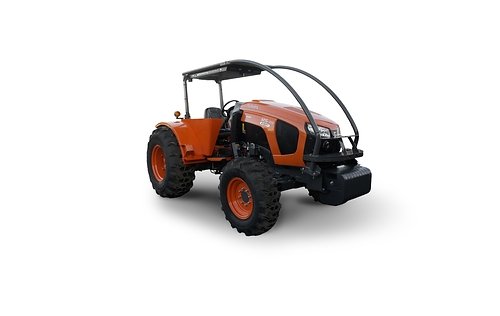
In August 2026, Kubota announced its Agri Robo Tractor MR Series for the Japanese market, due in April 2027. The company says the unmanned models, rated at 100 and 105 horsepower, are the first domestically built tractors capable of unmanned autonomous work under remote monitoring. A cellular link connects the tractor to a tablet from which the operator can start, stop and restart work, while five AI cameras and five millimetre-wave radars watch for people and obstacles. The tractors can carry out eight types of rice and field crop work, including tilling and puddling to the edges of suitable fields. Manned versions steer themselves so that less experienced workers can do precise jobs.
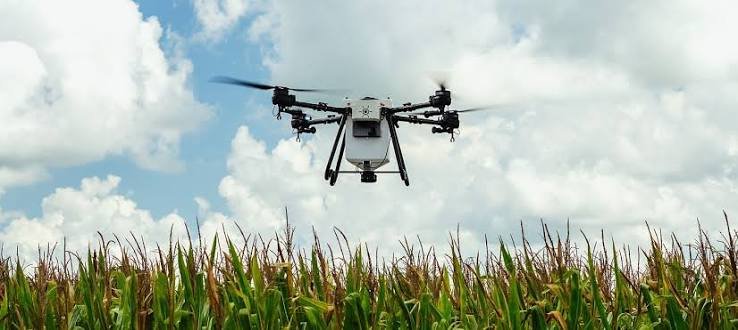
The significance is less the technology than the business model it enables. Remote monitoring means one experienced operator can supervise a machine working one field while doing something else in another. That is how a corporate farm with a handful of staff takes on the paddies of a dozen retiring neighbours. Yanmar, Iseki and other Japanese makers are pushing auto-steering and robotic platforms in the same direction, and spraying drones have become a familiar sight over rice paddies, cutting one of the most physically punishing tasks on a small farm.
Data is following the machines. According to the 2025 census, 40 per cent of farm management entities now use data in their operations, rising to 63 per cent among organised and corporate entities. The divide is telling. Smart agriculture is being adopted by the farms that are consolidating, not by the elderly households that are leaving.
The constraint is land shape. Japanese paddies are small, irregular and scattered, and 58.7 per cent of operations selling rice farm less than a hectare of it. Robot tractors need consolidated, regular fields. Farmland banks, the prefectural intermediaries that lease land from retiring owners and pass it to larger operators, are the unglamorous infrastructure without which the robots have nowhere useful to go.
The export bet
The third leg of Tokyo’s strategy is selling abroad. Japan’s exports of agricultural, forestry and fishery products and food reached about ¥1.7 trillion in 2025, up 12.8 per cent and a record for the 13th consecutive year, according to the farm ministry. Shipments rose to all ten of the top destinations, including the United States despite higher tariffs.
Yet the government missed its ¥2 trillion goal for 2025, and its target for 2030 is ¥5 trillion. Closing that gap requires both new markets and, crucially, more supply capacity, which brings the argument back to the farm. Agriculture Minister Suzuki’s position, that output should rise only once overseas demand is secured, captures the dilemma. Exports are meant to absorb the surplus rice that a consolidating, more productive farm sector will grow. But building export demand takes years, while the retiring generation’s land is coming onto the market now.
Rice itself is a small part of the export story by value, but symbolically it is the most important. If Japan is to keep its paddy land productive with far fewer farmers, it needs an outlet for rice beyond a domestic market where per capita consumption has been falling for decades. Export rice, rice for processing and rice flour are the obvious candidates, but they command lower prices than premium table rice sold at home. That only works if the cost of production falls, which brings the argument full circle to larger farms, regular fields and autonomous machinery. The export target, in other words, is less a trade policy than a farm structure policy in disguise.
For buyers across Asia-Pacific, the implication is that Japanese premium rice, beef, fruit and green tea will be pushed harder into regional markets, with Japanese exporters looking for distribution partners in Singapore, Hong Kong, Taiwan and South-East Asia.
The same curve, a decade or two behind
Japan is the most advanced case, not an outlier. Its neighbours are on the same path.
In South Korea, according to Statistics Korea data reported in September 2026, 51 per cent of the population in farming and fishing households was 65 or older in 2025, up nine percentage points in five years. Average cultivated area per farm household fell to 0.87 hectares, the lowest since 1960, which officials attributed to ageing. A modest rise in farm households, driven by people moving to the countryside, has not changed the underlying arithmetic.
Taiwan looks strikingly similar to Japan. The average age of its farmers was 67.84 in 2021, and more than half of agricultural workers were over 65 in 2020, according to figures compiled by Taiwan’s agricultural knowledge platforms citing official studies. Fewer than 15 per cent are under 45. Taiwan has leaned harder than Japan on imported labour, expanding its agricultural migrant worker scheme from about 800 workers at its 2019 pilot to roughly 20,000 by May 2025, alongside subsidies for labour-saving machinery.
China’s rural population is ageing faster than its cities, because younger workers have moved to urban jobs. Its 2020 census showed the share of over-65s markedly higher in the countryside than in towns, and Beijing’s push for land transfers, cooperatives and agricultural machinery service providers is, in part, a response to the same exit problem Japan faces.
Thailand is earlier on the curve but heading the same way. United Nations analysis of Thai labour data shows the share of agricultural workers aged 15 to 40 falling from 48 per cent to 32 per cent between 2003 and 2013, while the 40 to 60 cohort grew. The rice farmers of central Thailand who were in their forties then are approaching their sixties now, many on small, indebted holdings.
Table: Farmer ageing across five Asian systems
|
Market |
Key ageing indicator |
Average holding |
Main policy response |
Stage on the curve (editorial rating) |
|
Japan |
Core farmers’ average age 67.7; 56.5% aged 70+ (2026) |
3.8 ha per operation |
Consolidation, farmland banks, robotics, exports |
Advanced |
|
Taiwan |
Average farmer age 67.84 (2021); over half aged 65+ (2020) |
Small, fragmented |
Migrant labour, machinery subsidies, young farmer training |
Advanced |
|
South Korea |
51% of farm and fishing household population aged 65+ (2025) |
0.87 ha per farm household |
Return-to-farm incentives, smart farm clusters |
Advanced, slightly behind Japan |
|
China |
Rural ageing well ahead of urban (2020 census) |
Very small family plots |
Land transfer, cooperatives, machinery service providers |
Accelerating |
|
Thailand |
Under-40 share of farm labour fell from 48% to 32% (2003 to 2013) |
About 14 rai (2.3 ha) per family |
Young Smart Farmer programme, mechanisation |
Early to middle |
What the region can learn
Three lessons stand out from Japan’s experience.
First, the exit of an ageing farm generation is not a slow decline but a cliff, and the policy that matters most is not support for the farmers who are leaving but the machinery that moves their land to those who are staying. Japan’s farmland banks, imperfect as they are, are the template. Korea, Taiwan and China all need equivalents that work at scale before the wave hits.
Second, an ageing farm sector is brittle in a crisis. Japan’s supply system had little slack in 2024, and the response to shortage came late and then overshot. Countries that run tight supply management for staple grains should build in buffers and faster stockpile mechanisms while they still have the farmers to respond.
Third, technology adoption follows consolidation, not the other way round. Robot tractors and spraying drones are spreading among Japan’s corporate and larger farms, and the market for them will grow as land concentrates. For machinery makers, agri-input companies and investors across Asia-Pacific, the opportunity lies with the contractor running 50 or 100 hectares, not with the elderly smallholder.
Back in our composite Tohoku household, the father may farm for a few more seasons. When he stops, the best outcome is not that his son reluctantly returns. It is that a well-capitalised operator, running a remotely monitored tractor and selling part of the harvest to Singapore or Los Angeles, takes on the paddies and keeps them producing. Whether that happens, and how fast, will decide whether Japan’s last generation of small rice farmers is followed by a new kind of farming, or by abandoned fields.
What to watch in 2027
- Whether the farm ministry’s 2027 rice supply outlook and any reserve buyback stabilise prices without reviving pressure to cut planted area.
- How quickly Kubota’s unmanned MR Series tractors sell after their April 2027 launch, and how rivals such as Yanmar and Iseki respond.
- Whether the share of farmland held by farms of 20 hectares or more keeps rising as more farmers aged over 70 retire.
- Whether Japan’s food and agricultural exports hold double-digit growth, keeping the ¥5 trillion target for 2030 credible.
- How far heat-tolerant varieties spread beyond Kyushu and western Japan into the northern rice belt after another hot summer.
- Whether South Korea and Taiwan move from subsidies and imported labour towards Japanese-style farmland consolidation schemes.
Ankit Kankar | ankit.kankar@mmactiv.com