Health Canada has approved the sale and use of three pest control products containing epyrifenacil, clearing the way for two herbicide formulations to enter the Canadian market. The decision introduces an additional weed-management option for growers dealing with difficult grass and broadleaf weeds, including biotypes resistant to other herbicide chemistries.
The registrations cover S-3100 Technical (Rapidicil Technical), S-3100 0.46 EC Herbicide and V-10488 0.94 SE Herbicide. The approval was granted under subsection 8(1) of Canada's Pest Control Products Act, following an assessment of the products' health and environmental risks and their value under the proposed conditions of use.
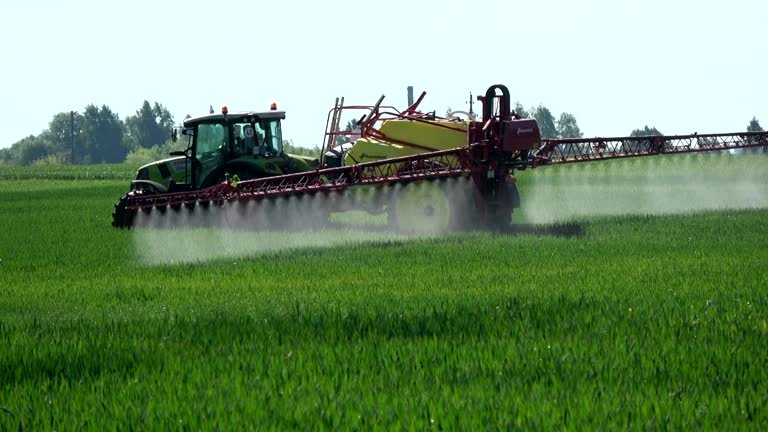
The two formulated products have different application profiles. S-3100 0.46 EC Herbicide is approved for pre-plant surface application in canola, field corn, and spring and winter wheat, as well as pre-plant surface and pre-emergence use in soybean. V-10488 0.94 SE Herbicide is approved for pre-plant surface application in spring wheat and pre-emergence application in soybean.
Both formulations can also be used in fall burndown and fallow land programmes, for maintaining bare ground in non-cropland areas, and in industrial vegetation management.
A different approach to PPO inhibition
Epyrifenacil belongs to Group 14 herbicides, which inhibit protoporphyrinogen oxidase (PPO), an enzyme involved in the chlorophyll biosynthetic pathway. When PPO activity is blocked, phototoxic chlorophyll precursors accumulate in plant tissues. Exposure to light triggers the production of reactive oxygen species, damaging cell membranes and causing tissue necrosis, ultimately killing the plant.
What distinguishes epyrifenacil, according to the regulatory assessment, is its novel binding mechanism within this herbicide group. It is designed to control weed biotypes resistant to other chemical families classified as PPO inhibitors. The active ingredient is also rapidly absorbed through foliage and, unlike other PPO inhibitor herbicides, is translocated within the plant.
This distinction could be relevant to growers operating in conservation tillage systems, where effective pre-plant weed control is central to crop establishment. Weeds that survive initial control measures can compete with emerging crops for moisture, nutrients and sunlight, particularly before the crop canopy closes.
Two formulations, different weed-management roles
S-3100 0.46 EC Herbicide provides burndown control of grass and broadleaf weeds across canola, field corn, soybean and wheat. Its approved application rates range from 182–363 mL/ha in canola and fall burndown or fallow land programmes, and 363–726 mL/ha in field corn, soybean and spring and winter wheat. For bare-ground maintenance in non-cropland areas and industrial vegetation management, the rate range is 726–1,452 mL/ha.
V-10488 0.94 SE Herbicide combines epyrifenacil with two already registered active ingredients, flumioxazin and pyroxasulfone. Alongside burndown activity against weeds controlled by S-3100 0.46 EC Herbicide, the co-formulation offers residual control of weeds targeted by flumioxazin and pyroxasulfone.
Its approved rates are 1.75–2.0 L/ha for soybean and fall burndown or fallow land programmes, 1.75 L/ha for spring wheat, and 1.75–3.5 L/ha for bare-ground maintenance and industrial vegetation management.
The distinction between the products is important: while both provide broad-spectrum burndown activity, V-10488 adds residual weed-control activity through its combination of active ingredients.
Regulatory assessment clears the way
The final registration follows the publication of Proposed Registration Decision PRD2026-13, which detailed Health Canada's evaluation of the products. The proposal underwent a 30-day public consultation that concluded on 20 September 2026.
Health Canada received written submissions concerning the health, environmental and value assessments. The regulator stated that some comments were not directly related to the proposed decision. Following its evaluation, it concluded that the health and environmental risks, as well as the value of the products, were acceptable when used in accordance with the approved conditions.
The early-season advantage
The commercial and agronomic relevance of the new formulations will depend on their performance under field conditions and their integration into existing weed-management programmes. In conservation crop tillage, starting with a relatively weed-free field is particularly important because reduced soil disturbance can leave growers with a narrower set of effective control options.
Early-season weed pressure can undermine crop establishment before the canopy develops sufficiently to suppress competing vegetation. Effective burndown and residual control can help reduce this competition, allowing crops to access moisture, nutrients and light during a critical growth period.
Epyrifenacil's distinct binding mechanism and systemic movement within plants offer additional characteristics for weed-management programmes. However, its registration should not be interpreted as a substitute for integrated weed management. Resistance management will continue to depend on appropriate herbicide rotation, the use of multiple effective modes of action and adherence to approved application directions.
For Canadian growers, the approval expands the available chemistry for pre-plant and pre-emergence weed management across several major field crops. Its longer-term significance will be determined by field-level efficacy, the range of weed species controlled, crop safety and its ability to deliver consistent results in systems facing increasing herbicide-resistance pressure.