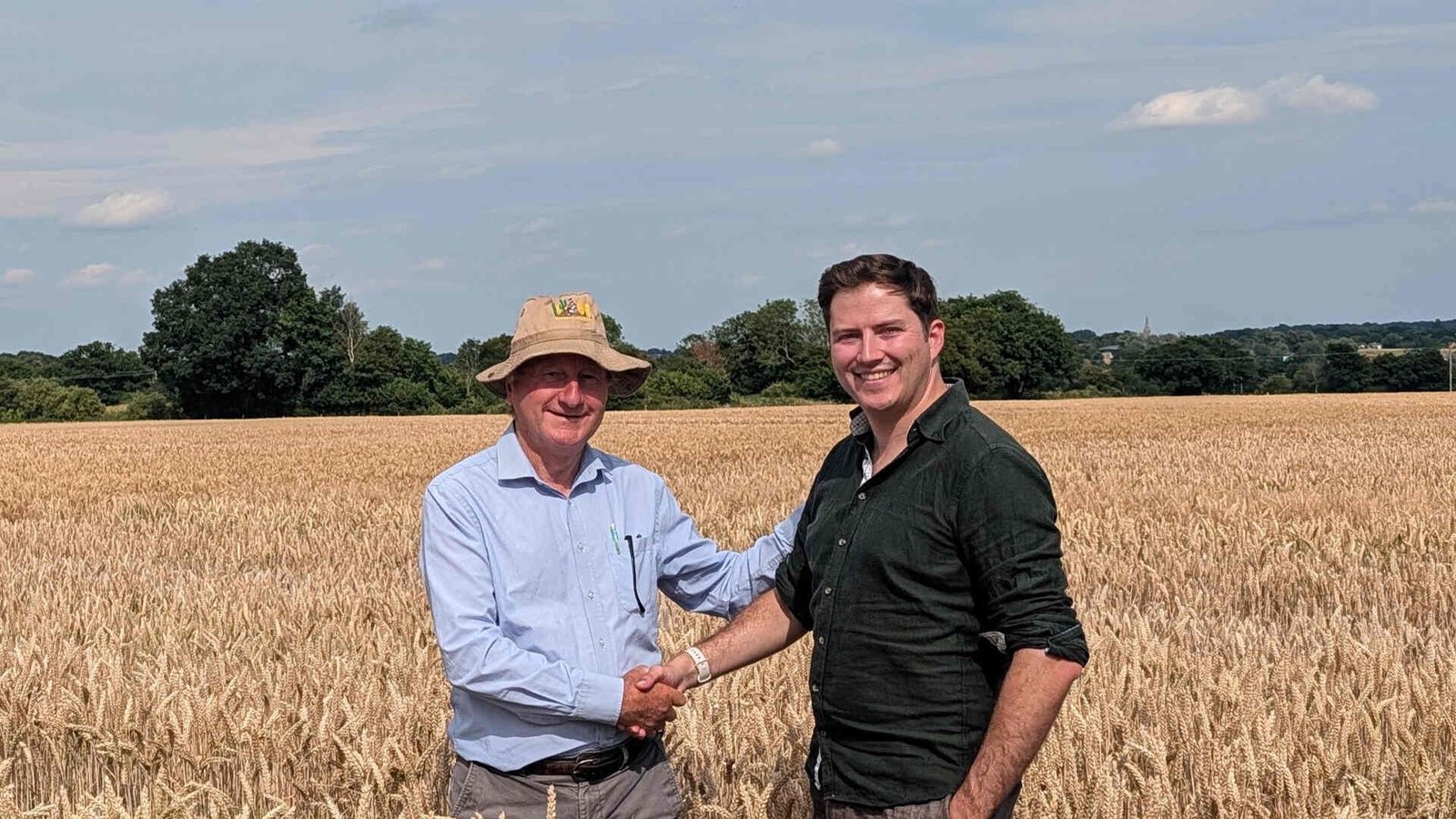
Wild Bioscience, the University of Oxford spinout focused on crop improvement, has acquired independent wheat breeder F1 Seed Ltd, bringing together an AI-driven biotechnology platform and an established UK wheat breeding pipeline.
The deal turns Wild Bio into a fully integrated seed company, covering trait discovery, genetic improvement, breeding and delivery of new varieties to farmers. F1 Seed, led by veteran wheat breeder Bill Angus, contributes more than a decade of germplasm development and breeding expertise, while Wild Bio brings evolutionary biology, gene editing and machine-learning tools designed to identify useful plant traits.
The combination is aimed at one of the most persistent problems facing British arable farming: wheat yields have shown little improvement for roughly three decades. At the same time, higher input costs and increasingly volatile weather are putting additional pressure on farm economics. Wild Bio points to two consecutive dry and hot springs in England in 2025 and 2026, with 2025 recorded as the driest spring in more than a century and 2026 the warmest on record.
The company says the impact is already visible in farm performance. UK wheat yields in 2025 were about 13% below the 10-year average, while climate modelling indicates that parts of England's wheat-growing regions could lose 10% to 25% of their productive potential over the next two decades. With around one-third of UK farms currently loss-making and considering whether to leave the industry, improving crop performance has become an increasingly important commercial issue.
Wild Bio's technology is designed to search plant biology for solutions that evolution has already produced under difficult growing conditions, including drought, heat and flooding. The company uses biological datasets and AI and machine-learning tools to identify genetic patterns associated with desirable traits, which can then be targeted through precision breeding.
The acquisition gives Wild Bio the breeding infrastructure needed to turn those discoveries into commercial wheat varieties. By bringing precision breeding and conventional breeding capabilities under one business, the company expects to move more quickly on traits linked to yield, yield stability and disease resistance while tailoring varieties to UK growing conditions.
The move also has implications for Britain's domestic seed industry. Wheat is the UK's largest arable crop and typically contributes around £3 billion to the economy, but its genetics and seed markets have historically been heavily influenced by subsidiaries of international agricultural companies. Wild Bio's strategy is to develop traits and varieties within the UK and for British growers, giving the company a more direct role in a crop that is central to domestic food supply.
Regulatory changes in England are also creating a route for precision-bred crops. The Genetic Technology (Precision Breeding) Regulations came into force in November 2025, establishing a framework for targeted genetic changes that could potentially have been achieved through conventional breeding. Wild Bio sees the framework as an opportunity to bring its AI-led discovery and precision-breeding capabilities into commercial agriculture.
Ross Hendron, Co-Founder and CEO of Wild Bio, said the integration with F1 Seed gives the company the capabilities required to develop wheat varieties around the traits growers need, rather than treating trait discovery and breeding as separate activities.
Bill Angus, Founder and Director of F1 Seed, brings two decades of experience running major UK wheat breeding programmes at Nickerson and Limagrain. He said the combination of new traits with established UK germplasm could accelerate the next phase of wheat breeding.
The acquisition also marks a strategic shift for Wild Bio beyond technology development and licensing. Stuart Harrison, Chief Business Officer at Wild Bio and a former Syngenta executive, said the deal transforms the company into a full seed business while retaining the speed and flexibility of a startup.
For Wild Bio, the immediate opportunity is to apply its technology to a market where stagnant productivity, climate pressure and thin farm margins have created a clear demand for better-performing varieties. The company now has both the genetic discovery platform and breeding pipeline to pursue that opportunity directly.