India’s push for edible-oil self-sufficiency is raising a difficult question: can the country expand domestic palm oil production without importing the environmental costs associated with conventional palm cultivation? In this exclusive AgroSpectrum interview, Murli Dhar, Director – Sustainable Agriculture, WWF-India, argues that the answer lies in science-led expansion, rigorous environmental risk assessments and stronger safeguards for water resources, biodiversity and local livelihoods. He distinguishes the land-use challenges associated with imported palm oil from the resource-management risks of domestic cultivation, while stressing that traceability alone cannot guarantee responsible sourcing. Dhar also makes a compelling case for collective action by refiners, traders and consumer brands to turn deforestation-free sourcing from a voluntary commitment into a supply-chain priority. Equally significant is his position on who should pay for sustainability: companies making sustainability claims must bear the associated costs of verification, certification and reporting rather than passing the entire burden to farmers.
With India targeting greater edible-oil self-reliance by 2047, the conversation examines how policy, industry accountability and sustainable farming practices can shape a credible Indian palm-oil model. The central message is clear: production growth cannot come at the expense of ecological resilience, and sustainability must deliver value for both farmers and the environment. Read the full interview for an incisive perspective on reconciling India’s edible-oil ambitions with the demands of responsible agriculture.
India wants to reduce its dependence on imported edible oil while simultaneously raising the sustainability bar for palm oil. Is this a genuine strategic opportunity, or are we simply shifting environmental risks from Southeast Asia to India ?
India's situation differs significantly from that of importing countries when it comes to environmental risks and development priorities. The country's strategy aligns with the Viksit Bharat 2047 vision, which aims to strengthen India's self-sufficiency in edible oils and reduce reliance on imports. Achieving this long-term objective will require a gradual, well-planned expansion of domestic oilseed and palm oil production, while ensuring environmental risks are carefully managed. However, expansion must be undertaken in a responsible and scientifically informed manner, balancing the goals of reducing edible oil imports and safeguarding environmental sustainability. The objective is not merely to increase production, but to do so through a transformation pathway that minimises ecological and social risks. For example, Andhra Pradesh currently contributes more than 80 per cent of India's crude palm oil production, making it a key state in the country's palm oil sector. The Government of India has set an ambitious target to increase crude palm oil production from approximately 11.2 lakh tonnes to 28 lakh tonnes by 2030, with expansion focused on regions that are agro-climatically suitable for oil palm cultivation.
At the same time, robust performance indicators and monitoring systems need to be established to assess environmental and social risks, particularly in ecologically sensitive and biodiversity-rich landscapes. Introducing a non-native crop into new regions requires careful evaluation of potential impacts on ecosystems, water resources, biodiversity, and local livelihoods. This is where science can play a critical role. Risk assessment models, scenario analysis, and predictive tools can help policymakers and practitioners understand potential outcomes before large-scale expansion takes place. If risk assessments indicate that environmental impacts are likely to exceed manageable limits, alternative strategies and mitigation measures should be adopted to ensure sustainable development.
Even as domestic production expands, India will continue to rely on imports to meet a portion of its edible oil demand. However, the country is increasingly raising the bar on sustainability and due diligence. The objective is not to shift environmental risks elsewhere but to manage them responsibly through evidence-based planning, sustainable production practices, and continuous monitoring. In this way, India can work toward self-sufficiency in edible oils while maintaining a strong commitment to environmental stewardship and sustainable development by 2047.
Imported palm oil and Indian-grown palm oil represent two very different sustainability problems. Why has the debate failed to sufficiently distinguish between deforestation embedded in global supply chains and resource-use risks at the farm level ?
In India, the situation differs somewhat from that in major palm oil-producing countries. Much of the recent expansion in oil palm cultivation has occurred through shifts within existing agricultural land use, with farmers transitioning from crops such as rice or fruit orchards to oil palm. In contrast, concerns in several exporting countries are often linked to broader land-use changes, including the conversion of forests and other natural ecosystems for agricultural production. Palm oil accounts for approximately 35-40 per cent of the global edible oil supply, making it one of the most important vegetable oils in the world. Given its significant share in the global edible oil market and the rapid land-use changes seen in some producing regions, it is understandable that debates continue regarding its environmental and social impacts.
However, it is important to distinguish between global and local contexts. While the broader debate surrounding palm oil reflects both its significant contribution to the global edible oil supply and concerns over the environmental impacts of its expansion in certain regions, the nature and magnitude of these impacts can vary considerably across countries. In India, the impacts are generally more localised and often linked to resource management, water availability, biodiversity considerations, and landscape-level planning rather than large-scale land conversion.
For imported palm oil, the leverage sits largely with Indian buyers. What would it take for India’s major refiners, traders and consumer brands to collectively make deforestation-free sourcing a commercial requirement rather than another voluntary sustainability commitment ?
Voluntary sustainability standards are primarily a mechanism for providing assurance to buyers that their supply chains are free of deforestation and other environmental risks. However, voluntary standards are only one of several approaches that can be used to drive sustainable production practices. An equally important approach is the formation of coalitions of buyers that collectively engage with producing countries and communicate clear expectations regarding environmental safeguards. Through coordinated action, buyers can encourage governments, producers, and industry stakeholders to adopt policies and practices that ensure palm oil production and exports do not come at the expense of forests, biodiversity, or other critical natural ecosystems.
Given the scale and market influence of major palm oil buyers, collective action has significant potential to shape production practices in producing countries. By aligning sustainability requirements, investment decisions, and procurement policies, buyer coalitions can create strong incentives for responsible production, improved traceability, and compliance with environmental safeguards. In this regard, WWF-India has co-founded the India Sustainable Palm Oil Coalition (ISPOC) in partnership with key stakeholders. The coalition's objective is to bring together actors across the palm oil value chain and promote the sustainable production, sourcing, and consumption of palm oil in India.
The coalition has demonstrated encouraging results by providing a collaborative platform for stakeholders to address key supply chain challenges and opportunities. It has also played an important role in raising awareness and encouraging businesses, buyers, and consumers to adopt sustainable practices and strengthen sustainability commitments within the palm oil supply chain.
Through collective action and stakeholder engagement, the coalition continues to support efforts towards building a more responsible, transparent, and sustainable palm oil sector in India.
On domestic plantations, the responsibility shifts from corporations to farmers and local institutions. How do you enforce responsible use of fertilisers, pesticides and water when the farmer is also under pressure to maximise yield and income ?
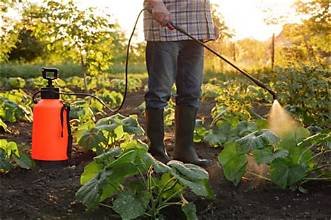
The responsible use of resources, including fertilisers, pesticides, and water, can help farmers optimise input use and improve production efficiency. Rather than simply focusing on increasing income through higher production, the objective should be to reduce unnecessary input costs while maintaining or improving productivity. This approach can ultimately enhance farm profitability by lowering farmers' investments and increasing their net returns.
In India, several processors and value chain actors are supporting farmers through advisory services, training, and technical guidance on the optimal use of resources. These efforts help farmers adopt more efficient agricultural practices, improve resource-use efficiency, and reduce environmental impacts associated with excessive input use. WWF’s Sustainability standards globally show that producers are getting benefits while complying with the requirements.
India is promoting oil palm as part of its edible-oil self-reliance strategy. Where, in your assessment, should the country draw the line between expanding domestic production and protecting water-stressed regions, biodiversity and long-term soil health?
India needs to leverage its existing national missions and flagship programs to simultaneously accelerate edible oil self-sufficiency and ensure that palm oil expansion is undertaken in a sustainable manner. Achieving these dual objectives will require a coordinated approach that integrates agricultural productivity, natural resource management, and environmental safeguards. Several government initiatives can play an important role in supporting sustainable palm oil development. For example, the Pradhan Mantri Krishi Sinchayee Yojana (PMKSY) can help improve irrigation efficiency and water-use management in palm-growing regions, while the Soil Health Card Scheme can support farmers in making informed decisions on nutrient management and soil fertility. These interventions can help soptimise resource use, reduce input costs, and improve long-term sustainability.
At the same time, the expansion of oil palm cultivation should be aligned with broader conservation and sustainability objectives. Programs such as the National Mission on Natural Farming (NMNF) can contribute to the conservation of agro-biodiversity, enhancement of soil health, and promotion of environmentally responsible farming practices. Integrating palm oil development with initiatives focused on soil conservation, water management, and sustainable agriculture will help ensure that productivity gains do not come at the expense of ecological sustainability.
By leveraging these existing schemes and policy frameworks, India can create a more balanced pathway for oil palm development, one that supports the country's goal of edible oil self-sufficiency while conserving natural resources, protecting biodiversity, and promoting climate-resilient agricultural landscapes.
Traceability has become the centrepiece of responsible palm-oil sourcing. But does knowing exactly where the oil came from actually guarantee that it was produced responsibly? What should companies be measuring beyond traceability?
Traceability, by itself, is not a guarantee of sustainability. It primarily provides visibility into the supply chain by identifying the geographic origin of raw materials and the sourcing areas from which products are supplied. While this is an important first step, traceability alone does not address the environmental or social challenges associated with production.
Companies need to go beyond traceability and take a more proactive role in promoting sustainable supply chains. Once sourcing regions have been identified, businesses can collaborate through joint initiatives to better understand the environmental and social risks present in those landscapes. This may include assessing issues such as deforestation, biodiversity loss, water stress, greenhouse gas emissions, labour conditions, and the livelihoods of local communities.
There is a fundamental economic question here: who should pay for sustainable palm oil—the farmer, the processor, the consumer or the global buyer? And can sustainability requirements work if the additional cost is pushed entirely down to farmers?
This debate has been ongoing for a long time. From my perspective, if a company chooses to make claims regarding sustainable sourcing, deforestation-free production, carbon reductions, or compliance with a particular standard, then it is reasonable that the company owning and benefiting from those claims should bear the associated costs of verification, certification, traceability, or reporting. In many cases, producers are not the ones making such claims to consumers or markets. Their primary role is to grow and supply the raw material. Therefore, passing the entire cost burden of compliance, certification, or assurance systems onto producers may not be equitable, particularly for smallholder farmers who often have limited financial resources.
A more balanced approach would be for supply chain actors, especially brands, retailers, and downstream companies that benefit from sustainability claims and market differentiation, to share or absorb a significant portion of these costs. This would help ensure that sustainability requirements do not become a financial burden on producers while still enabling the supply chain to meet its environmental and social commitments. Looking ahead five to ten years, what would a genuinely credible Indian palm-oil model look like—one that reduces import vulnerability, gives farmers a viable crop, and does not reproduce the environmental costs associated with conventional palm-oil expansion elsewhere?
As mentioned earlier, the Government of India (GoI) already has a clear roadmap for achieving greater self-sufficiency in edible oils, and it is important that this strategy remains consistent and focused. At this stage, the priority should be to align palm oil expansion efforts with existing nature-based and sustainability-focused government programs to ensure that production growth is balanced with environmental stewardship. In particular, greater emphasis should be placed on leveraging schemes related to natural resource management, biodiversity conservation, sustainable agriculture, water-use efficiency, and landscape restoration. These initiatives can help ensure that the expansion of palm cultivation is undertaken responsibly and in a manner that safeguards ecological integrity.
At the same time, robust risk assessment and modelling should be undertaken in India's most environmentally sensitive and vulnerable regions. Scientific risk modelling can help identify potential impacts on biodiversity, water resources, ecosystem services, and local livelihoods before large-scale expansion occurs. Such an approach would enable policymakers and stakeholders to develop targeted mitigation measures and make informed decisions based on evidence.
-- Suchetana Choudhury (suchetana.choudhuri@agrospectrumindia.com)