Taiwan is preparing to export breeding cattle to the Philippines for the first time after Manila approved imports, opening a new avenue for agricultural cooperation between the two economies and creating an opportunity to strengthen the Philippines’ underdeveloped dairy sector.
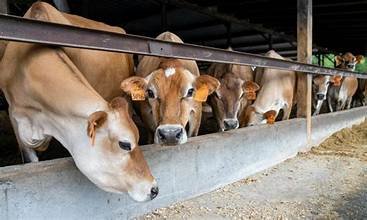
The approval, announced by Taiwan’s Animal and Plant Health Inspection Agency, follows two years of negotiations over animal health requirements and export quarantine certification. The agreement centres on Holstein cattle selectively bred in Taiwan to withstand hot, humid conditions while retaining the high milk yields associated with the dairy breed.
For the Philippines, the move addresses a structural weakness in its dairy supply chain. The country produces less than 5 per cent of its domestic milk requirements, according to Taiwan’s Livestock Research Institute, leaving a substantial gap between local production and consumption. Improving the productivity and suitability of its dairy herd is one potential route to narrowing that deficit.
The export approval also offers Taiwan an opportunity to demonstrate the commercial value of its livestock breeding expertise beyond its domestic market.
Heat-adapted Holsteins offer a different approach to tropical dairying
Holsteins originated in the Netherlands and the adjoining German-Danish border region and are widely known for their high milk production. However, conventional dairy cattle can face challenges in tropical environments, where heat and humidity affect animal comfort, productivity and management requirements.
In many tropical Asian markets, farmers have traditionally relied on indigenous cattle and heat-tolerant zebu breeds. While these animals are better adapted to local conditions, they generally produce less milk than specialised dairy breeds.
Crossbreeding and selective breeding offer a way to balance these competing requirements. Taiwan’s Livestock Research Institute has worked to adapt Holsteins to hot, humid conditions while maintaining milk production, potentially making the animals more suitable for tropical dairy operations.
Livestock Research Institute Director Huang Chen-fang described the achievement as an important milestone for Taiwan’s dairy industry. The Philippines’ interest in the cattle reflects a shared climatic challenge and the need for breeding stock capable of performing under tropical conditions.
Two-year process clears the way for exports
Taiwan applied to export breeding cattle to the Philippines in 2024, with Philippine officials inspecting local farms in November that year. Manila approved Mei-gui Ranch in Tainan and Ho-sheng Ranch in Changhua County for live cattle exports in May 2025, according to Animal and Plant Health Inspection Agency Deputy Director-General Fu Hsueh-li.
The two sides subsequently negotiated animal health requirements for export quarantine certificates, with assistance from the Taipei Economic and Cultural Office in the Philippines. The latest approval clears a key regulatory hurdle for Taiwan’s first breeding-cattle exports to the country.
The agreement’s commercial significance will depend on the scale of shipments, the cost of importing and maintaining the animals, and the ability of Philippine dairy farms to support productive herds. Access to suitable breeding stock alone will not close the country’s milk supply gap; feeding systems, veterinary services, farm management, breeding programmes and reliable milk collection and processing infrastructure will also matter.
Livestock technology could widen the opportunity
Taiwan’s ambitions extend beyond live animal exports. Huang said the Livestock Research Institute also hopes to export automated equipment, including farm-management robots, to the Philippines.
Such technology could support more systematic herd monitoring and farm operations as dairy producers seek to improve productivity. If breeding stock and farm technology are developed as complementary offerings, Taiwan could potentially build a broader agricultural export relationship with the Philippines. The first cattle shipments will mark an important milestone, but the longer-term test will be whether the breeding stock and associated technologies can help Philippine dairy farmers raise milk output economically under local conditions.