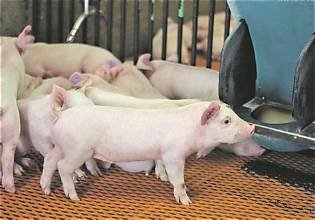
Brazil’s agricultural research agency Embrapa has begun research into gene-edited pigs that could be less susceptible to African Swine Fever (ASF), opening a potential new front in the fight against one of the most damaging diseases facing the global pig industry.
Led by Embrapa Pig and Poultry, the project is currently at an early laboratory stage. Researchers are first editing pig cells to investigate whether specific changes to genes involved in the interaction between pigs and the ASF virus can alter the cells’ response to infection. If the results are promising, the work could eventually move to embryos and, later, gene-edited animals.
Brazil has remained free of ASF since the early 1980s, making prevention of the disease’s reintroduction a strategic priority for its pork industry. For Embrapa, developing the scientific capability before the disease becomes an immediate domestic threat could provide another layer of preparedness for the country’s pig sector.
Looking for genetic weak points in ASF infection
The research is focused on understanding how the ASF virus interacts with pig cells and whether that interaction can be disrupted through highly targeted genetic changes.
The team is using the CRISPR/Cas gene-editing system to modify predetermined sites in DNA. Among the initial targets are SLA-DMA and SLA-DMB, genes that previous research has identified as potentially important in the interaction between pigs and ASF virus.
“We can select a candidate, modify it and ask: does this change affect the cell’s response to the virus?” says Dr Mariana Groke Marques, the researcher leading the project.
The objective is not simply to identify a gene associated with resistance, but to understand several points at which the virus and host interact. Researchers are already considering additional genetic targets and, at a later stage, could investigate whether combinations of favourable genetic changes produce a stronger effect.
“Rather than assuming that modifying a single gene will be the solution to a disease as complex as ASF, we want to identify different points in the interaction between the virus and the host and determine whether combining these changes can produce a pig that is less susceptible to the disease,” Marques says.
From cell cultures to potentially gene-edited pigs
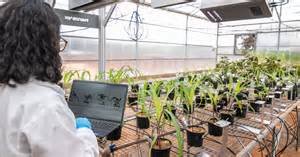
The project is still focused on building and refining the laboratory platform needed for the work. Embrapa has established pig fibroblasts in culture and conducted computational analyses to identify DNA sites that could be modified.
The researchers are adapting polyethyleneimine, or PEI, a technology previously used by the Embrapa team to introduce genetic material and generate transgenic cells and embryos. Applying the technique to gene editing could reduce reliance on some commercial solutions while creating a platform that could eventually support research into other traits related to pig health and disease resistance.
But the scientific path remains long. Researchers have not yet demonstrated that the targeted genetic changes make pig cells resistant to ASF. The immediate task is to establish that the intended edits can be successfully introduced and then determine whether the modified cells behave differently when exposed to the virus.
Only if those experiments produce positive results would the research move towards embryos and subsequently gene-edited animals.
Commercial pigs remain a distant prospect
Even successful laboratory results would not translate quickly into pigs on commercial farms. Researchers would first need to establish that the genetic modifications are effective and safe, while ruling out unintended effects on biological functions, development, reproduction and animal performance.
Regulatory requirements would add another layer, particularly for a technology involving gene-edited livestock. Consumer acceptance and the position of importing markets would also influence whether such animals could ultimately enter commercial production.
“There is no estimate yet for when pigs carrying these traits could reach commercial farms,” the research team indicates, reflecting the early stage of the programme.
For Embrapa, the benchmark is therefore broader than disease resistance alone. Any resulting animal would need to remain healthy and perform at least as well as conventional pigs while gaining a meaningful advantage against ASF.
“The aim is to produce a healthy animal that has a real advantage against ASF without the alteration having a detrimental effect on other characteristics. Its performance must be at least as good as that of non-edited animals,” Marques says.
A new layer of biosecurity
Gene editing would not replace conventional biosecurity, surveillance or disease prevention. Instead, it could eventually add a biological layer of protection built into the animal itself. “The difference is that we would also have a protective characteristic linked to the animal itself,” Marques says.
That possibility gives the research significance beyond Brazil’s immediate ASF status. The country’s disease-free position provides researchers with an opportunity to develop and test the underlying technology before an outbreak creates pressure for an emergency response.