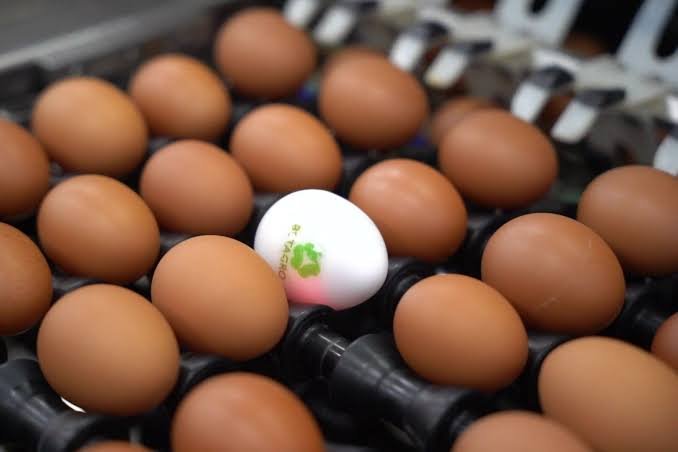
Thailand-based integrated food company Betagro has introduced SPY EGG, a smart monitoring device designed to detect physical impacts and vibrations throughout egg production and distribution. The technology aims to reduce product damage, improve handling efficiency and minimise food waste, with the company estimating that it could prevent losses equivalent to approximately 8.7 million eggs annually.
Developed using biomimetic technology, smart sensors and the Internet of Things (IoT), SPY EGG replicates the physical characteristics of a natural egg. Weighing between 65 and 75 grams, the device travels alongside real eggs through grading, sorting, packaging and transportation processes to identify conditions that could cause damage.
The technology converts physical impacts, vibrations and movement into measurable data, enabling operational teams to identify vulnerable points in handling equipment and distribution systems.
Smart monitoring targets egg handling losses
According to Betagro, handling-related damage accounted for more than 4 per cent of eggs entering its distribution process in 2025, equivalent to approximately 64 million eggs annually and representing losses exceeding $6 million.
The company identified several sources of damage across its supply chain, including mechanical impacts during grading and sorting, transportation-related vibrations and excessive pressure during packaging and loading. Using SPY EGG under actual operating conditions, Betagro identified six critical risk points in its conveyor and handling systems. These included conveyor belt junctions, mechanical transfer points and areas where eggs experienced excessive pressure or impact.
The findings are being used to improve equipment settings and handling procedures, helping reduce the risk of damage before products reach consumers. Betagro estimates that these improvements could prevent losses of approximately 8.7 million eggs annually, generating potential savings exceeding $1.05 million per year. The company also projects a return on investment of up to seven times.
Combining biomimetic technology with IoT
SPY EGG was developed through collaboration among three Betagro teams: Material Science and Technology, Automation and IoT Support, and the Egg Collection Center. The teams combined expertise in materials engineering, automation and digital technology to create an artificial egg capable of replicating the physical characteristics and shock response of natural eggs.
Equipped with miniature sensors, embedded electronics and data-processing algorithms, the device records handling conditions throughout the production and distribution chain. This information enables Betagro to assess machinery performance, identify potential operational weaknesses and make targeted improvements to its egg handling systems.
Reducing food waste and environmental impact
Beyond operational efficiency, Betagro expects SPY EGG to support its sustainability objectives by reducing food waste and conserving resources used in egg production.
Lower egg losses could reduce the unnecessary consumption of feed, water and energy associated with producing, processing and transporting eggs that cannot ultimately be sold. The company estimates that the technology could reduce greenhouse gas emissions by approximately 800 tonnes of carbon dioxide equivalent annually.
SPY EGG also received recognition at Thailand's SET Awards 2026 in the Outstanding Innovative Company Awards category. The development reflects Betagro's increasing use of digital monitoring and engineering technologies to improve food production efficiency, reduce supply chain losses and support more sustainable livestock operations.