In 2024, Verra did something carbon registries rarely do: it went back through its books and invalidated 37 rice methane projects, cancelling about 4.5 million credits. According to an analysis by RMI, those credits represented 99.9 per cent of all rice credits ever issued. Many came from projects in China that had assumed paddies would otherwise have been continuously flooded, a baseline that flattered the reductions. The rice carbon market, in effect, restarted from zero.
Two years on, the money has come back with a vengeance. In April 2026, Amazon agreed to buy about 685,000 tonnes of carbon dioxide equivalent from The Good Rice Alliance in India, a deal reported at US$30 million. In July, the Singapore-based platform Rize closed a US$31 million Series B. In September, Mitti Labs signed a four-year offtake with Google for one million credits from Indian paddies. Japan’s trading houses are building projects in the Philippines, Vietnam and Bangladesh under the government’s Joint Crediting Mechanism (JCM).
The agronomy is not in dispute. The question is whether a credit generated on a one-hectare plot in the Mekong Delta or Telangana can be measured with enough confidence to be sold to a technology company’s sustainability team, and whether enough of the money reaches the farmer to change behaviour in the first place. This is the integrity test, and the market is sitting it in public.
Why paddies are a methane problem worth solving
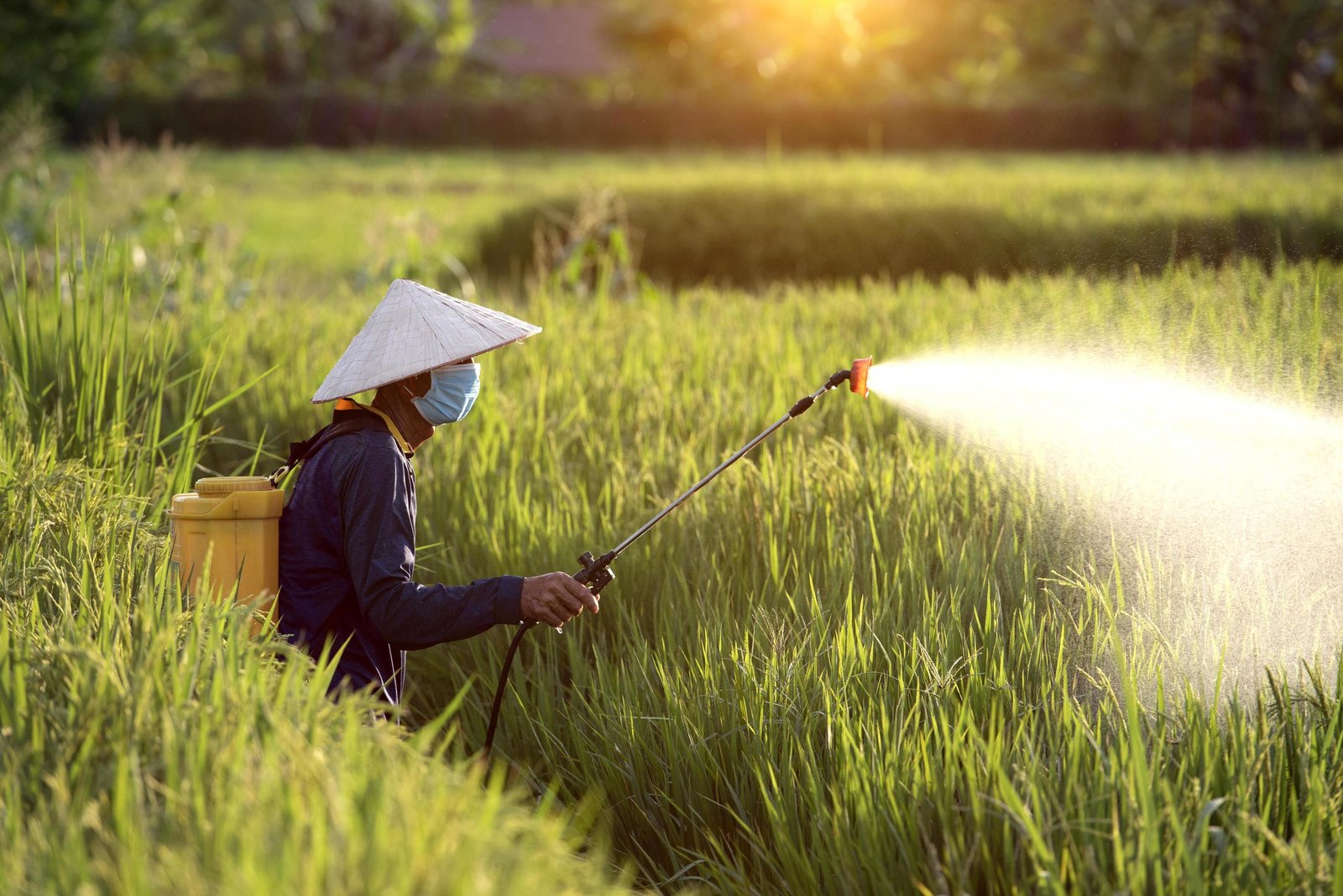
Flooded rice fields starve soil of oxygen, which allows methane-producing microbes to thrive. The Global Methane Hub puts rice paddies at around 8 per cent of human-caused methane emissions, and methane is a far more potent short-term warming agent than carbon dioxide. Asia grows the overwhelming majority of the world’s rice, so this is overwhelmingly an Asian abatement opportunity.
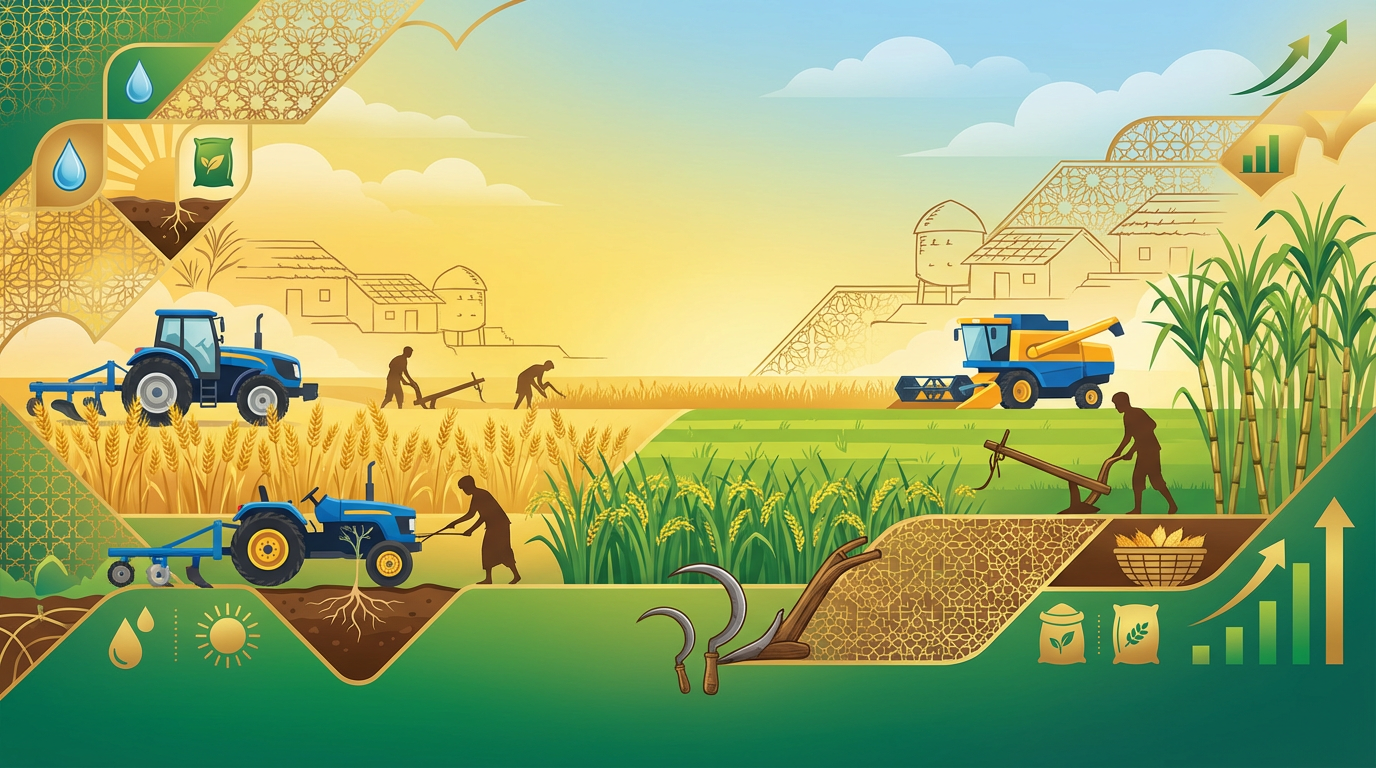
The main tool is alternate wetting and drying (AWD), developed and promoted by the International Rice Research Institute (IRRI). Farmers let the water level fall to about 15 centimetres below the soil surface, monitored through a simple perforated tube, before reflooding. IRRI says AWD can cut methane by 30 to 70 per cent and water use by around 30 per cent without reducing yields. Direct-seeded rice, which avoids the long flooded nursery and transplanting stage, is a second lever increasingly bundled into projects.
That 30 to 70 per cent range is the first clue to the integrity challenge. The reduction depends on soil, climate, how many dry-down events actually occur and whether the field was really continuously flooded before. Two neighbouring farms can deliver very different results.
The new rulebook
The collapse of the old methodology forced a rebuild. Verra’s VM0051, Improved Management in Rice Production Systems, became active in 2025 with tighter additionality rules and more dynamic baselines; version 1.1 was revised in July 2026. On 12 August 2026, Verra announced that the Integrity Council for the Voluntary Carbon Market (ICVCM) had approved VM0051, meaning credits from compliant projects can carry the Core Carbon Principles label that many corporate buyers now require.
The consequences for supply are blunt. RMI estimates the newer methodologies will issue around 4 to 6 credits per hectare, against 12 to 15 under the old CDM approach. On 19 October 2026, Verra approved the first credits under VM0051 for an AWD project run by Core CarbonX Solutions in Telangana’s Suryapet district, which reports avoided emissions of more than 210,000 tonnes of CO2e.
Gold Standard runs its own rice methodology, and governments are building parallel systems. India’s Bureau of Energy Efficiency published a rice cultivation methodology for the Indian Carbon Market in June 2026, covering AWD, aerobic cultivation and the shift to direct seeding. Japan’s JCM approved a Philippine methodology for methane reduction through paddy water management in February 2025, and Tokyo and Hanoi signed an updated JCM memorandum in May 2026.
The measurement problem
Every rice credit rests on three claims: the farmer would have flooded continuously without the project, the farmer actually dried the field as reported, and the resulting methane reduction was correctly estimated. Each is harder at smallholder scale than it sounds.
Direct measurement uses closed chambers placed over the soil to capture gas, but it is expensive and, as RMI notes, poorly operated chambers can overestimate reductions. Most projects therefore lean on emission factors or process models calibrated against a limited number of field measurements. The Good Rice Alliance credits Amazon is buying are modelled with Regrow’s DNDC biogeochemical model, calibrated with IRRI field data and checked against satellite monitoring, with field officers recording geo-tagged visits several times a season. Mitti Labs says its platform combines satellite radar, remote sensing, biogeochemical models and flow meters.
Farmer logbooks, once the backbone of verification, are now treated sceptically. RMI flags them as unreliable and recommends satellite verification of flooding. Radar satellites can detect standing water through cloud cover, which matters in monsoon Asia, but resolving dry-downs on fields smaller than a hectare remains demanding.
Additionality is the subtler risk. In parts of Vietnam, the Philippines and India, farmers already dry fields because irrigation water is scarce or pumping is costly. Crediting them for a practice they would have adopted anyway is the quickest way back to the scandal of 2024.
Vietnam’s million hectares and the Japanese buyer
Vietnam is the market’s most ambitious test bed. Its programme for one million hectares of high-quality, low-emission rice in the Mekong Delta by 2030 targets 20 per cent less water, 30 per cent less chemical fertiliser and pesticide, and more than 10 per cent lower greenhouse gas emissions. Implementation has run ahead of schedule: more than 354,000 hectares were enrolled by the end of 2025 against an original target of around 180,000 hectares, AgTech Navigator reported, with participating farmers’ average income up 13.4 per cent. The programme estimates reductions of 3 to 4 tonnes of CO2e per hectare and piloted 11 measurement, reporting and verification (MRV) models in 2025.
The programme’s centre of gravity is low-emission rice and export branding, more than carbon credits; more than 5,000 hectares carried a “green rice” label. Carbon finance is arriving at the edges. Japanese developer Green Carbon has registered an An Giang project under VM0051 covering 116,000 hectares with expected reductions of about 590,000 tonnes a year, and in June 2026 announced a JCM-oriented project in Nghe An with Korea Investment Holdings.
Japan’s role as buyer is structural. The government targets cumulative JCM credit use of around 100 million tonnes of CO2 by fiscal 2030, Mitsui has noted, and demand is expected to rise as JCM credits become usable under Japan’s GX emissions trading scheme, which moved into full operation in April 2026. Mitsui announced an AWD project in Bangladesh with the Bangladesh Bondhu Foundation in February 2026. In the Philippines, Green Carbon and Shell Eastern Trading are developing a JCM project across about 50,000 hectares on Mindoro. In Thailand, Green Carbon’s demonstrations with three universities recorded average methane reductions of about 49 per cent, or roughly 2.97 tonnes of CO2e per hectare per season, though Thailand caps international transfers of credits at 3 per cent of total emissions.
Table: Rice decarbonisation programmes and projects across Asia
|
Country |
Programme or project |
Lead parties |
Scale reported |
Crediting route |
Status |
|
Vietnam |
One million hectares low-emission rice |
Government, IRRI support |
Over 354,000 ha enrolled by end 2025 |
National programme; MRV pilots |
Ahead of schedule |
|
Vietnam |
An Giang AWD |
Green Carbon |
116,000 ha; about 590,000 tCO2e a year expected |
Verra VM0051 |
Registered |
|
Vietnam, Indonesia |
Low-emission rice sourcing |
Rize |
17,000 farmers, over 50,000 ha |
Carbon among several revenue lines |
US$31m Series B, July 2026 |
|
India |
Good Rice Alliance |
Bayer, GenZero, Shell |
13,000 farmers, about 35,000 ha |
Verra VM0051 |
Amazon offtake of 685,000 tCO2e |
|
India |
Mitti Labs AWD |
Mitti Labs |
Over 100,000 ha |
Verra |
Google offtake of 1 million credits, 2027 to 2030 |
|
India |
Suryapet AWD |
Core CarbonX Solutions |
Over 210,000 tCO2e avoided |
Verra VM0051 |
First VM0051 credits approved, October 2026 |
|
Philippines |
Mindoro AWD |
Green Carbon, Shell |
About 50,000 ha |
JCM |
In development |
|
Bangladesh |
AWD methane reduction |
Mitsui, Bangladesh Bondhu Foundation |
Not disclosed |
JCM |
Announced February 2026 |
|
Thailand |
AWD demonstrations |
Green Carbon, three universities |
About 49% methane cut in trials |
JCM, Article 6 options |
Demonstration |
Where the money goes
The question developers are most reluctant to answer in detail is the one that will determine whether AWD actually spreads: what does the farmer receive?
Public data is thin. The Amazon and Good Rice Alliance deal implies an average of roughly US$44 per tonne (US$30 million across 685,000 tonnes), though offtake terms often include project finance and multi-year delivery, so this is not a spot price. Earlier industry analysis by Quantum Commodity Intelligence put legacy rice credits at US$5 to 12 a tonne and next-generation, remotely verified credits at US$20 to 25 in forward sales.
On the farmer side, the most transparent benchmark comes from Indian soil carbon rather than rice methane. Grow Indigo’s programme, which includes direct-seeded rice, released more than Rs 2.9 crore to 2,550 farmers in Punjab and Haryana in September 2026, between about Rs 3,000 and Rs 15,000 each, and offered farmers either an assured upfront payment or 75 per cent of net carbon revenue. A July 2026 proposal for India’s new rice carbon market argued that farmers should receive at least 60 per cent of net revenue, through an adoption payment, a seasonal performance payment and a final carbon dividend.
The illustrative breakdown below uses verified price and yield ranges to show how a credit’s value can be divided. The shares are an editorial model, not any developer’s disclosed terms.
Table: Where the money goes, illustrative split of one rice credit
|
Component |
Illustrative share of gross credit value |
At US$25 per tCO2e |
Notes |
|
Registry, validation and verification |
10% |
US$2.50 |
Fixed costs weigh heavily on small projects |
|
MRV technology (satellite, modelling, field audits) |
15% |
US$3.75 |
Higher under VM0051 than legacy methods |
|
Field operations and farmer training |
15% |
US$3.75 |
Field officer visits, AWD tubes, extension |
|
Developer margin, finance and sales |
20% |
US$5.00 |
Includes risk of non-delivery and buffer |
|
Farmer payment |
40% |
US$10.00 |
Below the 60% share some Indian experts propose |
|
Per hectare, at 4 to 6 credits |
|
Farmer receives about US$40 to 60 a season |
Editorial estimate |
At four to six credits a hectare, even a generous 60 per cent farmer share at US$25 a tonne yields US$60 to US$90 a hectare per season before any delays. That is meaningful but modest, and payments often arrive several seasons after the work is done, once credits are verified and sold. For many smallholders the stronger incentives are the ones Vietnam’s programme emphasises: lower pumping and input costs, more stable yields and access to premium export buyers.
The integrity test, scored
So can rice credits pass? The new methodologies have fixed the most egregious flaw, inflated baselines, and the ICVCM label gives buyers a defensible standard. The remaining weaknesses are additionality in regions where drying is already common, the precision of models extrapolated from thin field data, and benefit-sharing that is rarely disclosed.
The test, in other words, has moved from the methodology to the project. Buyers who want to avoid the 2024 headlines will ask for satellite-verified dry-down events at field level, independent ratings (BeZero Carbon has rated The Good Rice Alliance A on an ex-ante basis), and published farmer payment schedules. Developers who can provide all three will command a premium. Those who cannot will discover how quickly the market can rewrite its own history.
What to watch in 2027
- The volume and pace of credit issuance under VM0051, and whether the first CCP-labelled rice credits trade at a premium.
- Whether India’s Indian Carbon Market issues its first rice cultivation offsets and sets binding rules on farmer revenue sharing.
- Vietnam’s progress towards one million hectares and whether its MRV pilots translate into a national crediting system or JCM projects.
- First JCM credit issuances from Philippine, Bangladeshi or Vietnamese rice projects, and their use under Japan’s GX-ETS.
- Independent research on satellite detection of AWD dry-downs on sub-hectare plots, the technical linchpin of smallholder integrity.
- Any developer that publishes a full per-credit cost and farmer payment breakdown, which would set a disclosure benchmark for the sector.
Ankit Kankar | ankit.kankar@mmactiv.com