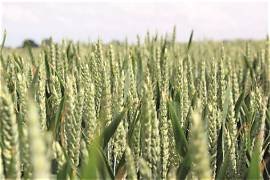

Sumitomo Chemical has launched TopGrain, a new biological crop input in Brazil designed to help soybean and corn crops better withstand adverse weather conditions while improving grain filling and yield performance.
Based on abscisic acid, TopGrain is positioned as an additional tool in crop management at a time when Brazilian farmers are confronting increasingly variable weather conditions and greater pressure to extract more productivity from each hectare. The product is designed to support the plant during critical stages of development, helping crops maintain performance when environmental conditions threaten yield potential.
Sumitomo Chemical said TopGrain can deliver yield gains of up to 161 pounds per acre in soybeans and up to 375 pounds per acre in corn. Based on average Brazilian yields during the 2025/26 season, the company estimates that these gains represent an improvement of close to 5 per cent in both crops.
The economics are central to the product’s positioning. For soybean growers, the additional cost of using TopGrain is equivalent to less than one bag of soybeans per hectare, while the cost for corn is slightly higher. Sumitomo Chemical argues that the potential yield improvement can therefore offset the additional input cost while providing farmers with another mechanism to protect yield potential under stressful growing conditions.
The product is not being positioned as a replacement for conventional crop protection products or fertilisers. Instead, Sumitomo Chemical sees it as a complementary input that can work alongside existing crop-management programmes. Luciano Jaloto, Marketing Director at Sumitomo Chemical in Brazil, described TopGrain as being similar to a “vitamin” for crops, helping plants make more effective use of the other inputs applied during the production cycle.
The underlying proposition reflects a broader shift in agricultural inputs towards technologies that seek to improve the efficiency of existing farm programmes rather than simply add another layer of crop protection. By supporting plant processes associated with grain filling and stress response, biological inputs such as TopGrain are increasingly being evaluated for their ability to help crops maintain productivity when temperature, water availability or other environmental factors become limiting.
For Brazil’s soybean and corn producers, the timing is particularly significant. Both crops operate at enormous commercial scale, meaning even relatively modest improvements in yield can have a material impact on farm economics. At the same time, weather volatility can quickly erode yield potential, making crop resilience an increasingly important consideration alongside disease, insect and weed management.
Sumitomo Chemical initially introduced TopGrain in the United States, India and Brazil, establishing the product across three major agricultural markets. The company plans to expand its application across additional crops, including sugarcane, cotton and fruit, as it develops the technology for different production systems and crop requirements.
The broader rollout is part of Sumitomo Chemical’s ambition to expand its agricultural business in Brazil. The company aims to double the size of its Brazilian operation by 2030, with biological and complementary crop inputs forming part of a wider strategy to provide growers with technologies that combine productivity, crop resilience and more efficient use of farm inputs.
The launch also reflects a changing competitive landscape in agricultural inputs. Traditional crop protection and fertiliser products remain central to commercial farming, but growers are increasingly looking for technologies that can help crops manage stresses that cannot be addressed through conventional pest and nutrient management alone.
TopGrain’s commercial test, therefore, will be whether the promised yield gains consistently translate into stronger returns for farmers across different regions, seasons and growing conditions. If the technology can deliver reliable improvements in grain filling and yield while remaining economically viable, Sumitomo Chemical could use its Brazilian launch as a platform for a broader expansion of biological crop inputs across major agricultural markets.