Demand for battery-powered grounds maintenance equipment increased by 7.4 per cent in 2025, signalling a gradual shift towards electric solutions. However, no single technology can meet the requirements of every operating environment, and internal combustion engine-powered machinery continues to play an important role. This is the position of Comagarden, the gardening machinery manufacturers’ association within FederUnacoma, organiser of EIMA International, currently underway in Bologna.
Italy’s 119 provincial capitals collectively account for approximately 190 square kilometres of green space. According to Lorenzo Peruzzo, President of Comagarden, these areas encompass diverse environments, including woodlands, parks and gardens, each requiring machinery suited to its specific operating conditions.
“We need to reduce noise and harmful emissions, but the choice between battery-powered machinery and equipment with internal combustion engines should be determined by operational requirements rather than ideology,” Peruzzo said.
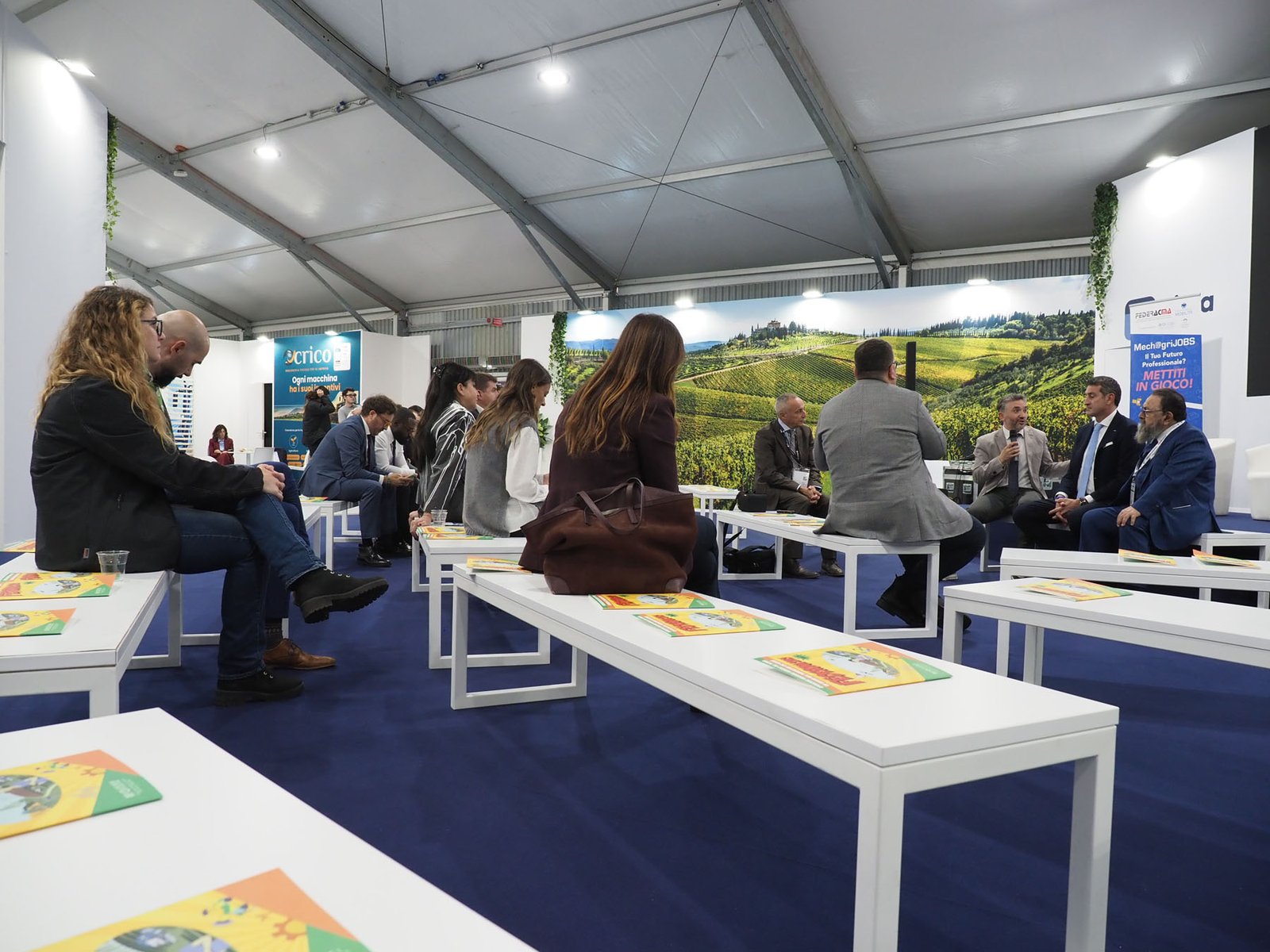
He made these remarks at the conference titled “EVA: Energy, Green Spaces and the Environment for the Cities of the Future”, organised by Comagarden in collaboration with Assoverde and CREA (Council for Agricultural Research and Economics).
Paolo Iacheri, President of Assoverde, highlighted the importance of applying the principle of subsidiarity, with sustainability initiatives and policy implementation driven by local authorities. He emphasised that environmental objectives must be balanced with operational productivity and compliance with labour regulations.
“Our aim is to reduce environmental impact, but all aspects must be considered, from productivity to compliance with labour regulations. Sustainability is fundamentally an ethical principle,” Iacheri said.
CREA, meanwhile, stressed the need to adopt a holistic approach to evaluating sustainability measures, taking into account their effectiveness alongside broader environmental considerations, particularly biodiversity.
Closer collaboration between businesses and institutions will be essential to strengthen the ornamental horticulture and nursery supply chain, enabling it to combine industrial production capabilities with environmental objectives and respond effectively to emerging challenges.
-Dipti Barve
-dipti.barve@mmactiv.com