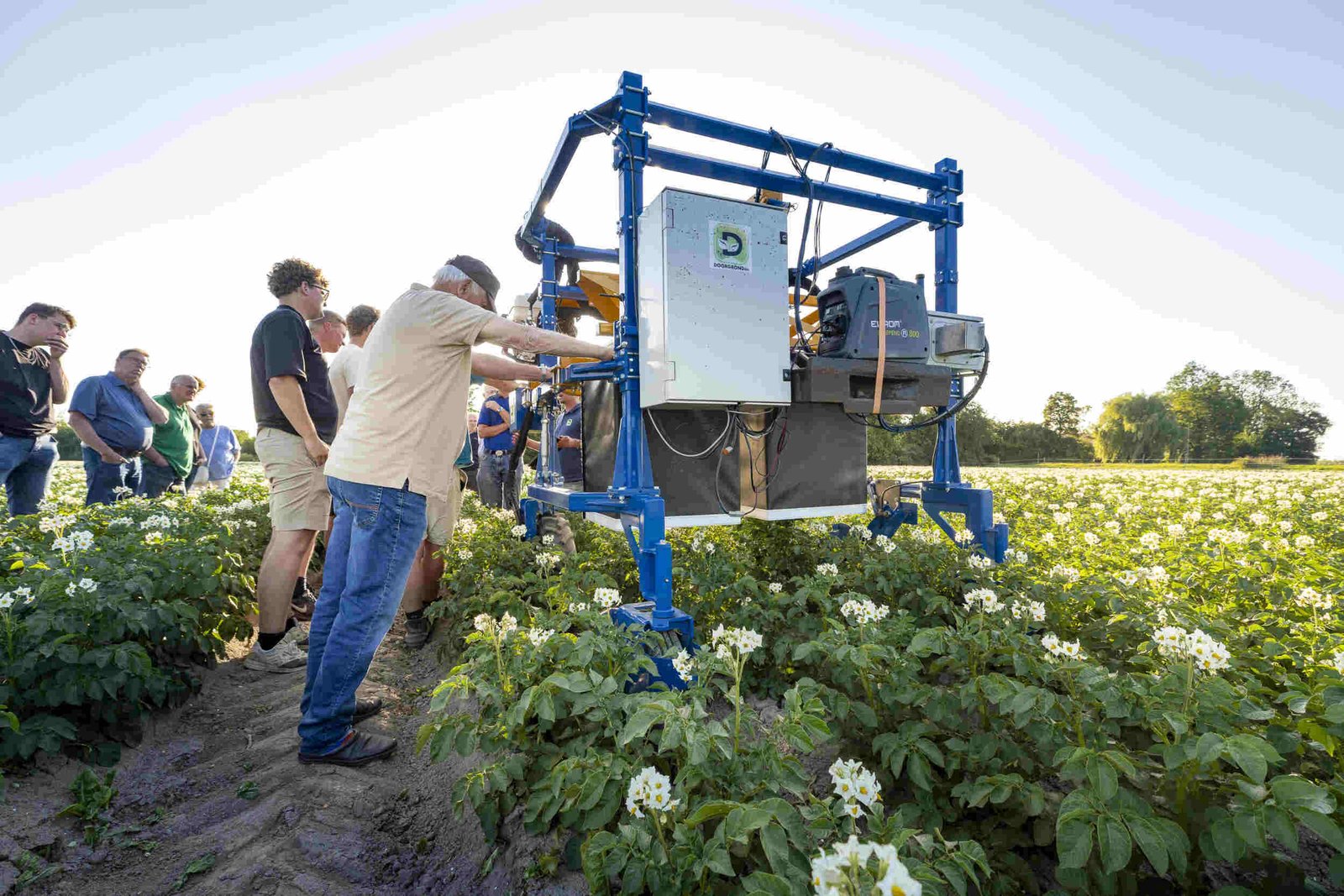
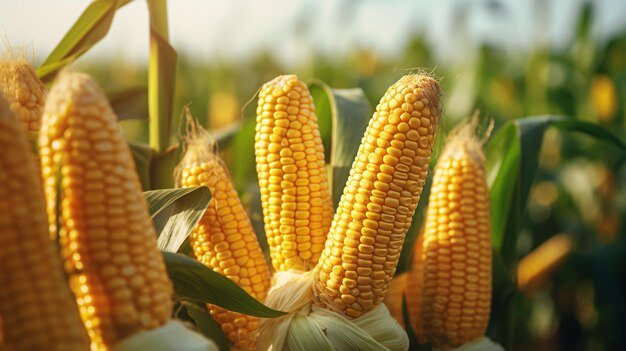
Beijing’s seed industry is taking its newest corn varieties out of the laboratory and into the field. At the 2026 Beijing Corn New Superior Varieties and Specialty Crop Varieties Demonstration and Observation Event, held on August 25 at the Beijing Crop Variety Trial and Demonstration Base, breeding experts, extension workers, large growers and seed-company representatives gathered to assess how 160 varieties are performing under real growing conditions.
The event was designed to provide something more practical than a catalogue of approved varieties. It gave growers and industry participants the opportunity to compare plant vigour, disease and lodging resistance, ear development, planting density and yield potential in one place. The objective, according to organisers, is to make variety selection more open, visual and evidence-led—allowing participants to “select varieties by observing crops” rather than relying only on trial data or marketing
The 160 entries were divided across four sections: 40 spring-sown common corn and silage-corn varieties; 30 new short-stature corn varieties; 50 genetically modified corn varieties; and 40 specialty-crop varieties, including upland rice, foxtail millet and sorghum. The display reflects the changing priorities of China’s seed sector. Yield remains central, but the industry is also placing greater emphasis on resistance, planting density, labour-saving traits, feed value, climate adaptability and crop quality.
The 40 conventional and silage-corn varieties formed the largest production-oriented section. They included varieties developed by institutions such as China Agricultural University, the Chinese Academy of Agricultural Sciences and the Beijing Academy of Agriculture and Forestry Sciences, alongside commercial seed companies including Beijing Lianchuang Seed Industry Co., Ltd., Zhongdi Seed Industry Co., Ltd. and Denong Seed Industry Co., Ltd.
Among the newly approved varieties being planted for the first time at the base were Zhongyu 749, Dedan 239 and Meijia 658. Their field performance is being evaluated for adaptability and yield under Beijing conditions. The event also included varieties that have already been grown in Beijing for several years and have shown more stable performance. Jingnongke 828, Zhongnongda 678 and Yufeng 303 were displayed to assess how they perform under this year’s weather and field conditions.
That distinction matters. Newly approved varieties may offer fresh genetic potential, but they still need to prove their value in commercial conditions. Established varieties may be less novel, but their yield stability and adaptability can provide growers with lower-risk planting choices.
The short-stature corn section drew particular attention. Thirty varieties were displayed, all developed with lower plant height, appropriate ear placement, stronger stalks and more developed root systems than conventional corn. Shorter plants can offer a practical advantage in areas exposed to strong winds or heavy rain. By reducing plant height and improving stem strength, breeders are seeking to lower lodging risk—the collapse or bending of plants that can reduce yields and complicate mechanical harvesting.
The plants were shown under a high-density planting condition of 5,500 plants per mu. That is equivalent to roughly 82,500 plants per hectare. According to the event briefing, the varieties maintained good ventilation and light penetration under dense planting. The breeding logic is straightforward. A more compact plant can shorten the internal distance nutrients travel and reduce the proportion of photosynthetic output used to maintain excess vegetative growth. More of the crop’s resources can then be directed towards ear development.
This does not mean every short-stature variety will automatically out-yield taller corn. Performance will still depend on planting density, soil fertility, water availability, local climate, disease pressure and crop management. But the category is attracting attention because it may combine higher-density planting with stronger lodging resistance and improved suitability for mechanisation.
The genetically modified corn section was another major feature of the demonstration. Fifty GM corn varieties were included, of which 23 had received approval, covering nine transformation events. The display was designed to evaluate yield, stability, resistance, stress tolerance and the effectiveness of the traits introduced through biological breeding.aixpoint Organisers said that compared with adjacent conventional control varieties, the GM corn plots showed intact leaves, cleaner plants and no visible insect damage or mould on the ears in the reported field observation.
The varieties are designed to reduce damage caused by insect pests and can potentially reduce insecticide use where the traits perform as intended. Their glyphosate tolerance can also make weed management less labour-intensive. Beijing’s Municipal Bureau of Agriculture and Rural Affairs had already recommended nine GM corn varieties in February 2026. The field demonstration expanded that representation and allowed participants to compare a wider group of products under the same conditions.
The exhibition is part of China’s wider move towards the commercialisation of biological breeding. The technology is being evaluated not only for its yield potential but also for whether it can improve pest control, reduce labour requirements and make production more predictable. However, commercial adoption will depend on more than field performance. Seed pricing, stewardship, regulatory compliance, grower awareness, pest-resistance management and market acceptance will all influence the speed and scale of deployment.
The final section focused on 40 specialty-crop varieties, including upland rice, foxtail millet and sorghum. The materials were introduced from major production areas in Hebei, Inner Mongolia and Shanxi. The aim was not solely staple-food production. The trials were also intended to identify varieties with market appeal and ornamental value that could support Beijing’s agricultural-tourism projects, leisure agriculture and landscape-farming initiatives. This reflects another dimension of the seed industry. Varieties can be chosen not only for yield or resilience, but also for appearance, local identity, processing potential, visitor appeal and suitability for higher-value niche markets.
Niu Qian, Chief of the Variety Regional Trial Section at the Beijing Seed Management Station, said the event was intended to create an open, intuitive, objective, comparable, credible and usable platform for variety selection. The field display, Niu said, was designed to show the real performance of new varieties and accelerate the practical application of seed-industry innovation. That is the central commercial value of such demonstrations. Breeding innovation is not complete when a new variety is approved. It must perform across different growing conditions, meet growers’ economic needs and fit into local production systems.
The Beijing trial base is increasingly becoming a bridge between these groups. By bringing breeders, seed companies, extension workers and farmers into the same field, it allows varieties to be tested not only for biological performance but also for practical suitability. The 2026 event shows how China’s seed sector is changing. Conventional high-yield corn remains important, but newer priorities are becoming visible: short-stature plants that can handle dense planting, GM varieties with insect-resistance and herbicide-tolerance traits, silage corn for livestock systems and specialty crops that can serve both agriculture and rural tourism.
The immediate test is the field season. The longer-term test is whether these varieties can help growers manage weather risk, labour shortages, pest pressure and the demand for higher productivity.
The event’s most important contribution may be its simplest one: putting the crop in front of the people who must ultimately decide whether to plant it.