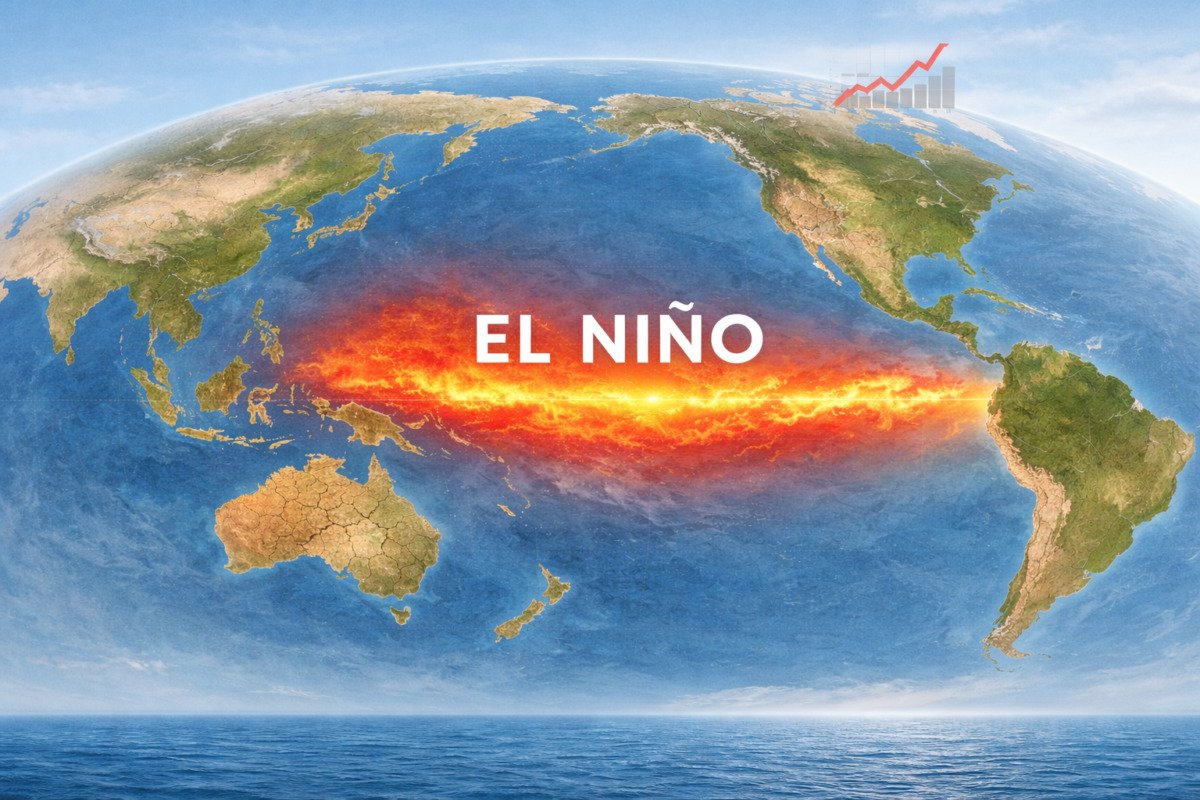
A climate phenomenon that disrupts rainfall and harvests could become another source of economic stress, as El Niño threatens to compound existing food and energy price pressures and prolong the inflation challenge facing governments and central banks.
Peter Verbaken, head of liquid commodities at APG, warns that the current El Niño event could have consequences extending well beyond agricultural markets. With the phenomenon expected to persist until early 2027, its effects on crop production and food availability could become more pronounced over the next six to 12 months.
Agricultural commodity prices have already risen by more than 20 per cent this year, Verbaken said. The concern is that the event’s anticipated peak remains ahead, leaving global food markets exposed to further supply disruptions and price volatility.
The timing matters. Harvests in the Southern Hemisphere, which are expected to face some of the more severe effects, could fall short of expectations by the first quarter of 2027. Existing inventories may cushion the initial impact, but they cannot necessarily compensate for a prolonged supply shortfall. Markets could then have to wait for the next Northern Hemisphere harvest to replenish supplies, potentially extending price pressures well into next year.
The implications reach far beyond commodity exchanges. Food accounts for approximately 14 per cent of the consumer basket used to calculate inflation, according to Verbaken. A sustained increase in agricultural prices could therefore feed directly into household expenditure, adding to the inflationary pressures already emerging from the energy shock associated with the conflict involving Iran.
The risk is not simply that food and fuel become more expensive. It is that a temporary increase in input costs develops into a more persistent inflation problem.
Central banks can often look through short-lived supply shocks when they expect prices to normalise. But the calculation changes when households and businesses begin to anticipate further increases. Workers may seek higher wages to compensate for rising living costs, while businesses pass on higher labour and input expenses to consumers. Those responses can entrench inflation even after the original supply disruption begins to ease.
This creates a difficult policy trade-off. Monetary authorities must distinguish between a temporary rise in prices caused by weather and energy markets and a broader inflationary process that could require a more forceful response. If expectations become entrenched, the economic consequences could extend well beyond food and agricultural commodities.
Climate change adds another layer of uncertainty. El Niño-related weather disruptions can interact with longer-term climatic shifts, intensifying drought in some regions and increasing the risk of extreme rainfall and flooding in others. Such conditions can damage crops, disrupt transport networks and complicate efforts to maintain reliable food supplies.
The humanitarian implications could be severe. Verbaken cited warnings that another 50 million people could face hunger under the scenario described. That projection should be read in the context of the specific assessment behind it, rather than as an established outcome of El Niño alone.
The central concern is the possibility of a feedback loop: adverse weather constrains agricultural output, tighter supplies raise food prices, and higher household costs add to inflation expectations. If energy prices remain elevated at the same time, the combined pressure could become harder to contain.
El Niño does not automatically produce a global inflation crisis. Its economic impact depends on the intensity and duration of weather disruptions, the crops and regions affected, available stocks and the ability of supply chains to adjust. But with agricultural markets already under pressure, a prolonged event could leave governments, central banks and vulnerable households facing a more complicated year ahead.
To read the original story click- https://apg.nl/en/publication/does-el-nino-contribute-to-a-perfect-storm-of-inflation/