Neela Biotech has raised £2.1 million in pre-seed funding to advance its technology for converting food, agricultural and forestry waste into feedstocks for sustainable aviation fuel (SAF). The Cambridge-based startup plans to use the capital to move from laboratory development towards a pilot-scale trial at a biogas plant over the next two years.
The funding comes as airlines and fuel producers face a persistent challenge in scaling SAF: the limited availability of suitable feedstocks and the high cost of producing alternatives to conventional jet fuel. Neela is developing a microbial process designed to turn a broader range of waste materials into fatty acids that can be used in hydroprocessed esters and fatty acids (HEFA)-based SAF production.
The round was led by climate investor Elbow Beach, which invested £1.5 million. Ascension, Cambridge Enterprise Ventures, Ventures Together and strategic angel investors also participated. Neela has additionally received grant funding from Innovate UK and the Henry Royce Institute and is part of the IAG Innovation programme.
SAF’s feedstock problem
SAF is a central component of the aviation industry’s efforts to reduce lifecycle emissions, but its commercial expansion remains constrained by cost and feedstock availability. HEFA, which converts waste oils, fats and other eligible lipid feedstocks into fuel, is the most established SAF production pathway. Its dependence on limited supplies of these materials, however, restricts the potential for expansion.
Neela estimates that around 95 per cent of current SAF production uses the HEFA pathway. While HEFA is generally among the less expensive SAF options, it remains more costly than conventional jet fuel. Emerging alternatives, including electricity-based e-SAF, face their own cost and infrastructure challenges.
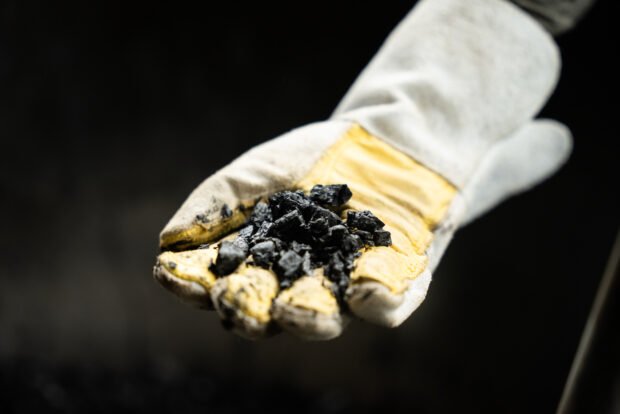
Neela’s strategy is to broaden the pool of materials available to HEFA producers rather than replace the downstream production process. Its technology uses an AI-guided, controlled microbial process to convert waste streams from food, agriculture and forestry into fatty acids that can serve as HEFA-compatible feedstocks.
The approach seeks to address a structural bottleneck in the SAF market: even if production capacity expands, the industry cannot scale indefinitely if it relies on waste oils and fats in limited supply.
“Most SAF today is made from waste oils and fats through HEFA. But the world burns 300 million tons of jet fuel every year, and there is simply nowhere near enough waste oil and fat to meet this demand,” said Dr Deepanshu Singh, CEO and co-founder of Neela Biotech.
“When Friederike and I founded Neela Biotech, we set out to make HEFA-SAF cheaper and scalable,” Singh said.
Repurposing existing biogas infrastructure
Neela’s second proposition is to use existing infrastructure to reduce the capital costs associated with bringing new fuel technologies to market.
The company’s process builds on anaerobic digestion, a biological process already used commercially at biogas plants. Neela aims to adapt this established infrastructure to support its microbial upcycling technology, creating a route to decentralised feedstock production without requiring an entirely new network of industrial facilities.
For biogas operators, the model could offer an additional revenue stream by enabling them to process waste into higher-value SAF precursors. Neela also intends to use a lower-energy biological approach rather than rely on more energy-intensive processing routes.
The commercial case will ultimately depend on whether the technology can deliver consistent yields, meet feedstock specifications, operate reliably at pilot and commercial scale, and produce fatty acids at a competitive cost. The upcoming pilot phase is expected to help establish the process’s performance beyond laboratory conditions.
“Our Controlled Microbial Upcycling process leverages recent advances in AI-driven synthetic biology to convert diverse waste streams like food and agriculture waste into HEFA-compatible feedstocks,” Singh said. “By integrating our technology with existing biogas plants, we can reduce capital requirements, accelerate deployment, and enable distributed, local production.”
The funding, he added, would support the company’s scale-up towards a pilot and bring it closer to its goal of making locally produced SAF competitive with fossil fuel.
Energy security adds urgency
The search for alternative aviation fuels is also linked to energy security. Countries and airlines that depend on imported jet fuel remain exposed to geopolitical disruptions, shipping constraints and price volatility.
The UK imports a substantial share of its jet fuel, making supply diversification an important consideration for the aviation and energy sectors. More locally produced SAF feedstocks could eventually help diversify supply, although the extent of that benefit will depend on the availability of waste materials, conversion economics and the capacity to scale production.
Neela argues that using diverse waste streams and existing biogas plants could reduce reliance on conventional fuel supply chains while creating a more distributed production model. The company sees the combination of broader feedstock availability and lower infrastructure requirements as a potential route towards cost competitiveness.
That ambition remains a development target, rather than a demonstrated commercial outcome. Neela’s pilot-scale work will be a key test of whether the technology can deliver the performance and economics needed for wider deployment.
Investors back the path to pilot scale
Elbow Beach led the funding round with a £1.5 million investment, citing the combination of feedstock flexibility, existing infrastructure and the potential to reduce production costs.
“Aviation’s fuel bill is only going one way, and the industry urgently needs alternatives that can scale commercially,” said Jonathan Pollock, CEO of Elbow Beach. He said many SAF technologies remained dependent on constrained feedstocks such as waste cooking oil.
“Neela’s approach is different as it builds on infrastructure that already exists across Europe, avoiding the capital costs that have held back other SAF players, while its low-energy process gives it a credible route to cost parity with fossil jet fuel,” Pollock said.
The £2.1 million raise will support Neela’s transition from laboratory research towards a pilot-scale demonstration, an important step for a technology that must prove its process economics and operational reliability before commercial expansion.
From Cambridge research to climate technology
Neela’s technology builds on research from the Department of Engineering at the University of Cambridge. Singh and co-founder and CTO Friederike Nintzel met through Founders at the University of Cambridge programmes and subsequently joined the START 3.0 cohort in May.
The founders’ focus is on addressing aviation’s climate impact while developing a more scalable route to sustainable fuel production. The company’s latest funding milestone coincides with an Investor Day at Google London, following months of customer discussions and work on its commercial model.
“This raise is the culmination of six months of quiet, relentless execution,” said Winny Sanchita, accelerator manager at Founders at the University of Cambridge. She noted that the team had continued developing customer relationships and refining its long-term business model while the funding round was being assembled.