The International Rice Research Institute (IRRI) and Japan's Ministry of Agriculture, Forestry and Fisheries (MAFF) have launched a new research initiative aimed at tackling one of agriculture's most complex climate challenges—developing rice production systems that can withstand rising temperatures while simultaneously reducing greenhouse gas emissions.
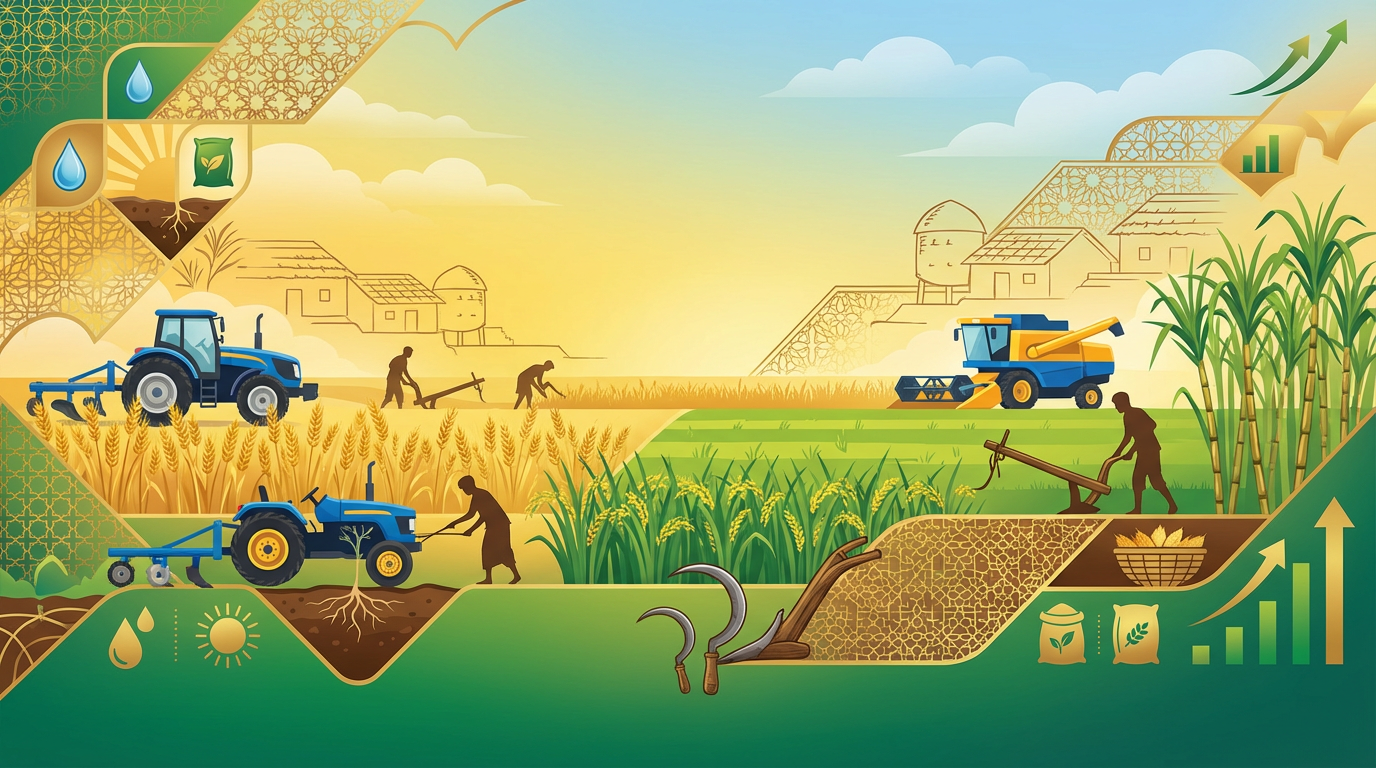
The one-year CoolRice project seeks to bridge climate adaptation and mitigation by combining heat-tolerant rice breeding with low-cost, low-emission cultivation practices. Rather than addressing declining crop productivity and agricultural emissions as separate issues, the initiative adopts an integrated approach that links plant genetics, agronomy, climate science and digital technologies to develop scalable solutions for rice-growing regions across Asia.
Rice remains central to food security for billions of people, yet it is increasingly vulnerable to climate change. Higher temperatures are eroding yields and grain quality across major rice-producing countries, while paddy cultivation continues to be a significant contributor to methane emissions, placing the sector at the centre of global efforts to balance food production with climate commitments.
The collaboration brings together IRRI, MAFF, the Japan International Research Center for Agricultural Sciences (JIRCAS), the National Agriculture and Food Research Organization (NARO) and Gifu University. Researchers from the participating institutions formally launched the programme during a two-day meeting at IRRI's headquarters in Los Baños, Philippines, where they outlined a roadmap for accelerating climate-resilient rice research.
IRRI Director General Dr. Yvonne Pinto described the initiative as an extension of the institute's long-standing scientific partnership with Japan, which spans more than six decades. She said the project reflects a shared commitment to developing technologies that not only protect farm productivity under climate stress but also contribute to broader global decarbonisation goals.
Japanese officials also underscored the growing urgency of international collaboration as climate-related risks intensify across Asia's rice ecosystems. MAFF representatives highlighted the importance of building on previous scientific breakthroughs—including research into early-morning flowering traits that help rice escape heat stress—to accelerate the development of next-generation climate-resilient varieties.
Researchers noted that rising temperatures are no longer confined to tropical production systems. Heat stress has become an increasing concern even in temperate rice-growing regions such as Japan, reinforcing the need for collaborative research that spans climatic zones and production environments.
Beyond crop breeding, CoolRice will focus on developing heat-risk mapping tools, geospatial analytics, remote sensing applications and cultivation practices capable of lowering methane emissions without compromising productivity. The programme also aims to strengthen regional research capacity by creating a collaborative framework for scientists working across breeding, crop physiology, climate modelling and digital agriculture.
Following the project's launch, technical workshops brought together researchers from IRRI and Japanese institutions to identify priority research areas and establish a joint scientific roadmap. Discussions covered advances in heat-tolerant breeding, greenhouse gas mitigation, climate analytics and precision agriculture, laying the groundwork for future technology deployment across Asia.
The initiative reflects a broader shift in global agricultural research, where climate resilience is increasingly measured not only by a crop's ability to survive extreme weather but also by its contribution to reducing agriculture's environmental footprint. As governments seek to secure food supplies while meeting ambitious climate targets, integrated programmes such as CoolRice are expected to play an increasingly important role in shaping the future of sustainable rice production.