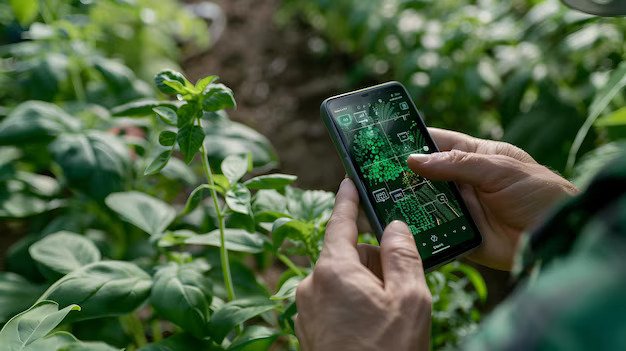
Australia is advancing the digital transformation of crop protection with the launch of SclerotiniaLM, a new decision support application designed to help lupin growers make more informed fungicide decisions and reduce the economic impact of one of the crop's most damaging fungal diseases. Developed by the Western Australian Department of Primary Industries and Regional Development (DPIRD) with co-investment from the Grains Research and Development Corporation (GRDC), the application translates years of scientific research into a practical, field-ready tool that enables growers to assess disease risk before symptoms become visible. The launch reflects a broader shift toward precision agriculture, where digital technologies are increasingly helping producers optimize crop management while improving returns on farm inputs.
Sclerotinia stem rot remains a significant threat to lupin production across Australia's grain-growing regions, particularly in Western Australia, where severe outbreaks can reduce yields by as much as 20 per cent. As effective disease control depends on preventive fungicide applications rather than treatments after infection has occurred, growers have traditionally been required to make costly management decisions based on uncertain seasonal conditions rather than visible disease symptoms.
The new application seeks to reduce that uncertainty by combining weather patterns, crop development, grain prices, fungicide costs, and expected yield responses into a single decision-making platform. Instead of simply predicting disease risk, the app evaluates the likely economic return from applying foliar fungicides, comparing treatment and no-treatment scenarios under both optimistic and conservative conditions. This allows growers to weigh the financial implications of disease management before committing to chemical applications.
The technology is built on extensive research undertaken through a joint GRDC and DPIRD investment focused on lupin sclerotinia management. By integrating scientific disease models with economic analysis, the application provides growers and agronomists with recommendations tailored to individual crop conditions rather than relying on generalized advice. Researchers involved in the project note that weather remains one of the most influential factors driving sclerotinia outbreaks, making disease management particularly challenging. Since infection often develops before symptoms are apparent, delaying fungicide applications can significantly reduce their effectiveness. The app is designed to support decision-making during the critical bloom stage, when timely intervention offers the greatest opportunity to protect yield and profitability.
The release also expands Australia's growing suite of digital crop protection tools. SclerotiniaLM becomes the first application in a new lupin management series and complements existing decision support platforms developed for canola disease management, including tools addressing sclerotinia and blackleg diseases. Together, these technologies illustrate how digital agronomy is becoming an increasingly important component of integrated disease management strategies across Australia's grain sector. Developers emphasize that the application has a clearly defined purpose. It is intended specifically to guide decisions on managing sclerotinia canopy infection during flowering and should not be used to assess basal sclerotinia, a soil-borne disease that does not respond to foliar fungicide treatments. Used alongside the existing Lupin Sclerotinia Disease Risk Assessment Guide, the app provides growers with an additional layer of evidence to support treatment decisions during one of the crop's most vulnerable growth stages.
For GRDC, the launch demonstrates the practical value of translating publicly funded agricultural research into technologies that deliver measurable on-farm benefits. Rather than remaining confined to research publications, disease modelling has been converted into an accessible mobile application that supports real-time decision-making throughout the growing season.