Brazil's livestock sustainability journey has reached a new milestone as Athian announced the successful sale of the country's first verified beef inset credits. Developed through a pilot project with methane-reduction technology company Rumin8 and leading beef exporter Minerva Foods, the initiative demonstrates how measurable emissions reductions at the farm level can be translated into verified Scope 3 environmental assets for the food supply chain.
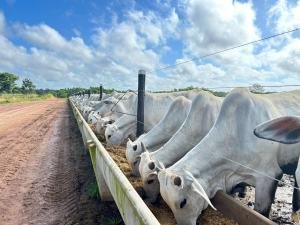
The pilot focused on evaluating Rumin8's feed ingredient technology, which significantly reduced methane emissions from cattle in a Brazilian feedlot setting. Using its livestock sustainability platform, Athian verified the emissions data, registered the resulting environmental outcomes as inset credits, and facilitated their sale to Minerva Foods. The transaction marks a first not only for Brazil's beef industry but also expands Athian's sustainability framework beyond its origins in the U.S. dairy sector.
The project also validated Athian's insetting model internationally, proving that emissions reductions generated on livestock farms can be independently verified and monetized across different production systems. Unlike carbon offsets, inset credits allow companies to reduce emissions directly within their own agricultural supply chains, helping food businesses address increasingly important Scope 3 climate commitments.
"Our work in Brazil demonstrates that livestock sustainability can be both measurable and commercially viable," said Kendra Tolley, Co-founder and Chief Commercial Officer at Athian. "The project confirmed not only the effectiveness of the insetting process—from emissions generation and third-party verification to the sale of Scope 3 assets—but also showed that our platform can be successfully applied across global livestock systems."
For Rumin8, the project provided additional commercial validation of its methane-reducing feed ingredient while highlighting the value of coordinated sustainability efforts across the livestock value chain. According to CEO David Messina, the study generated strong evidence of the product's effectiveness under Brazilian feedlot conditions while demonstrating how producers, processors and technology providers can work together to reduce agriculture's environmental footprint.
Athian's sustainability platform is built around scientifically validated on-farm protocols that help livestock producers lower greenhouse gas emissions through practices such as feed additives and alternative manure management systems. The company manages secure farm-level data collection, coordinates independent third-party verification, and registers verified environmental outcomes as inset credits that food companies can purchase to support their Scope 3 decarbonisation strategies.
Minerva Foods, one of South America's largest beef exporters, said the initiative reinforces the importance of measurable and transparent sustainability practices across global protein supply chains. Marta Giannichi, Global Sustainability Director at Minerva Foods, noted that the pilot demonstrates the industry's ability to quantify methane reductions at the farm level while integrating verified environmental data into commercial supply chains.
The latest project adds to Athian's growing sustainability network, which includes major U.S. dairy cooperatives, global dairy processors and leading food brands. Since launching its livestock insetting platform, the company has enabled farmers to earn more than $25 million for implementing emissions-reducing practices. Collectively, these projects have reduced approximately 600,000 metric tonnes of carbon dioxide equivalent (CO₂e) emissions across participating operations.
Athian believes successful projects such as the Brazilian beef pilot will accelerate the adoption of additional livestock sustainability protocols while creating new commercial opportunities for producers and food companies seeking credible pathways to reduce agricultural emissions.