Corteva Agriscience has launched Majesty, a new insecticide for controlling stink bugs in soybean and corn crops in Brazil. Available to farmers for the 2026/27 growing season, the product combines two complementary modes of action designed to target different stages of the pest’s life cycle and help protect crop yields.
Majesty combines Isoclast Active and bifenthrin. The two active ingredients provide high efficacy against nymphs and rapid action against adult stink bugs, helping control infestations at different developmental stages and reduce pest populations in the field.
Isoclast Active belongs to the sulfoximine chemical group (Group 4C) and has systemic and translaminar activity. It provides control of nymphs and is also a tool for resistance management. Bifenthrin complements the formulation with a fast knockdown effect against adult insects.
The product has received approval from federal and state regulatory authorities in Brazil. In soybean, its label includes brown stink bug (Euschistus heros) and whitefly (Bemisia tabaci). In corn, it is registered for the green-belly stink bug (Dichelops melacanthus). Majesty is also registered for pest management in cotton, citrus, melon, tomato, wheat and common bean.
Stink bugs can cause significant yield losses
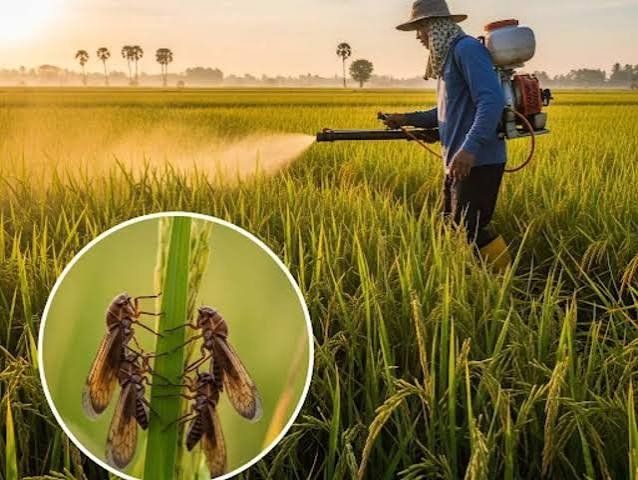
Stink bugs are among the most challenging pests to control in Brazilian crops. In soybean, brown stink bug feeding can damage grain quality and reduce yields. In corn, green-belly stink bugs pose a particular threat during the early stages of crop development, with potentially significant effects on productivity.
″Stink bug attacks represent a major challenge for agriculture and can cause soybean yield losses of up to 30%, according to Embrapa. Of the damage caused by these insects, 70% is associated with nymphs, which have high feeding rates and can cause severe damage to pods and grains, including pod abortion,″ said Thomas Scott, Corteva Agriscience’s insecticide and nematicide portfolio leader for Brazil and Paraguay.
Beyond direct yield losses, stink bug feeding can compromise grain and seed quality. Insects may damage cotyledons and embryos, affecting seed vigour and germination. Feeding injuries can also create entry points for fungi and other pathogens, further reducing the quality of harvested grain.
Monitoring is essential for effective control
Because stink bugs can develop rapidly and are difficult to manage, regular field monitoring is essential, particularly in soybean. Farmers should watch for insects migrating from nearby areas, woodland and other crops in search of food. This movement may begin toward the end of the vegetative stage and intensify as the crop enters its reproductive phase.
″When soybean reaches flowering, farmers enter a critical alert period for starting pest control, because reproduction begins soon afterwards. The transition from egg to nymph takes an average of seven days. Population development is very fast, so growers need to monitor their fields constantly and act at the right time. There is no room for error in pest management,″ Scott said.
During flowering, at growth stages R1 and R2, stink bugs begin colonising soybean fields. Once the first pods appear at R3, greater food availability favours population growth, increasing pest pressure during a critical period for yield formation.
Performance under different field conditions
Corteva also highlights the formulation’s characteristics under varying environmental conditions. Isoclast Active moves through plant tissues through systemic and translaminar activity, helping reach insects in less exposed parts of the plant. The active ingredient also offers selectivity toward beneficial insects, an important feature for its use in integrated pest management (IPM) programs.
Bifenthrin, meanwhile, offers strong foliar retention, along with photostability and thermal stability, which support its persistence and performance in tropical conditions.
The launch expands Corteva’s insecticide portfolio in Brazil, offering farmers another tool to manage stink bugs amid increasingly complex pest control challenges and growing concerns over resistance in the field.