Rice farming is emerging as an increasingly important frontier in the global effort to reduce agricultural greenhouse gas emissions. Against this backdrop, Paris-based ClimateTech startup CarbonFarm has raised €7 million in an oversubscribed Series A funding round to expand its rice decarbonisation business across global markets.
The investment, led by Colam Impact, the impact investment arm of Colam Entreprendre, brings together a group of investors including Proparco, Suma Capital, elea, Working Capital Fund, Albo and BPI France. Existing investors Serena and make sense, through Racine², as well as Technmind, also participated in the round.
The capital will support CarbonFarm's expansion across Asia, Africa and Europe, while accelerating its entry into Latin America. The company also plans to strengthen the technology and technical expertise required to develop, finance and certify high-integrity rice decarbonisation projects and connect them with corporate supply chains and regulated carbon markets. For an agricultural sector facing growing pressure to reduce its climate footprint without compromising food production, the investment reflects the increasing commercial interest in making emissions reduction measurable, financeable and scalable at farm level.
"CarbonFarm is building the enabling infrastructure for one of the largest untapped decarbonisation opportunities globally," said Benjamine Friderich, investment director at Colam Impact. He pointed to the company's combination of project-development expertise, climate-finance capabilities and digital measurement, reporting and verification (MRV) technology as the foundation for scaling decarbonisation initiatives across the rice sector.
Rice methane: An overlooked agricultural emissions challenge
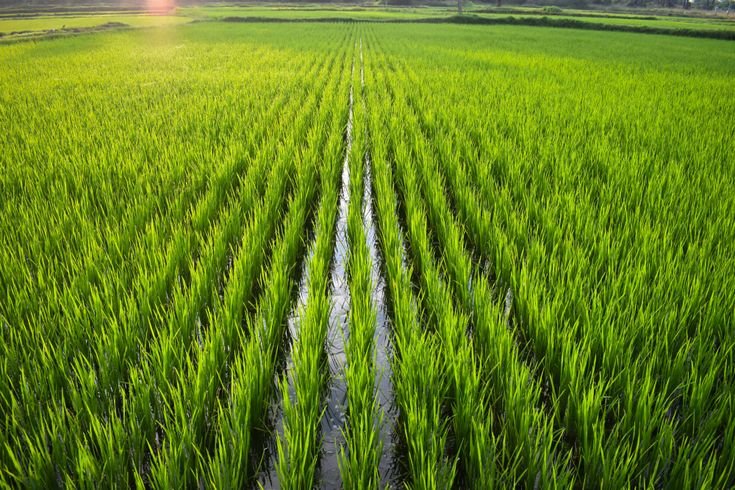
Rice cultivation is a significant source of agricultural methane, primarily because conventional flooded-field cultivation creates anaerobic soil conditions that encourage methane-producing microorganisms. CarbonFarm estimates that rice farming accounts for approximately 12 per cent of global human-caused methane emissions. The crop also consumes up to 28 per cent of the world's freshwater resources, placing it at the intersection of two major sustainability challenges: agricultural emissions and water security.
The company argues that changes in water management could offer a practical route to reducing this footprint without necessarily requiring farmers to overhaul their production systems. One such intervention involves allowing rice fields to drain periodically rather than maintaining continuous flooding. Practices such as alternate wetting and drying can reduce the anaerobic conditions responsible for methane generation.
According to CarbonFarm, improved water management practices can reduce emissions by up to 50 per cent and water consumption by as much as 30 per cent without affecting yields. However, translating this potential into large-scale adoption requires more than identifying suitable farming practices. Farmers, cooperatives, agribusinesses and local project developers need reliable systems to measure changes in cultivation practices, quantify emissions reductions and establish the credibility of resulting climate claims.
Building the digital infrastructure for rice decarbonisation
Founded in 2021 by Vassily Carantino and James Hastwell, CarbonFarm has developed a business model centred on helping agricultural stakeholders design, finance and monitor rice decarbonisation programmes. The company works with rice producers, cooperatives, agribusinesses, non-governmental organisations, governments and local project developers. Its technology combines AI-powered satellite imagery analysis, field-data collection tools and greenhouse-gas modelling to track agricultural practices and estimate emissions at individual field level.
Developed in collaboration with academic institutions including Cornell University, INRAE and the European Space Agency, the platform is designed to address a critical challenge in agricultural climate finance: establishing credible, verifiable evidence of emissions reductions across geographically dispersed farms.
Digital MRV systems are becoming increasingly important as carbon markets and corporate sustainability programmes demand stronger evidence of the environmental impact of funded interventions. For rice cultivation, where farms are often fragmented and production practices vary significantly across regions, the ability to monitor field-level changes could help reduce the complexity of developing large-scale decarbonisation programmes.
CarbonFarm currently operates in 19 countries across Asia, Europe, Africa and the Americas. Its partners include food and agribusiness companies such as Mars Food, Diageo, Ebro and Tilda. The company also lists carbon-finance organisations including Livelihoods Funds and myclimate, development institutions such as the World Bank and Asian Development Bank, and technology company Google among its partners.
Scaling through existing agricultural value chains
An important element of CarbonFarm's approach is its emphasis on working through established agricultural networks rather than attempting to replace them. Rice farmers, cooperatives, local agribusinesses and project developers already possess the relationships and operational knowledge needed to influence cultivation practices. The challenge is to connect this local expertise with the technical, financial and verification systems required to make decarbonisation programmes commercially viable.
"Scale will not come from replacing local value-chain players; it will come from equipping them. They understand the farming systems and have the relationships needed to make change happen," said Carantino, co-founder and chief executive officer of CarbonFarm. The company's role, he explained, is to convert local knowledge into programmes capable of attracting finance and meeting verification requirements.
This model could be particularly relevant across Asian rice-producing economies, where smallholder farming, fragmented landholdings and diverse irrigation systems can complicate the implementation of climate interventions. By providing project-development capabilities, digital monitoring and access to climate finance, CarbonFarm aims to make emissions reduction programmes more accessible to agricultural stakeholders.
Carbon finance and the next phase of growth
The new funding will allow CarbonFarm to strengthen its position across existing markets while entering additional rice-producing regions, particularly in Latin America. A significant part of the investment will go towards expanding the company's technology and expertise for developing and certifying high-integrity rice projects. Connecting these projects with corporate supply chains and regulated carbon markets will also be a priority.
The commercial opportunity extends beyond generating carbon credits. As food companies face increasing scrutiny over the emissions embedded in agricultural supply chains, verified improvements in rice production could become an important component of their climate strategies. For farmers, the viability of these programmes will depend on whether improved water management and other interventions can be implemented without undermining yields, increasing operational costs or creating additional production risks.
The ability to establish credible emissions reductions, deliver measurable water savings and develop sustainable financial incentives will therefore determine how quickly rice decarbonisation moves from individual projects to mainstream agricultural practice. CarbonFarm's €7 million funding round signals growing investor interest in the infrastructure needed to make agricultural emissions reduction measurable and commercially actionable. The larger test, however, will be whether digital monitoring, local partnerships and carbon finance can work together at the scale required to transform rice cultivation across major producing regions.