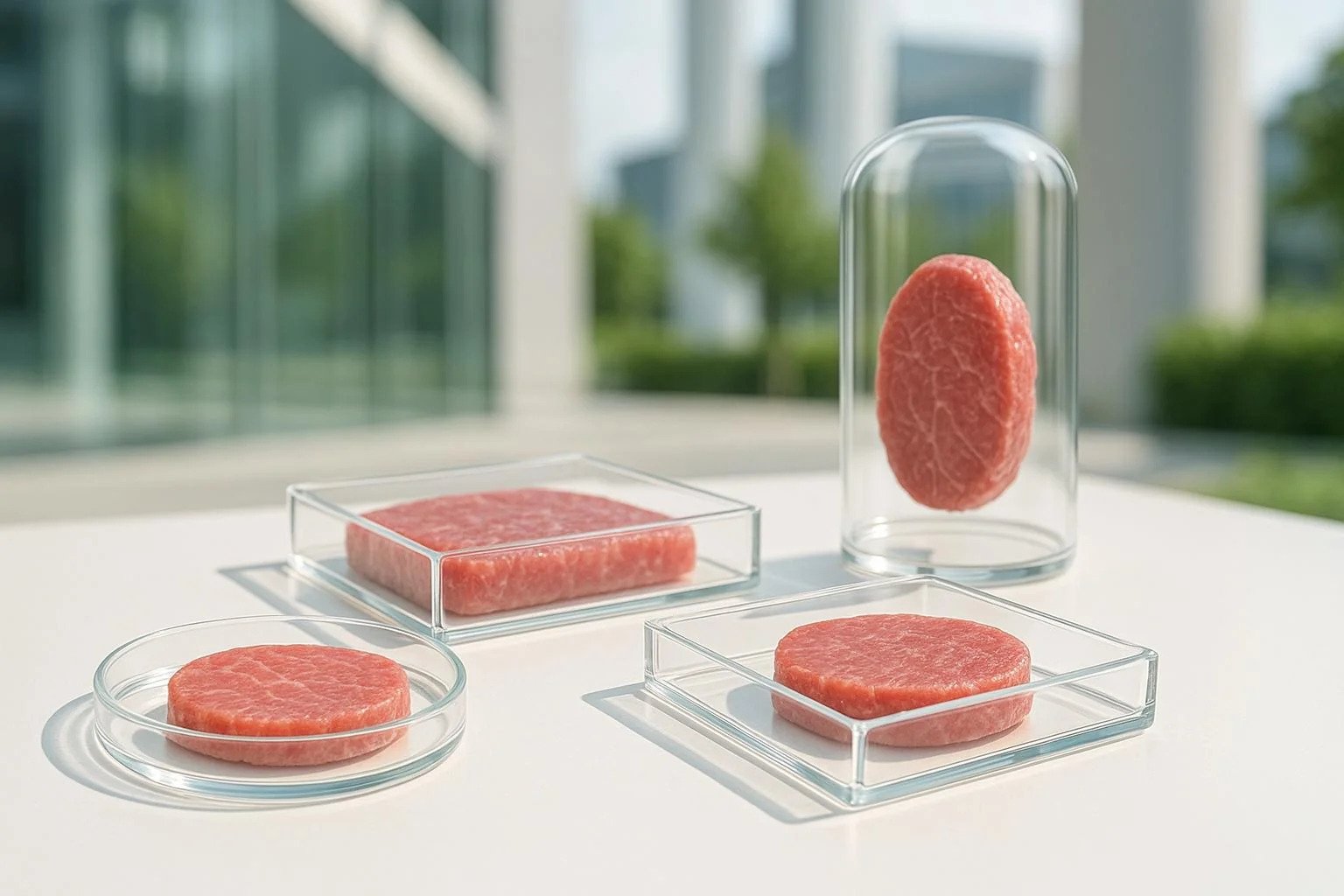
France should move quickly to define its position on cultivated meat as the European Union approaches a potential first authorisation, while giving greater consideration to precision fermentation, which has a more mature production process and a clearer route to profitability, according to a report by the country’s agriculture ministry inspection body.
The 76-page report from France’s General Council for Food, Agriculture and Rural Areas (CGAAER) examines the commercial prospects of conventional proteins and emerging food technologies. Written by inspectors Claire Armengaud and Jean-Pierre Orand and dated March 2026, it was published by the agriculture ministry on September 14.
The authors argue that precision fermentation is further along the path to industrial deployment than cultivated meat. They also warn that French startups developing novel proteins face difficulties securing the capital required to move from research and development to industrial-scale production.
The report recommends that France support promising companies to prevent them from relocating overseas and urges the government to determine its position before the first cultivated-meat product reaches a vote at EU level. The authors clarify that their findings represent their own assessment and do not commit the ministry to specific follow-up action.
Cultivated duck application puts France at the centre of EU debate
The report identifies cultivated duck cell biomass from French company Parima as the first major regulatory test for cultivated meat in the EU. According to the authors, the European Union has authorised 20 precision fermentation products, 18 of which are human milk oligosaccharides, while no cultivated meat product has received authorisation.
Parima’s application is under evaluation by the European Food Safety Authority (EFSA). The company was formed in October 2025 after Gourmey acquired Vital Meat. Gourmey had submitted the EU’s first cultivated-meat application in July 2024.
The authors expect the first cultivated-meat authorisation to trigger debate among member states over the technology’s environmental, ethical and cultural implications. Under the EU Novel Food Regulation, member states can raise such considerations when voting on a European Commission implementing act, and a blocking minority can prevent its adoption.
The report points to opposition expressed in January 2024, when France, Italy and Austria challenged cultivated meat at the EU Agriculture and Fisheries Council, with nine other delegations also backing opposition to the technology.
For the inspectors, the regulatory question extends beyond the safety assessment of an individual product. France must decide how it intends to approach the technology as it moves through the EU approval process.
Funding gap threatens industrial scale-up
French novel-protein companies told the mission that public programmes, including France 2030 and the Ferments du Futur public-private partnership, had helped finance research and development. Standing Ovation, for instance, received France 2030 grants for three casein projects.
However, moving from laboratory development to commercial manufacturing remains a significant hurdle. Companies interviewed by the mission reported difficulties raising finance for first-of-a-kind industrial facilities without foreign investors or established industrial partners.
The report states that recent requests for public funding in cellular agriculture were rejected for political reasons, highlighting the challenges facing cultivated-meat developers as they seek to commercialise their technologies.
The inspectors recommend that France back promising startups to help retain expertise and industrial capacity within the country. They also call on EFSA to strengthen its pre-submission support for applicants, drawing on the European Medicines Agency’s early-dialogue model for new therapies.
Applicants consulted for the report said repeated requests for additional information can prolong EFSA assessments. More structured engagement before formal submission, the authors suggest, could help companies navigate the regulatory process.
Consumer acceptance and climate claims remain challenges
Consumer attitudes present another obstacle, particularly for cultivated meat. The report cites survey data indicating that 20 per cent of French respondents favour cultivated meat, placing France among the more reluctant markets surveyed. Precision fermentation encounters less resistance, according to the findings.
Environmental performance is also unresolved. The report says both technologies could reduce land use by up to 99 per cent compared with cattle farming. However, it cautions that their climate benefits remain uncertain because bioreactor energy requirements can substantially influence emissions.
The inspectors call for product-specific life-cycle assessments rather than relying on broad environmental claims across the sector. Such assessments would help establish whether individual products deliver measurable benefits under realistic production conditions.
The report sees potential for cultivated meat in premium, specialised markets, including foie gras, but considers the technology far from being able to compete with conventional livestock production, particularly poultry.
Precision fermentation, by contrast, is viewed as having a clearer commercial trajectory. The authors expect tightening supplies in animal-protein markets to create opportunities for fermentation-derived ingredients and improve their prospects for competitiveness and profitability.
For France, the findings point to two linked decisions: how to position itself on cultivated meat as EU authorisation proceedings advance, and how to ensure that domestic novel-protein companies can secure the funding and regulatory support needed to scale. The report favours a more mature industrial pathway for precision fermentation, while leaving the government to determine its policy response.