European agriculture risks losing further ground to global competitors unless farmers gain faster access to new technologies, according to a report commissioned by Bayer that calls for more proportionate regulation and greater support for agricultural innovation.
The study combines economic analysis by Oxford Economics, polling of more than 8,000 consumers and interviews with around 90 farmers across eight European markets. It examines how productivity, climate pressures and regulatory frameworks are shaping the competitiveness and resilience of the European Union and the United Kingdom.
The findings point to a persistent gap in agricultural output growth. Between 2011 and 2023, crop production in the EU grew by an average of just 0.1 per cent annually, while the UK recorded no growth. The corresponding rates were 1 per cent in the US, around 2 per cent globally and between 2 and 3 per cent in China, Canada and India. Brazil recorded average annual growth of 3.3 per cent.
Longer-term comparisons also reveal the scale of the challenge. Average EU crop production was only 2 per cent higher than in the preceding decade, compared with increases of 16 per cent in the US, 44 per cent in Canada and 51 per cent in Brazil, according to the report.
Crop agriculture contributes €246 billion to EU GDP and €5.7 billion to UK GDP, the study estimates. Each €1 billion of crop agriculture output also supports nearly €3 billion in downstream production across other sectors, underlining the wider economic consequences of weaker agricultural performance.
Climate pressures compound the productivity challenge
Europe’s productivity gap is emerging as farmers contend with rising input costs and increasingly severe climate-related risks. The report estimates that climate-related factors already generate average annual losses of €17.4 billion, equivalent to 6.4 per cent of EU crop production.
Those losses could rise to between €24.8 billion and €28.9 billion annually by 2050, the study projects.
The report argues that farmers’ ability to adapt is constrained not only by climate exposure but also by the speed at which new technologies reach commercial farms. Producers in competing markets may have access to a wider range of seed technologies, crop protection products and digital tools, or may be able to adopt innovations sooner.
Frank Terhorst, head of strategy and sustainability at Bayer’s Crop Science Division, said Europe needed to treat agriculture as a strategic sector linked to economic autonomy and competitiveness.
He argued that innovation should be viewed as an opportunity rather than primarily as a risk to be managed, adding that European farmers need faster access to effective solutions to address climate and geopolitical challenges.
Regulatory barriers constrain farmers’ options
The report identifies regulatory processes as a significant factor affecting the availability of agricultural technologies in Europe. It calls for a more predictable and proportionate framework that maintains safety and stewardship standards while reducing unnecessary delays and administrative burdens.
According to the study, more than 1,000 active ingredients were authorised in the EU in the early 2000s, compared with around 420 today. It also reports that farmers have lost access to 92 active ingredients over the past seven years, while only one new synthetic active ingredient reached the market during that period.
The UK’s regulatory position has diverged from the EU’s since Brexit. The report says the UK has approved four entirely new active ingredients since 2022 that remain unapproved or pending in the EU. It also retains approvals for 15 crop protection active ingredients whose EU licences have expired or been withdrawn.
However, discussions about dynamic alignment between UK and EU regulatory frameworks could affect some of these differences. The report warns that changes to existing approvals need to be managed carefully to avoid unintended consequences for crop yields and farm incomes.
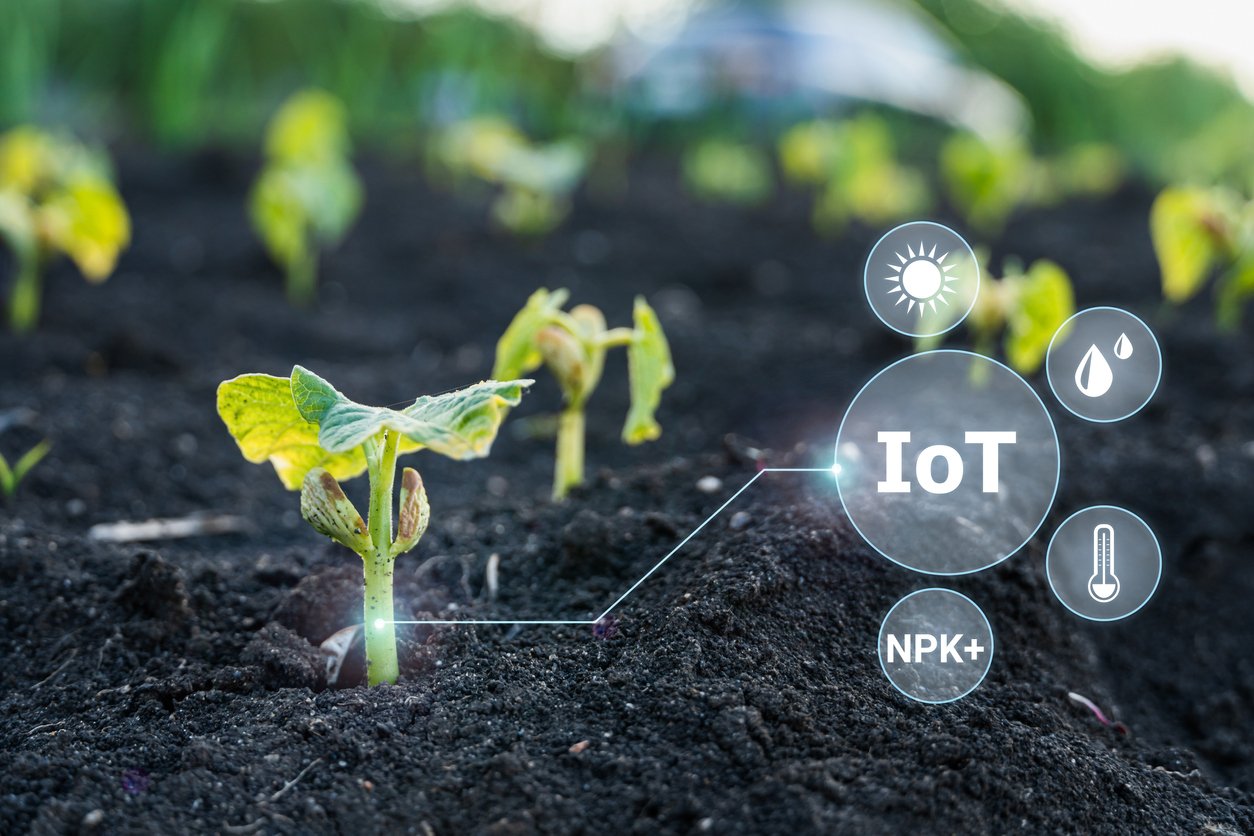
Beyond crop protection, the study highlights the potential contribution of advanced seed technologies, precision agriculture, automation and artificial intelligence to agricultural productivity. Bayer has also announced plans for new seed and trait technologies, including genome editing, and AI-enabled approaches to discovering new modes of action for crop protection.
Terhorst called for regulatory decisions to consider real-world risks and benefits while preserving high safety standards. He pointed to recent UK approvals as an example of how alternative regulatory pathways can accelerate access to agricultural innovations.
Consumer support for agricultural technology
Public attitudes may offer policymakers greater room to pursue technology-led agricultural strategies than commonly assumed, the report suggests.
In the survey, 84 per cent of European respondents agreed that food security is a matter of national security. The same proportion said farmers should have access to the latest technologies and innovations to improve harvests and help reduce food prices.
A further 77 per cent believed that reducing bureaucracy and administrative red tape would help Europe produce enough food. Meanwhile, 63 per cent said they would be more likely to vote for a political party that supported farmers using new science and technology.
Matthias Berninger, Bayer’s head of public affairs, science, sustainability and HSE, said the findings reflected public recognition of the links between resilient farming, food security and food affordability.
He argued that regulation should safeguard public trust while enabling progress in areas such as artificial intelligence and agricultural technology. Berninger also pointed to the EU’s recent decision on new genomic techniques as evidence that the bloc can advance innovation-focused policy.
Strategic autonomy depends on farm-level adoption
The report’s central argument is that Europe’s agricultural competitiveness depends not only on scientific capability but also on whether innovations can reach farmers at a pace that matches mounting production and climate pressures.
It calls for policymakers, businesses and civil society to support a regulatory environment that enables access to new technologies while maintaining high standards of safety and responsible use.
Commissioned by Bayer, the study covers the Benelux countries, France, Germany, Italy, Poland, Romania, Spain and the UK. Its conclusions place regulatory reform and technology adoption at the centre of the debate over European agricultural resilience, although the findings should be considered in the context of the commissioning company’s interest in expanding access to agricultural innovation.