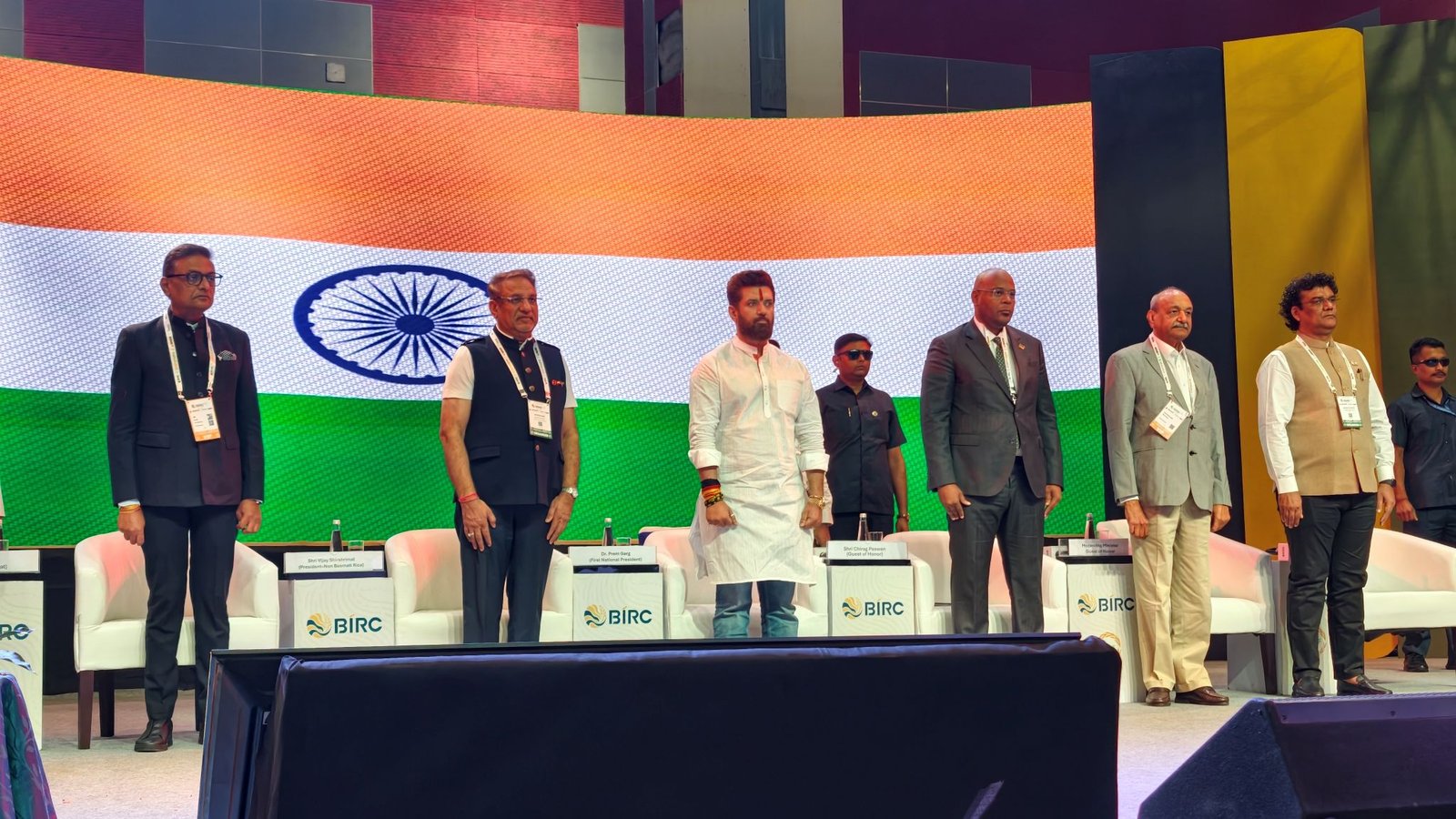
Union Minister for Food Processing Industries Chirag Paswan called for greater investment in value addition, technology, traceability and sustainability in the rice sector at the inaugural session of the Bharat International Rice Conference (BIRC). He highlighted the role of food processing in strengthening agricultural exports and advancing India’s ambition of becoming a developed nation by 2047.
Bringing together stakeholders from across the rice value chain, the three-day conference provides a platform for farmers, processors, exporters, researchers, technology providers and international delegates to explore business opportunities and exchange best practices.
Paswan noted that India’s position as a major producer, consumer and exporter of rice presented opportunities to move beyond production and unlock greater value across the sector. He highlighted that India accounts for nearly 40 per cent of global rice trade and emphasised the need to strengthen export competitiveness through improved quality, research and technological collaboration.
“Since we have that volume with us, value is what we need to talk about. Since we have that production with us, product is what we need to emphasize on,” he said.
The minister identified traceability and sustainability as key areas requiring greater attention, alongside innovation in cultivation practices, processing technologies and machinery. He also called for strengthening domestic manufacturing capabilities across the rice value chain in line with the vision of Atmanirbhar Bharat.
Highlighting Prime Minister Narendra Modi’s vision of positioning India as a “global food basket”, Paswan said the country had the potential to meet domestic food requirements while contributing to food security in other nations. Realising this potential, he added, would require coordinated development across food processing and related industries.
Welcoming international delegates, Paswan said trade agreements could support export growth while facilitating the exchange of technology and best practices. He invited conference organisers and industry representatives to submit recommendations emerging from the discussions, including proposals for policy changes and measures to improve the ease of doing business.
Mozambique seeks partnerships in rice processing and agriculture
Addressing the inaugural session, Mozambique’s representative António Grispos invited Indian businesses to explore strategic partnerships in agricultural production, rice processing and value addition.
Grispos said Mozambique was pursuing structural economic transformation, with a focus on industrialisation and a gradual shift from exporting raw materials towards expanding domestic production and processing.
He highlighted the country’s fertile land, water resources and strategic location in Southern Africa as potential advantages for investors. Mozambique’s ports and transport links, he added, could provide businesses with access to wider regional markets.
Describing India–Mozambique relations as rooted in longstanding friendship and economic cooperation, Grispos said India’s expertise in seed research, cultivation technologies and food processing offered opportunities for collaboration. He also outlined the Mozambican government’s efforts to improve the business environment, simplify procedures and reduce transaction costs.
He emphasised that agricultural trade should serve not only to move goods across borders but also to drive economic development.
Both speakers underscored the importance of government–industry collaboration in strengthening food security, attracting investment and developing competitive agricultural value chains.
Rajiv Sethia, President of the Basmati Rice industry, and Dr Prem Garg, National President of the Indian Rice Exporters Federation (IREF), attended the inaugural session, along with other industry representatives and delegates.
The three-day conference is expected to take these discussions forward through technical sessions, industry interactions and business-to-business meetings focused on investment, innovation and emerging opportunities across the rice value chain.