As rising temperatures place growing pressure on global food systems, Lancaster University and the Donald Danforth Plant Science Center are joining forces to strengthen one of sub-Saharan Africa’s most important food crops against heat stress.
Backed by a $4,937,793 grant from the Gates Foundation, the four-year HeatSmart Cassava project will explore whether a heat-stable version of a key photosynthetic protein can help cassava maintain productivity as temperatures rise and heatwaves become more frequent.
Cassava supports the food security and livelihoods of an estimated 800 million people worldwide and is particularly important to smallholder farmers across sub-Saharan Africa. The crop is valued for its ability to produce under marginal soil conditions and intermittent drought, but higher temperatures can sharply reduce photosynthesis and threaten yields. The challenge becomes even more severe when heat and drought occur together.
At the centre of the project is Rubisco activase, a protein essential to keeping the photosynthetic machinery of plants functioning efficiently. Under high temperatures, the protein can lose its effectiveness, creating a bottleneck that limits the plant’s ability to capture carbon dioxide and convert sunlight into the energy needed for growth.
HeatSmart Cassava will build on earlier machine-learning and protein-engineering research that identified versions of cassava Rubisco activase capable of remaining stable under laboratory conditions. The next phase will move the work into living plants, with researchers introducing promising modifications into cassava and testing how the plants perform under heat and combined heat-and-drought stress.
The project will assess whether engineered cassava can maintain photosynthetic efficiency, Rubisco activation and yield at higher temperatures without compromising performance under normal growing conditions. The research will also determine whether improving Rubisco activase alone is enough to build heat resilience or whether it must be combined with other traits.
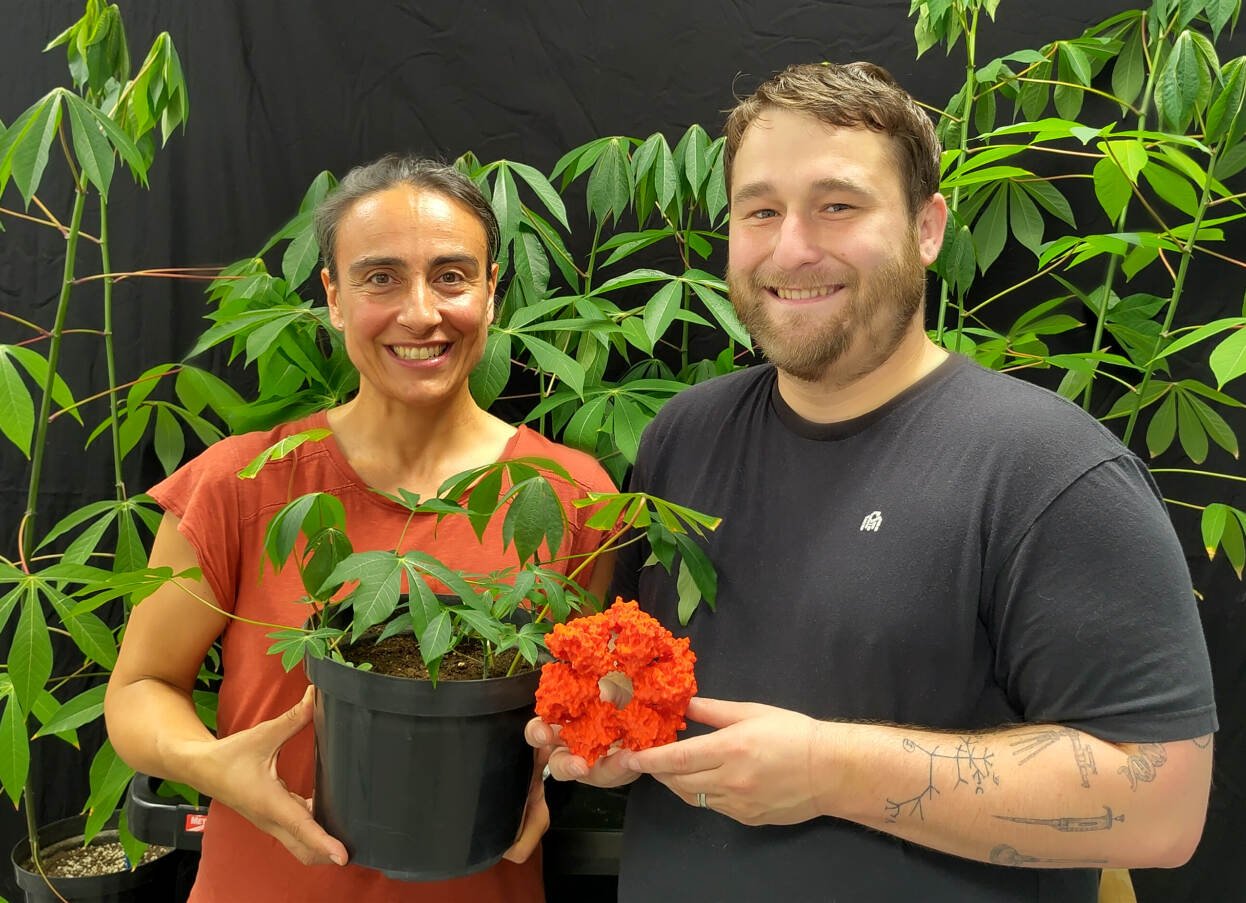
The Lancaster University team is led by Professor of Crop Physiology Elizabete Carmo-Silva, alongside Dr Clay Dilks, Dr Marjorie Lundgren and Professor Ian Dodd. The Danforth Center team is led by principal investigator Dr Getu Duguma, with Dr Nigel Taylor, Vice President for Impact and Dorothy J. King Distinguished Investigator, serving as co-principal investigator.
“For the past decade we have been researching photosynthetic thermotolerance in crops to protect yields when plants experience heatwaves,” Carmo-Silva said. “We are excited to partner with colleagues at the Danforth Centre to translate our findings into such an important sub-Saharan food crop.”
The partnership combines Lancaster University’s expertise in photosynthesis, plant physiology and protein engineering with the Danforth Center’s capabilities in cassava biotechnology, gene editing and plant transformation.
“For millions of families, cassava is more than a crop—it is a safeguard against hunger when conditions are difficult,” said Duguma. The project, he added, offers an opportunity to strengthen one of the crop’s most heat-sensitive processes and determine whether the intervention can help cassava continue producing efficiently as temperatures climb.
Beyond its scientific objectives, HeatSmart Cassava reflects a wider effort to apply advanced plant science to crops central to food security in climate-vulnerable regions. Under the Gates Foundation’s Global Access policy, the researchers will publish their findings through open-access channels, deposit engineered sequences in public databases and make project materials available in line with global access principles.
“A warming climate is already changing the conditions in which farmers must grow the food their families and communities depend on,” said Danforth Center President Dr Giles Oldroyd. “HeatSmart Cassava reflects the heart of the Danforth Center mission: bringing leading-edge plant science to bear on urgent challenges and helping build a more food-secure future for all.”