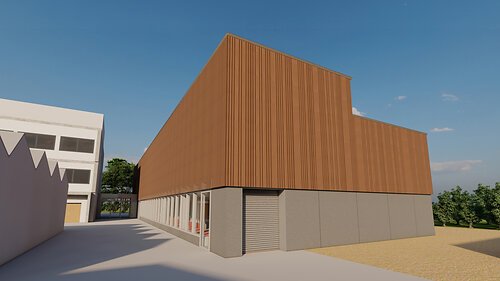
BASF Agricultural Solutions is putting fresh capital behind one of the less visible but increasingly critical bottlenecks in crop-protection innovation: the ability to generate robust scientific data quickly enough to meet tougher regulatory requirements worldwide. The company is investing a low double-digit million-euro amount in a new Climate Center at its headquarters in Limburgerhof, Germany. Construction has begun, with completion scheduled for the first half of 2027.
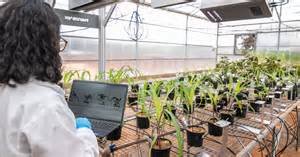
The facility will house advanced climate chambers capable of precisely controlling environmental conditions for scientific studies, strengthening BASF’s research and regulatory infrastructure for the global registration of crop-protection products.
The investment comes as regulatory scrutiny of agricultural chemicals intensifies and demand rises for high-quality, Good Laboratory Practice-compliant ecotoxicology studies.
For BASF, the strategic value extends beyond additional laboratory capacity. The Climate Center is designed to give the company greater control over one of the critical steps between discovery and commercialisation: generating reproducible data that can withstand regulatory assessment across markets.
Turning climate control into a research advantage
Climate chambers may sound like laboratory infrastructure, but their importance lies in the ability to remove variability from biological studies. The new facility will allow researchers to precisely regulate temperature, humidity and light, creating controlled and repeatable conditions for ecotoxicology research.
That matters because environmental conditions can influence biological responses. By controlling those variables, BASF expects to improve the reproducibility and scientific robustness of its studies while increasing planning reliability, data quality and research capacity. The facility is therefore being designed around a simple strategic objective: make complex biological research more predictable.
As crop-protection development becomes increasingly data intensive, that predictability can translate into greater efficiency in research and regulatory programmes.
Regulation is becoming part of the innovation equation
The investment also highlights how closely product innovation and regulatory science are now intertwined. Developing a new crop-protection product is no longer simply a chemistry challenge. Companies must generate extensive evidence on efficacy, environmental fate, non-target organisms and other potential impacts before products can reach farmers.
The regulatory burden varies across markets, but the direction is broadly towards greater scrutiny and more sophisticated data requirements. BASF’s decision to expand its own controlled research infrastructure suggests that regulatory capability is increasingly becoming a competitive asset for agricultural-input companies.
Melanie Bausen-Wiens, Member of the Management Board of BASF Agricultural Solutions in charge of Technology, said the Climate Center is intended to combine research capabilities with enhanced regulatory capacity and help the company bring innovations to farmers more efficiently and in line with evolving requirements.
Insect research gets dedicated capacity
Some of the facility’s climate chambers will be dedicated to insecticide research. The controlled environments will support the production of insect populations used in early-stage screening and discovery programmes.
That capability could become increasingly important as the crop-protection industry searches for new modes of action and more targeted solutions amid resistance concerns and tighter environmental expectations. Maintaining consistent insect populations under controlled conditions can improve the reliability of early-stage testing and help researchers compare potential solutions under repeatable conditions.
In other words, the Climate Center is designed not only to support products already moving through regulatory pipelines but also to strengthen the front end of BASF’s future discovery engine.
Limburgerhof becomes a bigger strategic asset
The investment reinforces BASF’s long-term commitment to its Agricultural Center in Limburgerhof as a global hub for agricultural innovation. The site already plays a central role in BASF’s agricultural research activities. Expanding its infrastructure is intended to strengthen its scientific capabilities and competitiveness while supporting the company’s ability to attract future research talent.
The strategic significance is broader than a new building. As agricultural-input companies face rising R&D costs, increasingly complex regulatory pathways and growing demand for evidence-based product development, research infrastructure itself is becoming an important part of the competitive landscape.
Companies that can generate high-quality data efficiently may be better positioned to move innovations through development and registration. The industry is under pressure to develop products that are effective against increasingly complex agricultural threats while meeting higher expectations around environmental safety and sustainability.
That means the competitive race is increasingly taking place not only in the discovery laboratory, but also in the testing infrastructure that determines how quickly and confidently products can progress. By investing a low double-digit million-euro amount in controlled-environment research at Limburgerhof, BASF is effectively betting that better science infrastructure can shorten uncertainty between innovation and market approval.
The Climate Center is scheduled to become operational in the first half of 2027. For BASF, the facility represents more than additional laboratory space. It is an investment in the data, regulatory readiness and research capacity that increasingly determine whether the next generation of crop-protection products can reach farmers at all.