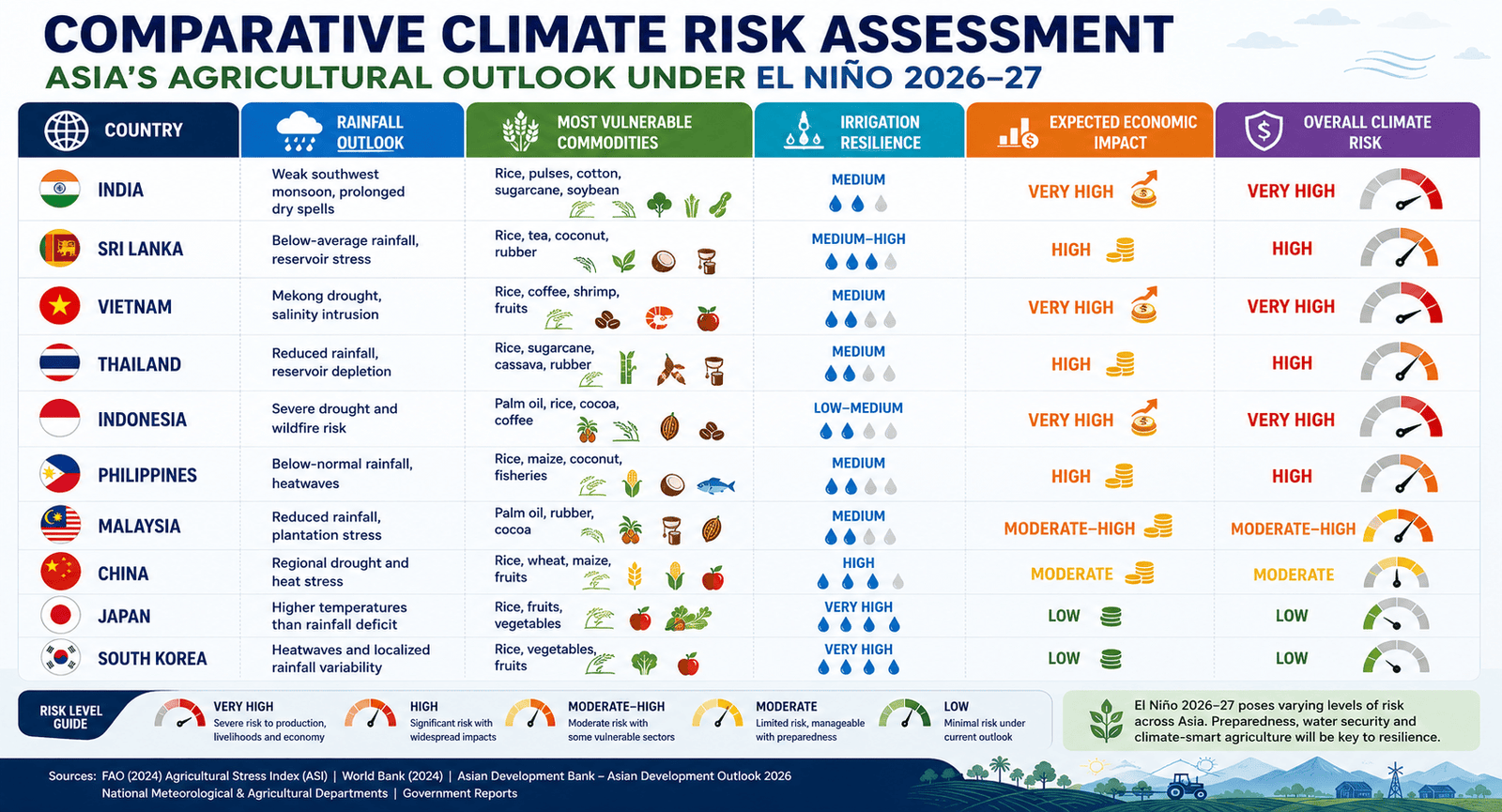
A serious climate threat is building for global agriculture. The World Meteorological Organization expects a strong El Niño to develop, raising the risk of widespread disruption through 2026 and 2027. Four decades of satellite data from the UN Food and Agriculture Organization point to South and Southeast Asia as a major risk zone, with a drought corridor stretching from Pakistan and India to Indonesia and the Philippines. The stakes are high. The region produces more than 90 per cent of the world’s rice and a large share of farmed seafood. Even a modest fall in monsoon rainfall during critical growing periods could therefore hit supplies and push food prices higher.
The damage would not be limited to crops. Prolonged drought and extreme heat could cut yields, weaken pastures, raise livestock feed costs and disrupt coastal fisheries that millions depend on for food and livelihoods. These risks are unfolding against a backdrop of record global temperatures, persistent inflation and geopolitical tensions. Developing countries are particularly vulnerable, accounting for more than 80 per cent of drought-related agricultural losses while often lacking reliable irrigation, insurance and financial safety nets.
The experience of the 2015–2016 El Niño shows why waiting for a crisis is a costly strategy. More than 60 million people were put at risk and international aid requirements reached $5 billion. The lesson is straightforward: acting before a drought hits is cheaper and more effective than responding after crops and livelihoods have already been damaged.
For Asia, the next El Niño should be treated as a test of preparedness. Investments in drought-tolerant seeds, satellite-based early warning systems, efficient irrigation, climate insurance and targeted financial support can help farmers absorb the immediate impact. More importantly, they can strengthen food systems against the increasingly unpredictable climate risks ahead.
Understanding El Niño and Why Asia Must Prepare
A major climate threat is taking shape over the equatorial Pacific, with serious implications for agriculture across Asia. El Niño, along with its cooler counterpart La Niña, is one of the main drivers of year-to-year changes in global weather. Its effects are felt far beyond the Pacific, altering monsoon patterns and rainfall across Asia—from delayed rains in the Indian subcontinent to dry conditions in parts of Southeast Asia, falling reservoir levels and volatile agricultural markets.
For Asia, El Niño is not just a weather event. The region produces more than 90 per cent of the world’s rice, leads global palm oil and aquaculture production, and is a major exporter of natural rubber, coffee, spices, tea and tropical fruits. Even a modest change in seasonal rainfall can therefore affect supplies, push up prices and add to food inflation in markets around the world.
The expected 2026–27 El Niño comes at a difficult time. Global temperatures remain high, freshwater resources are under pressure, geopolitical tensions continue to disrupt trade, and farmers are dealing with rising input costs. These pressures can magnify the impact of a climate shock, leaving farmers and food markets with less room to cope.
A Pattern Asia Knows Too Well
History offers a clear warning. Major El Niño events have repeatedly caused serious damage to agriculture across Asia, exposing weaknesses in water management, crop insurance and disaster preparedness.
During the 1997–98 El Niño, severe drought hit Indonesia, Papua New Guinea and the Philippines, damaging crops during critical growing periods. Indonesia also faced massive forest and peatland fires, creating widespread haze, disrupting transport and affecting communities and farms across Southeast Asia.
The 2015–16 El Niño was even more damaging. India experienced two consecutive years of weak monsoons, affecting millions of hectares of rain-fed crops, including pulses, oilseeds and coarse grains. Across Southeast Asia, water shortages reduced rice and palm oil production and led governments to impose tighter irrigation controls. Worldwide, the event put more than 60 million people at risk across 23 countries and required more than $5 billion in emergency humanitarian aid.
The 2023–24 El Niño showed that the effects can vary sharply from one region to another. A strong Indian Ocean Dipole added to rainfall shortages across the Indo-Pacific, with drought affecting Indonesia, Myanmar, Thailand, Cambodia, Laos, Vietnam and the Philippines. In Timor-Leste, prolonged drought left nearly 360,000 people—more than 27 per cent of the population—facing severe food insecurity. In Mongolia, an unusually dry summer followed by a harsh winter, known as a dzud, killed more than 5.9 million livestock.
These events show how quickly El Niño can move from a weather problem to a food, water and economic problem.
Why the 2026–27 Outlook Matters
The latest outlook is particularly worrying because of the expected strength and duration of the event. Monitoring by the U.S. National Oceanic and Atmospheric Administration shows rising sea-surface temperatures across the central and eastern equatorial Pacific, along with weaker trade winds and stronger rainfall activity over the central Pacific.
Current projections put the probability of El Niño conditions continuing into early spring 2027 at 97 per cent. Forecasters also estimate an 81 per cent chance that the event will reach “very strong” intensity between October and December 2026. If that happens, it would rank among the strongest El Niño events recorded since modern observations began in 1950.
The Food and Agriculture Organization’s Agricultural Stress Index System, based on 41 years of satellite data, has identified a broad drought corridor across South and Southeast Asia. It includes India, Sri Lanka, Myanmar, Thailand, Cambodia, Vietnam, the Philippines, Indonesia and Timor-Leste—many of the region’s key agricultural economies.
Beyond Rainfall: The Wider Impact
The effects of a strong El Niño will extend beyond a shortage of rain. Lower soil moisture can delay planting and reduce yields, particularly in rain-fed farming areas. Rice, corn and sugarcane are vulnerable at critical stages such as germination, flowering and grain filling. Extreme heat can further reduce crop yields.
Livestock will also come under pressure. High temperatures can reduce feed intake, milk production and fertility, while shortages of water and fodder can increase costs. Aquaculture faces its own risks as warmer water and lower oxygen levels can affect fish breeding and survival.
Changing monsoon patterns add to the uncertainty. Later monsoon arrivals, longer dry spells and sudden heavy rains are making traditional planting calendars less reliable. Recent events also show that El Niño does not always produce the same result in every country. During 2023–24, for example, Afghanistan received only 45 to 60 per cent of its average rainfall despite typically seeing higher rainfall during El Niño years.
For farmers, this means that past weather patterns can no longer be relied on as a guide on their own.
The Cost of Waiting
Low- and middle-income countries account for more than 80 per cent of drought-related agricultural losses worldwide. For small farmers, a failed harvest can mean lost income, rising debt, livestock sales and less food for their families. Governments, meanwhile, may have to shift money from development programmes to food imports and emergency relief.
The experience of recent years also shows that warnings are useful only when farmers and governments have time and resources to act. Programmes led by the Food and Agriculture Organization in Timor-Leste, Cambodia, Vietnam and the Philippines have used measures such as drought-tolerant seeds, micro-irrigation, livestock support and local weather advisories before severe conditions arrive.
The lesson is simple: preparing before a drought is far cheaper than dealing with its consequences afterwards. For Asia, the 2026–27 El Niño will be a test of how well governments, businesses and farmers can turn an early warning into timely action.
The Climate Outlook for Asia: Mapping Agricultural Risk Across the Region
The first warning rarely comes with a failed harvest. A rise in sea-surface temperatures in the equatorial Pacific can alter atmospheric circulation, weaken trade winds and shift rainfall patterns across continents. What begins as an oceanic anomaly can determine whether reservoirs fill or run dry, crops survive or fail, and food markets remain stable or turn volatile.
That chain reaction is already drawing attention across Asia. Governments are monitoring Pacific temperatures alongside domestic crop conditions, traders are revising supply forecasts, irrigation authorities are reviewing reservoir levels and agricultural ministries are updating drought plans. The emerging 2026–27 El Niño is no longer seen simply as a seasonal climate cycle. For a region that produces much of the world's staple food and supports nearly two billion livelihoods linked directly or indirectly to agriculture, it is an economic risk. The concern is greater this time because the event is developing against a very different climate backdrop.
Previous El Niño events occurred in a climate with greater natural buffers. Today, global temperatures remain at record levels, freshwater reserves are under pressure and groundwater in parts of South and Southeast Asia has been heavily depleted by years of irrigation. Reservoirs are recovering more slowly after successive dry seasons, while more frequent and intense heatwaves are increasing water loss from soils. Many farming regions are therefore entering the season with less room for error.
The U.S. National Oceanic and Atmospheric Administration reports that ocean-atmosphere coupling across the equatorial Pacific is strengthening. Current projections put the probability of El Niño conditions continuing into early 2027 at 97 per cent, with an 81 per cent chance of “very strong” intensity between October and December 2026. But the strength of El Niño alone will not determine the agricultural impact.
The World Meteorological Organization says natural climate cycles are increasingly interacting with long-term global warming. Higher temperatures increase crop water requirements, accelerate soil moisture loss and add heat stress during sensitive stages such as flowering and grain filling. The Food and Agriculture Organization’s Agricultural Stress Index System, based on more than four decades of satellite observations, has identified a broad agricultural drought corridor stretching from the Indo-Gangetic plains through mainland Southeast Asia and into the Indonesian archipelago. More than 80 per cent of global drought-related agricultural losses occur in low- and middle-income countries, where rain-fed farming remains widespread and farmers often have fewer options to cope.
India: The Monsoon Still Sets the Tone
In India, the monsoon continues to have consequences far beyond the farm. Agriculture contributes less than one-fifth of Gross Value Added but remains the main livelihood for more than 40 per cent of the workforce. Nearly half of cultivated land still depends on seasonal rainfall despite decades of investment in irrigation.
The key concern is not simply how much rain arrives, but when it arrives. A delayed monsoon, long dry spells in June and July, followed by intense bursts of rain can cause more damage than a season of evenly distributed below-normal rainfall. Drought years such as 1982, 1987, 2002, 2009 and 2015–16 have shown the link between strong El Niño events and weaker production of rice, pulses, oilseeds and coarse cereals.
Irrigation is also becoming less reliable. Groundwater levels continue to fall in states such as Punjab and Haryana, while rain-fed regions of Maharashtra, Madhya Pradesh, Chhattisgarh, Jharkhand and Odisha remain exposed to rainfall swings.
The effects do not stop at India’s borders. As a major exporter of rice, sugar, cotton, spices and horticultural products, any significant fall in Indian production can tighten global supplies and add to food inflation across importing markets.
Sri Lanka: A Question of Water
In Sri Lanka, the focus is increasingly on water storage. Reservoir managers are assessing whether supplies will be sufficient for the Maha cultivation season if rainfall weakens. Water has to be balanced between paddy, hydropower, urban consumption and export-oriented crops such as tea.
Tea illustrates the wider challenge. Prolonged moisture stress can reduce leaf growth, increase production costs and affect quality, weakening export competitiveness. Coconut and rubber plantations face similar pressures, while lower reservoir inflows threaten irrigation in the Dry Zone, a major rice-growing area.
Vietnam: When Drought Brings Salt
In Vietnam’s Mekong Delta, lower rainfall and river flows during El Niño can allow seawater to move further inland, affecting irrigation canals, rice fields, fruit orchards and shrimp farms. The drought and salinity intrusion of 2015–16 remains a major reference point, prompting authorities to strengthen salinity monitoring and review irrigation plans ahead of dry periods.
Vietnam’s coffee industry also depends heavily on adequate soil moisture during flowering, while aquaculture requires reliable freshwater supplies. As a major exporter of rice and coffee, disruptions in Vietnam can quickly affect international markets.
Thailand: Watching the Reservoirs
In Thailand, reservoir storage is becoming as important as rainfall forecasts. Authorities are monitoring inflows into major reservoirs in the Chao Phraya Basin because storage levels determine how much water can be released for rice and sugarcane.
Agriculture is also competing with manufacturing, tourism and growing cities for the same limited water resources. Maintaining Thailand’s position as a leading rice exporter will therefore depend increasingly on how effectively available water is managed.
Philippines: Drought Meets Import Dependence
For the Philippines, drought is emerging alongside the country’s familiar exposure to typhoons. Authorities are reviewing irrigation schedules, expanding seasonal advisories and strengthening crop insurance as El Niño conditions strengthen.
The country’s dependence on imported rice adds another layer of concern. If domestic production falls at the same time that exports from India, Vietnam and Thailand tighten, food prices could rise sharply and put further pressure on government procurement.
Across Asia, El Niño is therefore no longer just about rainfall. Warmer temperatures, depleted groundwater, lower river flows, stressed reservoirs and changing monsoon patterns are interacting to put greater pressure on agriculture.
The challenge is increasingly about how quickly governments, businesses and farmers can respond to these changes. Better water management, stronger crop protection, more reliable weather information and timely support for farmers will matter as much as the rainfall itself. The 2026–27 El Niño could become a major test of Asia’s ability to prepare before a climate event turns into a food supply crisis.
East Asia: Resilience Through Technology, but Climate Risks Continue to Mount
If South and Southeast Asia are bracing for less rain, East Asia faces a different test: can technology keep agriculture ahead of a warming climate?
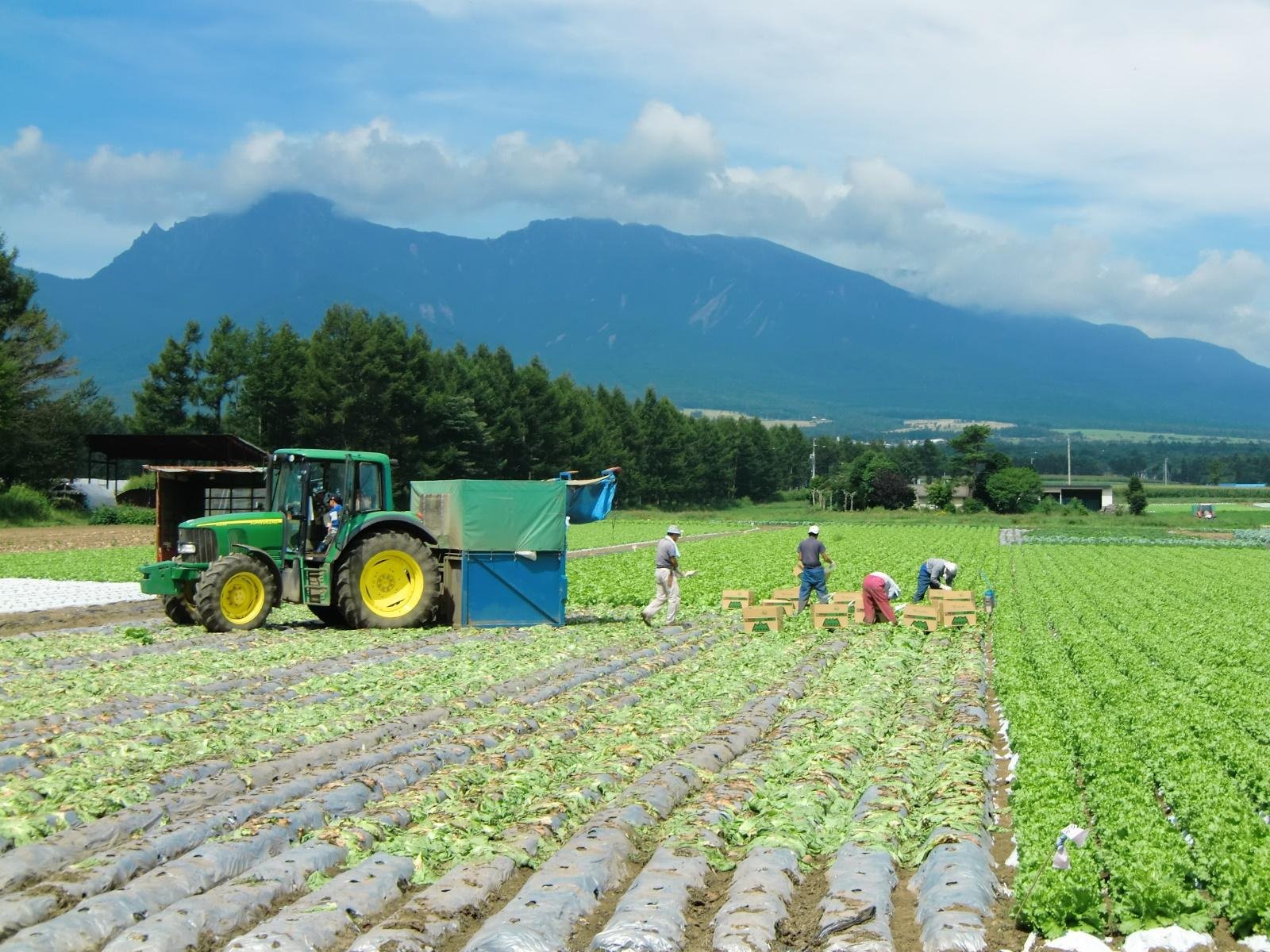
China, Japan and South Korea have spent decades building some of Asia’s most sophisticated agricultural systems—irrigation networks, satellite monitoring, seasonal forecasting, automated farms and increasingly AI-driven production. That investment has bought them an advantage. But rising temperatures are beginning to test how far that advantage can go.
China is at the centre of that test. Feeding nearly one-fifth of the world's population with less than one-tenth of its arable land has made food security a national priority. As El Niño develops, seasonal forecasts are feeding into crop planning, reservoir management and drought preparations.
In the north, provinces such as Henan, Hebei, Shanxi and Inner Mongolia could face higher temperatures and greater irrigation demand, putting wheat and maize under pressure. In the south, where rice production depends heavily on monsoon rainfall and river flows, the concern is less predictable: longer dry spells could be followed by intense rainfall.
China has seen the consequences before. The 2022 drought in the Yangtze River basin sent river levels sharply lower, cut hydropower generation and put irrigation and farm production under pressure. It was a warning that even an extensive water infrastructure network has limits when heat and water shortages arrive together.
The response has been massive. China is expanding high-standard farmland, precision irrigation, satellite crop monitoring, AI-based farm management and climate-resilient seed breeding. Digital platforms are giving farmers faster access to weather forecasts, pest alerts and irrigation advice. But scale remains the country's biggest vulnerability. Even a modest fall in grain production can push up imports of maize, soybeans and feed grains—and send ripples through global commodity markets.
Japan faces a different problem. Water shortages are rarely the main threat. Heat is.
Decades of investment in irrigation and meteorological forecasting have helped shield Japanese agriculture from widespread drought losses. But higher temperatures are increasingly affecting what farmers earn from what they grow.
Rice is the clearest example. Heat during grain filling can leave harvest volumes largely intact while producing chalkier, lower-quality kernels that fetch lower prices. In horticulture, apples, grapes, peaches and citrus face growing risks from sunburn, irregular flowering and shorter growing cycles. Livestock producers, meanwhile, are paying more to keep animals cool as heatwaves become more frequent.
Japan is turning to technology again. Robotics are helping offset an ageing farm workforce, AI is being used to improve irrigation decisions, and heat-tolerant varieties are moving from research into commercial production. Its Green Food System Strategy places climate adaptation firmly within food security policy—a logical priority for a country that imports a large share of its food and feed.
South Korea is following much the same path. Smart greenhouses, automated irrigation, environmental sensors and digital farm platforms have reduced agriculture's dependence on favourable weather. But the cost of maintaining that protection is rising.
El Niño years are generally associated with warmer summers and greater rainfall variability in South Korea. That means higher irrigation demand and greater heat stress for rice, vegetables and fruit. The challenge is increasingly one of efficiency: how to manage limited water as evaporation rises and traditional growing seasons become less predictable.
Smart greenhouses, AI-based pest monitoring, automated irrigation and precision farming are becoming central to that effort. Agricultural insurance is expanding alongside them, reflecting a simple reality: protecting farms from climate risk now requires both technology and financial protection.
China, Japan and South Korea have something many other parts of Asia lack—decades of investment in infrastructure, science and technology. That investment can reduce the damage from drought, heat and erratic weather. But it cannot stop temperatures from rising.
That is the real test facing East Asian agriculture. The question is no longer simply whether crops can survive a dry season. It is whether farmers can maintain yield, quality and profitability as extreme heat becomes a more permanent feature of the growing season.
Technology can buy time. It cannot change the climate.
Government Readiness Across Asia: Are Countries Prepared for the Next El Niño?
If previous El Niño events were measured by crop losses, the 2026–27 episode may be judged by something else: how quickly governments act before losses occur.
Across Asia, preparedness is moving upstream. Meteorological agencies are issuing seasonal forecasts months ahead, irrigation authorities are reviewing reservoir plans, and governments are using climate data to guide sowing, water allocation and farm support. The challenge is no longer predicting El Niño, but turning forecasts into timely decisions.
The shift comes from experience. The 1997–98 and 2015–16 El Niño events exposed the vulnerability of Asian agriculture, while 2023–24 showed how climate shocks can hit harder when groundwater is depleted, temperatures are higher and rainfall is less predictable. Today, preparedness starts well before drought appears on the ground.
India offers one of the clearest examples. As El Niño strengthens, agencies are tracking the monsoon at increasingly local levels. The India Meteorological Department is expanding weather forecasts and farm advisories through mobile apps, SMS and digital platforms, linking them to decisions on sowing, irrigation and fertiliser use. The Digital Agriculture Mission is bringing together satellite data, artificial intelligence and digital farm databases, while the Pradhan Mantri Fasal Bima Yojana provides a major financial buffer against weather-related losses.
But technology has limits. Nearly half of India's cultivated land remains rain-dependent, groundwater depletion threatens irrigation in several states, and fragmented holdings can restrict access to digital services. The problem is no longer simply producing better forecasts; it is getting the right information to farmers early enough for them to act.
China has taken preparedness to another scale. Food security drives major investment in satellite monitoring, smart irrigation, high-standard farmland, artificial intelligence and climate-resilient seeds. Remote sensing, drones, data analytics and predictive models allow authorities to track crop conditions in near real time, while agricultural insurance is expanding across the country's vast farm economy.
Japan has taken a different route. Strong irrigation networks, mechanisation and agricultural insurance have reduced exposure to seasonal climate swings. The focus is now shifting towards heat, with robotics, controlled-environment farming, precision agriculture and climate-resilient varieties central to its Green Food System Strategy.
South Korea is following a similar path. Smart greenhouses, sensor-based irrigation, AI pest monitoring and digital water management are helping farmers prepare for changing weather rather than simply respond to drought after it arrives. Insurance and real-time climate monitoring are expanding alongside these systems.
Further south, countries are adapting with fewer resources but growing urgency. Vietnam has used repeated drought and saltwater intrusion in the Mekong Delta to reshape agricultural planning. Salinity monitoring, modernised irrigation and climate-resilient rice varieties are being strengthened, while seasonal forecasts are increasingly linked to planting decisions.
Indonesia is taking a similar preventive approach after the severe El Niño episodes of 2015–16 and 2023–24. Seasonal forecasts are being incorporated into cropping decisions, alongside investments in reservoirs, irrigation and drought-tolerant rice. But implementation remains uneven across an archipelago of more than 17,000 islands.
In Thailand, the central concern remains water. Reservoir management, irrigation scheduling and seasonal forecasts are being coordinated to balance agriculture with rising urban and industrial demand. Satellite drought monitoring, precision farming and digital advisories are also expanding, although insurance remains concentrated among rice growers.
Malaysia is focusing on its plantation economy, using remote sensing, drones, satellite monitoring and precision management to protect palm oil and rubber production. Singapore, meanwhile, is taking a different approach altogether. With little conventional farmland, it is turning itself into a laboratory for vertical farming, controlled-environment agriculture and AI under its “30 by 30” strategy—and increasingly exporting technology and expertise rather than crops.
The broader shift is clear. Climate preparedness is no longer confined to weather agencies. It now involves agriculture, water, finance, technology and rural development. But the biggest gap remains between what science can predict and what farmers can actually do with that information.
Across much of Asia, millions of smallholders still depend on rainfall, insurance coverage remains limited and digital services struggle to reach remote communities. The technology is advancing. The question is whether the delivery systems can move fast enough.
Investment Opportunities During Climate Adaptation: Why Climate Resilience Is Becoming Asia's Biggest Agritech Investment Theme
Every major climate event creates winners and losers, and the 2026–27 El Niño is unlikely to be different. But this time, the biggest commercial opportunity may not be in commodity speculation. It may lie in the technologies helping agriculture cope with a hotter, drier and less predictable climate.
Across Asia, adaptation is moving from the margins of sustainability debates to the centre of investment strategy. For governments, it is increasingly tied to food security. For agribusinesses, it means protecting supply chains from repeated weather shocks. For investors, it is opening one of agriculture’s fastest-growing markets.
The scale of the opportunity is significant. The World Bank estimates that developing economies will need $215 billion to $387 billion a year by 2030 to adapt to climate change. Agriculture is at the heart of that spending. Producing more food is no longer enough; farmers must produce it with less water, under greater heat and amid more erratic weather.
That shift is already influencing agritech investment. AgFunder’s Global AgriFoodTech Investment Reports point to continued interest in biological inputs, precision agriculture, digital farm management, water technologies and climate information. The focus is gradually moving beyond technologies designed simply to raise yields toward tools that can reduce losses and make production more predictable.
Biologicals are one example. Biological crop protection products, microbial biofertilizers and biostimulants are moving from niche products into mainstream farm inputs across Asia. They can improve soil health, support root development and help crops cope with drought, salinity and heat. India, China and Southeast Asian markets are encouraging their use as they seek to reduce dependence on synthetic fertilizers. For investors, the attraction lies in expanding markets, regulatory support and growing farmer acceptance.
Artificial intelligence is changing farm decisions in parallel. Platforms that combine satellite imagery, local weather forecasts, soil-moisture data and crop models can help farmers decide when to irrigate, fertilize or apply crop protection products. Governments are also using these tools. India’s Digital Agriculture Mission, China’s smart-farming programmes and Singapore’s agri-food initiatives are bringing digital information closer to farmers. For technology companies, the appeal is scale: software can reach large rural markets without a matching increase in operating costs.
But water remains the biggest constraint. Agriculture accounts for about 70 percent of global freshwater withdrawals, according to the Food and Agriculture Organization. As drought becomes more frequent, irrigation efficiency is becoming a critical investment area. Drip irrigation, micro-sprinklers, automated pumps, soil-moisture sensors and digitally controlled irrigation systems are moving beyond yield improvement to become essential infrastructure. India and China are expanding micro-irrigation investment, while experience from Israel and Australia shows how better water management can reduce consumption without necessarily cutting yields. Every litre saved has an economic value.
The same logic is changing the seed business. Maximum yield has long been the main selling point for commercial varieties. Increasingly, farmers will also pay for yield that holds up under heat, drought, flooding and salinity. Public research institutions and private breeders are accelerating work on climate-tolerant rice, wheat and maize. Partnerships involving organisations such as the International Rice Research Institute are helping shorten breeding cycles and move new varieties towards farmers faster. As rainfall patterns become less reliable, genetics is becoming one of agriculture’s first lines of defence.
Adaptation is also creating new revenue streams in rural economies. Conservation tillage, agroforestry, cover crops and better nutrient management can improve soil moisture and reduce erosion while storing carbon. Agricultural carbon markets in Asia remain fragmented, but corporate demand is growing as food companies look for ways to reduce emissions across their supply chains.
The investment opportunity extends beyond farms. Governments and institutional investors are putting money into groundwater mapping, wastewater recycling, desalination, digital water monitoring and automated allocation systems. Singapore has shown how water engineering can address structural scarcity, while similar approaches are beginning to shape infrastructure planning elsewhere in South and Southeast Asia. Water technology is increasingly being treated as agricultural infrastructure rather than an environmental cost.
Controlled-environment agriculture offers another route to reduce exposure to weather. Vertical farms, hydroponics, aeroponics and automated greenhouses are expanding across East Asia. These systems reduce dependence on rainfall, can sharply lower water use and provide tighter control over pests and growing conditions. Singapore has made indoor farming a key part of its “30 by 30” food strategy, while Japan, South Korea and China are investing in commercial greenhouse production. High capital costs remain a hurdle, but falling equipment prices and greater climate volatility are improving the case for high-value crops.
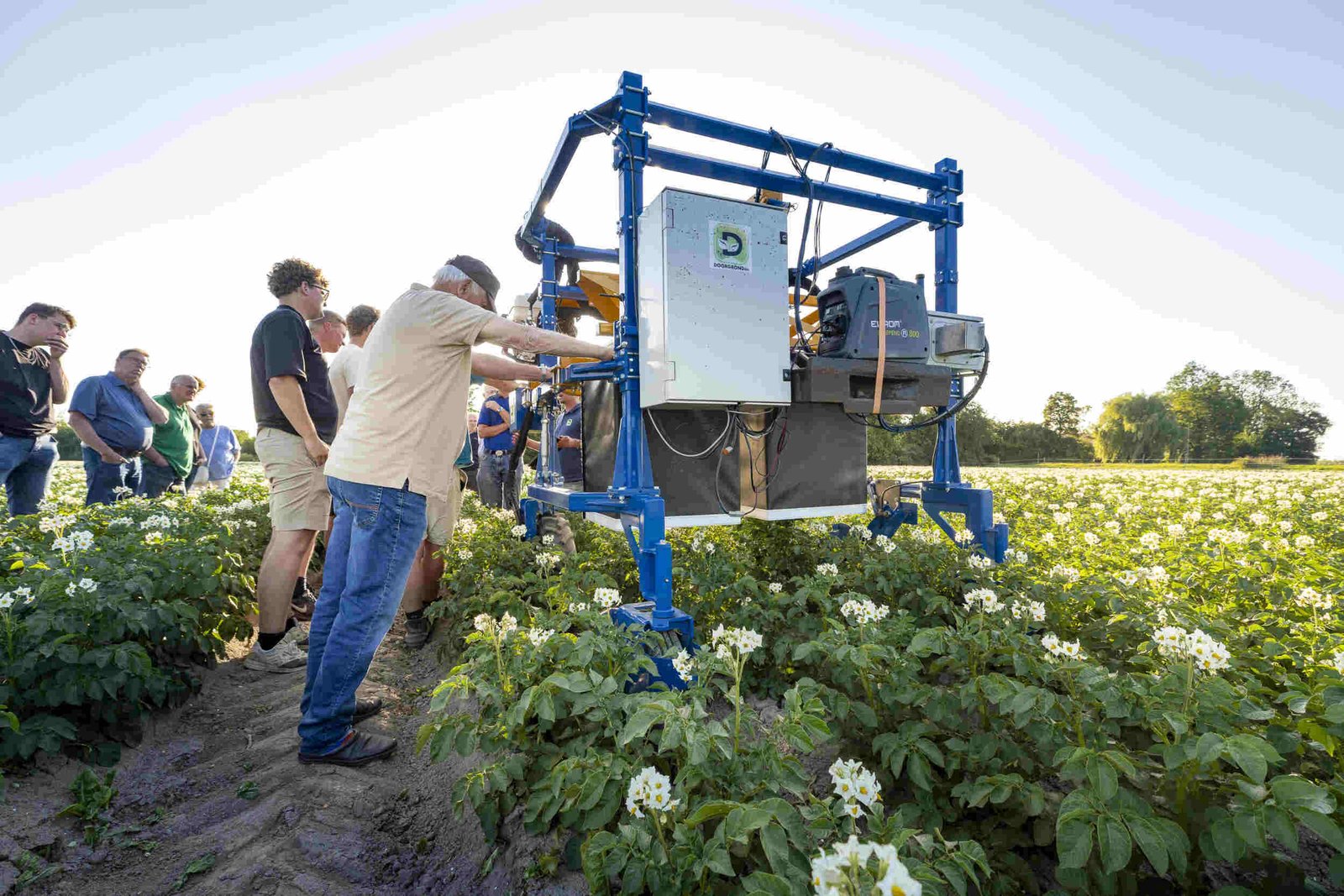
Labour shortages are adding another layer to the technology race. Ageing farm populations, rising rural wages and shorter planting windows are driving demand for autonomous tractors, robotic harvesters, drones and computer-vision systems. Japan and South Korea remain leaders in agricultural robotics, but adoption is spreading across China and Southeast Asia. When weather windows narrow, automation can help farms complete critical operations faster.
Perhaps the most valuable input, however, is information. As weather patterns become harder to predict, climate intelligence is becoming an increasingly important agricultural service. Local forecasting platforms can combine satellite data, machine learning and weather models to provide more precise farm advisories. The same information is valuable to traders, insurers, banks, food companies and logistics operators managing supply and price risks. Weather data is moving from a specialist service into core infrastructure for the food economy.
Behind these technologies is the wider digitisation of agriculture. Farm-management platforms are bringing weather, satellite imagery, soil data, finances and market information into a single system. Each tool addresses a different problem; together, they are changing where agricultural capital is going.
The next investment cycle is likely to be less about producing more at any cost and more about reducing the cost of uncertainty. For Asia, where climate risks are rising alongside food demand, that shift could be significant. The agritech companies that matter most in the coming decade may be those that help farmers use less water, withstand harsher weather and keep production moving when conditions turn against them.
Adaptation is no longer just an environmental priority. It is becoming an investment market in its own right.
The Road Ahead: Building an Agricultural System That Can Withstand the Next Climate Shock
If the 2026–27 El Niño proves anything, it is that Asia can no longer treat climate shocks as temporary disruptions. They are becoming structural features of agricultural production, shaping planting decisions, irrigation schedules, commodity prices, food inflation and export competitiveness. The question is no longer whether another major climate event will arrive, but whether the region can adapt quickly enough before it does.
There are reasons for cautious optimism. Governments have learned hard lessons from the droughts of 1997–98, 2015–16 and 2023–24, while meteorological agencies now provide increasingly reliable seasonal forecasts. But predictions alone do not save harvests. Their value depends on institutional follow-through: Can irrigation departments adjust reservoir operations before shortages emerge? Can extension officers reach farmers before sowing rather than after crops begin to fail? Can financial institutions deliver emergency credit quickly enough for smallholders to invest in drought-tolerant seeds or micro-irrigation? Increasingly, the difference between resilience and crisis lies not in predicting climate risks, but in acting on them.
That requires a more integrated approach to agricultural governance. Climate adaptation can no longer remain the responsibility of meteorological agencies or environment ministries alone. It must be embedded across agriculture, water resources, rural development, finance and infrastructure planning. Reservoir management, groundwater regulation, crop insurance, digital extension and agricultural research are interconnected elements of a broader resilience strategy. Countries that integrate them effectively will be better positioned to shield producers and consumers from rising weather volatility.
Water will be central to that transition. Decades of excessive groundwater extraction have weakened Asia’s buffer against dry years. Future investment must therefore focus not only on expanding irrigation, but on improving water productivity. Micro-irrigation, watershed restoration, managed aquifer recharge, rainwater harvesting and digital water accounting are becoming as important to agricultural policy as fertilizer subsidies and price support. Countries that manage water strategically rather than reactively will gain a growing competitive advantage.
The private sector has an equally important role. For agribusinesses, climate resilience is shifting from a sustainability initiative to a core commercial imperative. The next generation of climate-smart agriculture may depend less on breakthrough technologies than on scaling solutions that already work: drip irrigation, alternate wetting and drying in rice, soil-health restoration, conservation agriculture, short-duration varieties, precision nutrient management and mobile advisory networks. The challenge is no longer proving their effectiveness, but making them accessible and financially viable for Asia’s millions of smallholders.
Capital allocation will be critical. Climate adaptation is emerging as a major investment theme in agriculture, with capital moving toward farm-management AI, microbial inputs, precision irrigation, resilient seed genetics, weather analytics and digital financial tools. Increasingly, investors recognise that the next wave of agricultural innovation will be defined not by maximising yields under ideal conditions, but by sustaining productivity under volatile ones.
The strongest opportunity may lie at the intersection of climate resilience and rural finance. Weather-indexed insurance, satellite-based risk assessment, digital lending and climate analytics are changing how agricultural risk is assessed and priced. For banks and insurers, real-time climate intelligence is becoming as important as credit histories and collateral. The same technologies helping farmers manage drought are enabling financial institutions to deploy capital more efficiently and with lower risk.
The convergence of public policy, private capital and technology is creating a new agricultural economy in which resilience itself becomes a competitive advantage. Countries that can produce food reliably despite rising temperatures and erratic rainfall will strengthen their positions in global trade. Agribusinesses that de-risk supply chains will become more attractive to institutional investors, while farmers adopting climate-smart practices can build more profitable and shock-resistant operations.
Ultimately, that is the defining lesson of the 2026–27 El Niño. Climate itself is no longer the only unknown. Science can provide months of advance warning, and technology offers an expanding range of solutions. The real test is whether governments can turn forecasts into action, investors can turn capital into execution, and innovators can turn technology into resilience at scale.
--- Suchetana Choudhury (suchetana.choudhuri@agrospectrumindia.com)