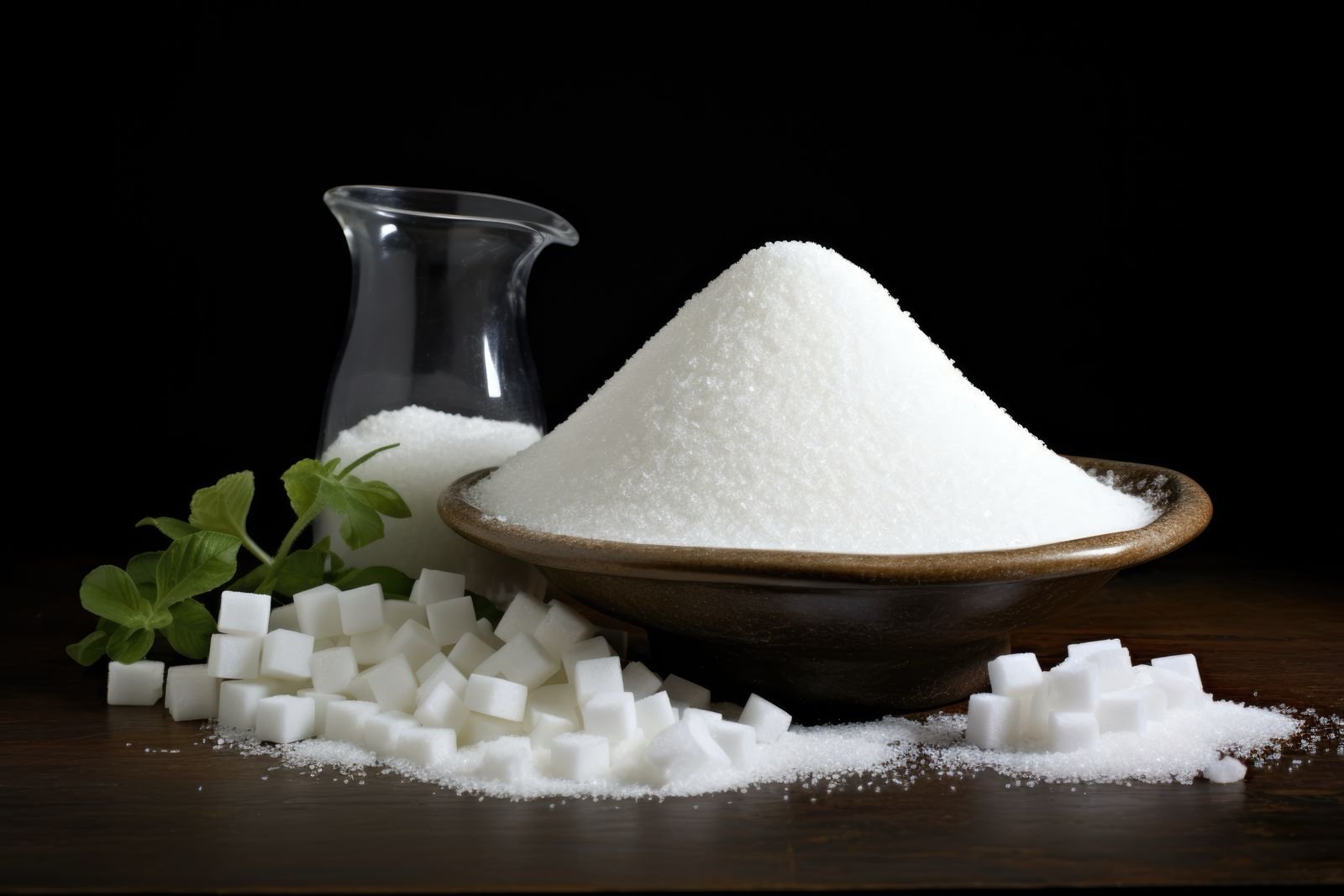
China’s sugar industry is putting billions of yuan behind a new proposition: the next growth market may not be ordinary sugar at all. From May through July 2026, companies across China disclosed a wide-ranging pipeline of new plants, expansions, technical upgrades and environmental approvals covering xylitol, maltitol, sorbitol, allulose, steviol glycosides, mogrosides, rare sugars, starch sugars, prebiotics and human milk oligosaccharides. The projects range from highly specialised facilities producing hundreds of tonnes a year to industrial-scale starch-sugar complexes measured in hundreds of thousands of tonnes.
The scale is striking. Heilongjiang Mingrui Pharmaceutical is planning a 50,000 t/a xylitol facility with investment of RMB 507.55 million. Anhui Pinqing Food Industry is expanding into 100,000 t/a of maltose and maltodextrin. COFCO Biochemical’s Chengdu operation has completed an expansion centred on 150,000 t/a of high-fructose syrup. And Shuangqiao (Jiaxing) Biotechnology has proposed a RMB 1.38 billion project with combined capacity of 1 million t/a for starch sugar and liquid sugar products. But the bigger story is not the headline tonnage. It is the diversification underneath it.
The latest investment cycle shows Chinese producers simultaneously defending scale in traditional starch-derived sweeteners, expanding established polyols such as xylitol and maltitol, and moving into rare sugars, natural high-intensity sweeteners, prebiotics, fibres and other functional carbohydrates. That is turning what was once largely a commodity-oriented sugar business into a much broader functional-ingredient market.
The pipeline also carries an important warning for anyone trying to estimate future Chinese sweetener supply: announced capacity is not the same as operating capacity. The 33 developments disclosed during the three-month period sit at different stages of the project cycle. Some are still undergoing environmental assessment. Others have received proposed or formal approval. Some have reached construction completion or commissioning, while others have completed environmental protection acceptance. Several projects contain alternative production options or products outside the sweetener category altogether.
The result is a pipeline that is potentially significant—but one that cannot responsibly be converted into a single number for new market supply.
Xylitol leads the polyol charge
The clearest July signal came from Heilongjiang, where two large xylitol projects emerged within days of each other. Heilongjiang Mingrui Pharmaceutical disclosed its full environmental impact assessment and public participation statement on July 10 for a new 50,000 t/a xylitol project in Hegang Bio-technology Industrial Park, Dongshan District, Hegang. The project represents RMB 507.55 million of investment and will be developed in two phases.
Phase I is designed for 15,000 t/a and is scheduled for construction from September 2026 to April 2028. Phase II, with another 35,000 t/a, is scheduled from December 2027 to November 2029. The project is not yet production capacity. It is a major investment proposal moving through the environmental approval process.
Harbin Huawei Biotechnology followed with another xylitol project. Its July 3 disclosure covered the EIA report and public participation statement for Phase I of a xylitol processing project in Shuangcheng Bio-technology Industrial Park, Harbin. The RMB 300 million project lists 20,000 t/a of crystalline xylitol and 3,200 t/a of liquid xylitol, with construction scheduled from July 2026 to April 2027.
The distinction between the project title and the product schedule matters. The headline refers to a 20,000 t/a xylitol processing project, while the product plan separately identifies 3,200 t/a of liquid xylitol. Those figures should not simply be added and presented as an unqualified 23,200 t/a capacity without reference to the underlying EIA structure. Together, the projects underline the continued attractiveness of polyols, even as the industry searches for newer sweetening systems.
Xylitol is not alone. Across the three-month pipeline, companies are also investing in maltitol, isomalt, sorbitol, mannitol and lactitol. The pattern suggests that polyols remain a core industrial segment even as the definition of the functional sugar market expands.
China’s rare-sugar push is getting more industrial
If polyols represent the established side of the market, rare sugars represent one of its more aggressive growth bets. Anhui Nuoyun Hecheng Biotechnology disclosed an EIA report on June 18 for a RMB 350 million sugar-substitute production base in Cihu High-tech Industrial Development Zone, Ma’anshan. The facility is planned at 4,500 t/a and will be built in two phases. The first phase targets 1,500 t/a of steviol glycosides. The second includes 2,000 t/a of D-mannose and 1,000 t/a of D-tagatose.
The combination is revealing. Rather than building around a single substitute, the company is assembling a portfolio spanning natural high-intensity sweeteners and rare sugars. Allulose is another important piece of the puzzle. Dongxiao Biotechnology’s RMB 170 million allulose project in Zhucheng, Weifang, Shandong, reached environmental-facility completion on June 4, with commissioning scheduled from June 5 through July 4. The new facility is designed for 3,000 t/a of allulose.
That milestone, however, needs to be read precisely. Completion and commissioning arrangements do not by themselves establish that environmental acceptance has been completed or that commercial production has started. Other projects point to the same diversification. Anhui Jinhe Industrial’s natural health product expansion includes 1,000 t/a of L-fucose within a much larger 9,000 t/a project covering food additives, plant extracts, beverages and compound food additives. Chengdu Beimu Biotechnology’s RMB 20 million biomanufacturing pilot and production base targets 2'-fucosyllactose, D-mannose, D-chiro-inositol, L-fucose and thaumatin, with a combined stated capacity of 100 t/a for its principal products.
The quantities are modest compared with starch sugar, but the economics and strategic positioning are different. These are products aimed at specialised food, nutrition, reduced-sugar and functional applications rather than simply replacing conventional crystalline sugar on a tonne-for-tonne basis.
Natural sweeteners move further up the value chain Stevia remains one of the strongest natural sweetener platforms in the project pipeline, but companies are increasingly moving beyond basic steviol glycosides. Quanyangtang (Jiangsu) Biopharmaceutical’s RMB 150 million expansion and technical upgrading project in Nantong includes 148.5 t/a of steviol glycosides, primarily rebaudioside M, alongside 135 t/a of 2'-fucosyllactose and 10 t/a of sweet protein.
The overall project is much larger at 5,110.2 t/a, but that number includes vitamins, lactoferrin, PQQ, astaxanthin and other formulations. It would therefore be misleading to treat the entire project as sweetener capacity. The explicitly identified sweetener-related output totals 293.5 t/a.
Inner Mongolia Hongxing Biotechnology’s technical upgrade adds another 200 t/a of raffinose, 50 t/a of stevia sweetener and 10 t/a of sesame extract. The RMB 23.79 million project will also discontinue existing chlorogenic acid, Grifola frondosa polysaccharide and rutin products, showing how technical upgrades can double as portfolio restructuring.
Guilin Sanleng Biotechnology is expanding its monk fruit platform with a RMB 40 million Phase II project covering 290 t/a of mogrosides and 2,500 t/a of concentrated monk fruit juice. Anhui Jinhe Green Carbon Technology is taking a different route. Its RMB 51.09 million upgrading project introduces 100 t/a of neohesperidin dihydrochalcone, while increasing Cashmeran capacity to 200 t/a. Existing WS-23 and WS-27 cooling-agent capacity remains unchanged.
Enzymaster (Taizhou) Pharmaceutical provides perhaps the clearest example of where project plans can diverge from what ultimately gets built. Its RMB 17.85 million technical upgrading project ultimately constructed 100 t/a of rebaudioside M. The facility was completed on July 25, 2025, with trial operation beginning September 1. An originally planned 100 t/a HMO production line was not constructed and will no longer be implemented.
That matters because the difference between planned and actual product mix can materially change assessments of future industry capacity.
Starch sugar remains the volume engine
For all the excitement around rare sugars and natural sweeteners, China’s starch-sugar business remains the heavyweight of the market. Anhui Pinqing Food Industry’s RMB 340 million expansion in Xiao County is designed for 100,000 t/a of principal starch sugar products. Maltose accounts for 50,000 t/a, divided between 35,000 t/a of liquid maltose and 15,000 t/a of solid maltose. Maltodextrin contributes another 50,000 t/a, comprising 30,000 t/a of liquid and 20,000 t/a of solid product. Corn fibre, corn germ and corn protein are also generated as by-products.
COFCO Biochemical (Chengdu) has already moved further along the project cycle. Its RMB 250 million expansion in Xinjin District covers 150,000 t/a of high-fructose syrup and 2,000 t/a of flavoured syrup. The project was completed in March 2026, with environmental acceptance monitoring information disclosed on May 13.
Then comes the outlier.
Shuangqiao (Jiaxing) Biotechnology’s proposed RMB 1.38 billion project in Haining, Zhejiang, is designed for a combined 1 million t/a of starch sugar and liquid sugar products. No individual product breakdown was provided in the source material, so the 1 million t/a figure should be treated as the total planned project capacity rather than assigned to any particular sweetener. If developed at scale, the project would dwarf most of the specialty-sugar facilities appearing elsewhere in the pipeline.
That contrast captures the dual structure of China’s sugar industry: huge factories continue to target bulk carbohydrate demand, while smaller facilities are chasing higher-value functional products.
Hunan Jindai Technology’s RMB 19.81 million starch sugar and PLA upgrading project shows another form of optimisation. Following completion in March 2026, the facility has capacity for 45,000 t/a of liquid starch sugar, 40,000 t/a of solid starch sugar and 12,000 t/a of protein powder. The upgrade should not be interpreted as a straightforward increase in total starch sugar capacity because it primarily changes the balance between liquid and solid output.
COFCO Biochemical (Ma’anshan) is similarly upgrading an existing platform through a RMB 16.85 million syrup co-integration and industrial demonstration project. The project covers 25,000 t/a of liquid sucrose and 6,000 t/a of flavoured syrup. Existing site capacity should not be counted as new capacity generated by this particular project.
Bengbu Xinghe Straw Biotechnology’s RMB 114.7 million project adds another dimension by using crop straw for sugar production and high-value resource utilisation. The project includes 10,000 t/a of mixed sugars and 15,000 t/a of high-efficiency fulvic acid organic fertiliser. Although the project title references 25,000 t/a, only 10,000 t/a is directly related to sugar output.
The prebiotic and HMO opportunity is expanding—but it is not conventional sugar Some of the most strategically interesting investments sit outside the traditional sweetener definition. Quantum Hi-Tech’s RMB 6 million technical upgrade in Jiangmen adds 1,000 t/a of P95S fructo-oligosaccharides, taking total FOS capacity from 25,000 t/a to 26,000 t/a. At the same time, blended syrup by-product capacity falls from 14,850 t/a to 13,500 t/a.
Nanning Shenglong Biotechnology’s Mashan project proposes 6,000 t/a of high-purity powdered FOS, 5,000 t/a of type-50 FOS syrup and 4,300 t/a of blended syrup. The facility is planned in Subo Industrial Park, Guangxi, with six months of construction and no investment figure disclosed in the source.
Newtrend Group is also targeting this intersection of functional carbohydrates and sweeteners. Its first Jiangxi project, Phase I of the Ji’an Life and Health Industry Manufacturing Base, carries RMB 390 million of investment and focuses on food-grade rice protein powder, rice starch, malt syrup, rice dextrin, rice syrup and high-maltose products.
Its second project involves RMB 279 million of investment and targets 40,000 t/a of dietary fibre and prebiotics plus 20,000 t/a of functional polyols and derivative starch sugars. The portfolio includes resistant dextrin, isomalto-oligosaccharides, crystalline and liquid maltitol, maltodextrin, high-fructose syrup and malt syrup.
The individual product capacities in the Newtrend project materials do not fully reconcile with the headline project totals, making it inappropriate to construct a capacity figure by simply adding every product listed.
The same caution applies to Baolingbao Biology’s 5,000 t/a high-purity resistant dextrin project in Yucheng, Shandong. The RMB 13.74 million facility was completed in December 2025 and underwent acceptance monitoring on May 8–9, 2026. Resistant dextrin is principally a dietary fibre, not a conventional sweetener.
Pectin and oligosaccharides are also moving into the same broader functional-ingredient ecosystem. Anhui Kangwei’s RMB 108 million project includes 1,000 t/a of nano-pectin, 100 t/a of pectic oligosaccharides and 2,000 t/a of citrus fibre. Meanwhile, Hesheng Vision’s RMB 200 million project in Hohhot targets 1,000 t/a of functional monosaccharides and oligosaccharides, including 2'-FL, 3-FL, LNT II, LNDFH II, 3'-SL, 6'-SL, LNT and LNnT. The listed individual capacities add up to 1,002 t/a, but the official project total is 1,000 t/a and should be used until the discrepancy is clarified.
Quanyangtang’s project and Chengdu Beimu’s pilot facility further reinforce the growing HMO and functional carbohydrate pipeline. These investments should not be lumped into a conventional sweetener-capacity calculation. Their applications, pricing structures and customers can be fundamentally different. But strategically, they are part of the same shift: manufacturers are seeking more value from carbohydrate chemistry than traditional sugar alone can provide.
Polyols, rare sugars and starch sugars are moving on different clocks
The project pipeline also reveals three distinct investment clocks. Starch sugars are being built at industrial scale because the market is mature enough to absorb very large volumes. Polyols occupy a middle ground, combining established applications with continuing demand for reduced-calorie and sugar-free formulations. Rare sugars and advanced natural sweeteners are being developed at far smaller capacities, reflecting a market where product differentiation and formulation performance can matter more than sheer volume.
Jiangsu Fenghe’s RMB 100 million expansion illustrates the complexity of the polyol category. Its phased environmental acceptance covers, among other products, 5,000 t/a of isomalt, 2,850 t/a of liquid ketose mixture and 5,000 t/a of crystalline maltitol, as well as an additional 7,750 t/a product capacity recorded in the source. The overall project is planned at 51,600 t/a, but trehalose, liquid trehalose, liquid glucose, fructo-oligosaccharides and liquid fructo-oligosaccharide syrup had not yet passed acceptance. The planned total therefore cannot be treated as current accepted capacity.
Henan Yuxin’s RMB 80 million lactitol and polydextrose expansion carries a similar caveat. Lactitol capacity is clearly stated at 5,000 t/a, but the source contains a discrepancy over polydextrose, with 15,000 t/a appearing in the project title and 10,000 t/a in the product plan. The final figure requires confirmation from the original EIA documents. Hubei Guangchen Pharmaceutical’s lactulose project adds another 2,000 t/a target, consisting of a 1,970 t/a production line and a separate 30 t/a line.
These projects show why the market cannot be assessed simply by aggregating every number appearing in project announcements. One million tonnes on paper does not mean one million tonnes of new supply
That distinction is becoming increasingly important as China’s project pipeline grows. Consider Shandong Tianli Pharmaceutical’s high-end biopharmaceutical project. The company has a designed capacity of 100,000 t/a of trehalose, backed by RMB 500 million of investment. The EIA was approved on February 29, 2024, and the project was actually completed on August 13, 2025. But the June 2026 update date is not the same as the environmental acceptance date, and the precise accepted capacity must be established from the acceptance report and attachments.
Dongxiao’s polyol industry upgrading project carries RMB 503.39 million of investment and targets mannitol, sorbitol, crystalline maltitol, VC-grade sorbitol solution and liquid maltitol. The project was reported in May, but the source did not specify the actual EIA acceptance date.
Its separate trehalose or specialty amino acid processing project is even more illustrative. The RMB 5 million unit can produce either 3,000 t/a of trehalose, 1,500 t/a of L-histidine or 1,500 t/a of L-phenylalanine, depending on customer orders. Those capacities are alternatives using the same production unit. They cannot be added together.
This is not a technical footnote. It changes the investment picture. Counting every announced number as incremental supply would materially inflate estimates of future market capacity.
The geographic map is broadening
The geographic distribution of these projects also suggests that China’s functional sugar build-out is not concentrated in one production cluster. Heilongjiang is emerging as an important xylitol investment base, with major projects from Mingrui and Harbin Huawei. Shandong continues to build depth across polyols, allulose, monk fruit, resistant dextrin and crop-straw sugar. Anhui is becoming a particularly diverse hub, with investments spanning starch sugars, rare sugars, natural sweeteners and syrup integration.
Jiangsu is strengthening its position in maltitol, fructo-oligosaccharides and functional extracts, while Zhejiang combines very large starch-sugar ambitions with higher-value rebaudioside M production. Hunan is upgrading starch sugar and PLA operations, while Guangdong, Guangxi, Inner Mongolia, Henan, Hubei, Sichuan and Jiangxi are all represented in the broader pipeline.
The geographic spread suggests that functional sugar investment is increasingly being integrated with regional biotechnology, food-ingredient, starch-processing and pharmaceutical manufacturing ecosystems rather than operating as an isolated sugar-industry niche.
The real competition is moving upstream
The most important takeaway from the May-to-July project disclosures is that Chinese companies are not simply betting on more sweetener consumption. They are betting on a change in what manufacturers want from sweeteners and carbohydrate ingredients.
That means lower-calorie formulations, natural-origin ingredients, rare sugars, fibre, prebiotics, specialised oligosaccharides and more sophisticated sweetener blends. It also means greater use of existing starch, agricultural and biotechnology platforms to manufacture multiple products rather than relying on one commodity output.
For bulk starch sugar producers, scale remains the weapon. For polyol manufacturers, product breadth and process efficiency are becoming increasingly important. For rare-sugar and natural-sweetener producers, the battle is likely to centre on yield, purity, formulation performance and the ability to move from pilot production to reliable commercial supply. That creates a market with very different economics under the same broad “functional sugar” label.
The 33 projects disclosed from May through July therefore point to an industry in transition—but not yet to 33 new factories supplying the market. Some are plans. Some are approvals. Some are upgrades. Some are already completed. Some contain products that are not sweeteners at all. Others include alternative products that cannot be produced simultaneously. And in several cases, project titles, product schedules and acceptance figures do not perfectly match.
The next phase will be about execution.
China has already demonstrated that it can build starch-sugar capacity at enormous scale. The emerging question is whether it can do the same for the higher-value end of the market—rare sugars, advanced stevia fractions, monk fruit derivatives, prebiotics, oligosaccharides and other functional carbohydrates—without creating a new wave of excess capacity.
China’s sugar industry is therfore expanding beyond sugar itself, and the companies positioning earliest across the functional carbohydrate value chain may be competing for a market whose most valuable products are measured not only in tonnes, but in functionality, formulation and margin.