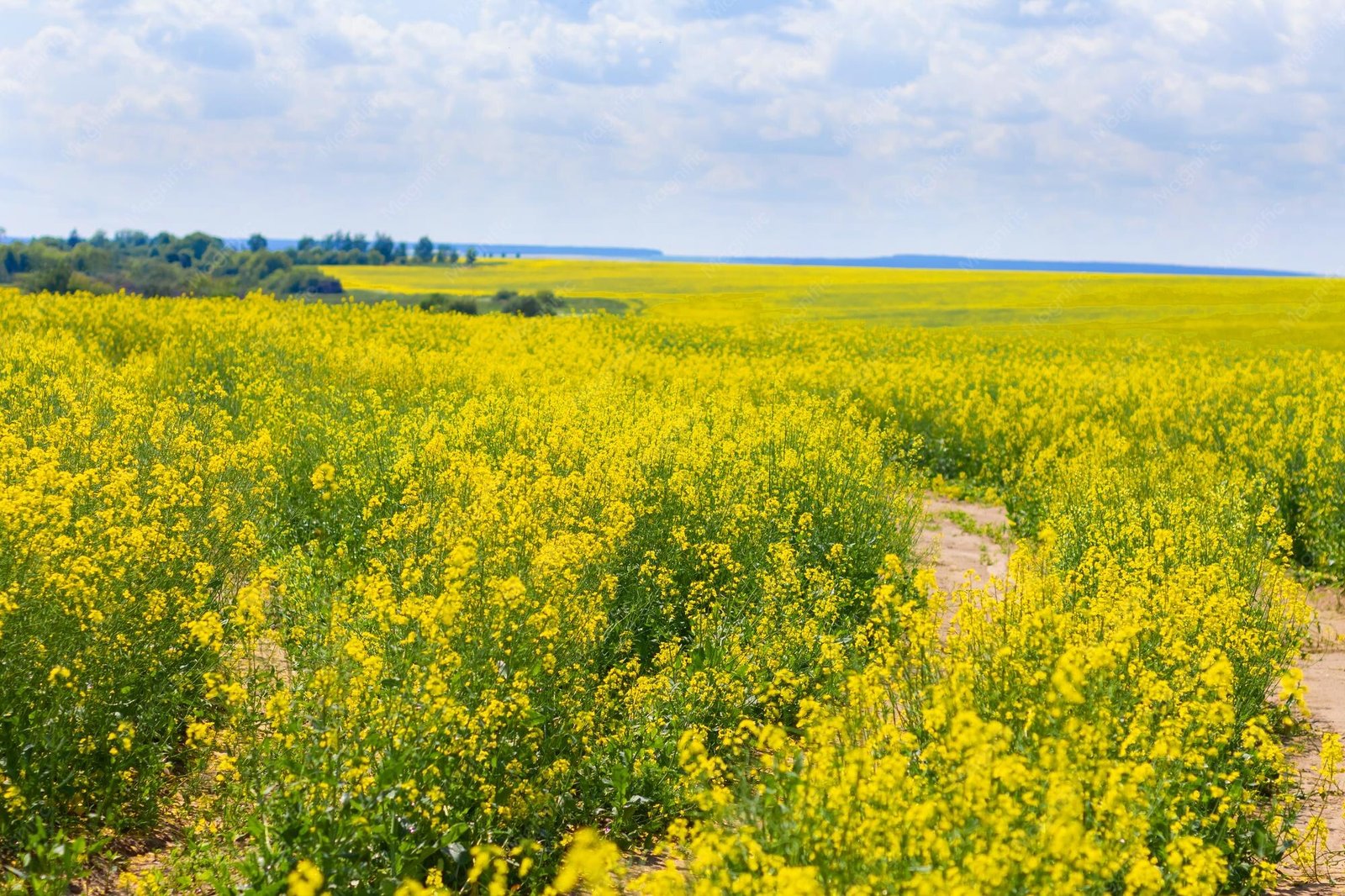
The National Agricultural Technology Extension and Service Center has published 52 typical cases of large-scale yield improvement for rapeseed in 2026. Eleven of those cases were achieved using two new varieties, Zhongyouza 501 and Zhongyouzao No. 1, bred by the Oil Crops Research Institute of the Chinese Academy of Agricultural Sciences (CAAS).
The results underline how improved genetics, combined with tailored agronomy, are helping lift rapeseed yields in China’s main production zones. Rapeseed is a key source of vegetable oil and animal feed, and higher yields per hectare can reduce pressure on land while improving farm incomes.
Zhongyouza 501: A Dense-Planting, High-Oil Variety
Zhongyouza 501 is a hybrid rapeseed variety developed to tolerate dense planting while maintaining high yield, high oil content and strong disease and stress resistance. It is the only major landmark rapeseed variety under China’s national biological-breeding special project.caas
The variety’s oil content reaches 50.38 per cent, and its tolerance for high planting density is more than 50 per cent higher than that of traditional varieties. When matched with a cultivation system described as “double-dense, double-high, multi-resistant”, it has produced seven of the 52 national high-yield cases across the upper, middle and lower reaches of the Yangtze River. In the 2026 summer harvest, Zhongyouza 501 achieved an average yield of 5,634.9 kg/ha on a 53.33-hectare demonstration plot in Dongtai, Jiangsu. That result set a national record for the rice–rapeseed rotation model.
In Xiangyang, Hubei, the same variety recorded an average yield of 4,315.5 kg/ha on a demonstration plot, about 70 per cent higher than the local average rapeseed yield in the previous year. The site has been cited as a benchmark for rapeseed yield improvement in Hubei for two consecutive years. In Huaxi, Guizhou, Zhongyouza 501 produced an average yield of 4,136.25 kg/ha on a demonstration plot, 119 per cent higher than Guizhou’s provincial average rapeseed yield in 2025. This set a single-season yield record for 6.67-hectare demonstration plots in the province.
The variety maintained stable yields despite adverse conditions at several sites, including significantly delayed sowing and continuous rain during the flowering and pod-filling stages. Those stresses typically reduce seed set and oil accumulation, making the results an indicator of the variety’s resilience.
Zhongyouza 501 was developed by the team led by Academician Wang Hanzhong at CAAS’s Oil Crops Research Institute. In earlier trials, the variety showed average yields of about 213 kg per mu (roughly 3.2 tonnes per hectare) in regional tests, with oil content above 50 per cent and oil yield per mu about 27 per cent higher than control varieties.
Zhongyouzao No. 1: Early Maturity for Triple-Cropping Systems
Zhongyouzao No. 1 is an early-maturing, high-yield rapeseed variety designed for triple-cropping systems such as rice–rice–rapeseed, where the window for rapeseed is short. Its average full growth period is 173.6 days, and its oil content is 44.37 per cent. Matched with appropriate agronomic practices, Zhongyouzao No. 1 created four of the 52 national high-yield cases in triple-cropping regions.
In Wan’an, Jiangxi, the variety achieved an average yield of 2,674.5 kg/ha on a demonstration plot in the 2026 summer harvest. That result broke the single-season yield record in Jiangxi’s triple-cropping region for the second consecutive year. In Guilin, Guangxi, Zhongyouzao No. 1 recorded an average yield of 2,552.25 kg/ha on a demonstration plot, setting a record for large-scale yield improvement of early-maturing rapeseed in Guangxi’s mountainous and hilly areas.
Early-maturing varieties are important in southern China, where farmers must fit rapeseed between two rice crops without delaying the next rice season. A shorter growth cycle allows rapeseed to be harvested in time for late-rice transplanting, making the crop compatible with intensive rice-based systems.
Why These Results Matter
China has been pushing a national campaign to raise yields of major oil crops, including rapeseed, as part of broader food-security and oilseed self-sufficiency goals. Rapeseed is grown mainly in the Yangtze River basin, where land is limited and farming systems are intensive. Higher yields per hectare can help narrow the gap between domestic production and demand for vegetable oils and protein meals. They can also improve the economics of rapeseed relative to other winter crops, encouraging farmers to maintain or expand planting area.
The 52 typical cases released by the National Agricultural Technology Extension and Service Center are intended to provide replicable models for other regions. They combine improved varieties with specific agronomic packages, such as optimized planting density, fertiliser management, mechanised sowing and harvesting, and pest and disease control. Zhongyouza 501 and Zhongyouzao No. 1 illustrate two complementary strategies. Zhongyouza 501 targets higher yield and oil content under dense planting in main rapeseed zones, including rice–rapeseed rotations. Zhongyouzao No. 1 targets time-constrained triple-cropping systems where early maturity is essential.
Both varieties are being promoted as part of a broader effort to upgrade rapeseed production. The Oil Crops Research Institute has emphasised that the new varieties are not only higher-yielding but also better suited to mechanisation and more resilient to stresses such as lodging, disease and adverse weather.
Challenges and Next Steps
Despite the gains, rapeseed production in China still faces structural challenges. Yield gaps remain between demonstration plots and average farmer fields. Input costs, labour availability and market prices can affect farmers’ willingness to invest in improved seeds and management practices.
The national programme is therefore focused not only on breeding but also on extension. The 52 cases are meant to show local agricultural bureaus, cooperatives and seed companies what is achievable under defined conditions, and to encourage wider adoption of the associated technologies. For Zhongyouza 501 and Zhongyouzao No. 1, the next phase will involve broader seed multiplication, regional adaptation trials and integration with local agronomic recommendations. The goal is to move from record yields on demonstration plots to higher average yields across large areas.