As Zambia looks to strengthen agricultural value chains and expand local grain-processing capacity, the economics of maize milling are increasingly moving beyond the purchase of individual machines. For processors and investors, the bigger challenge is designing plants that can match local power conditions, available space, production targets and the type of maize products the market demands.
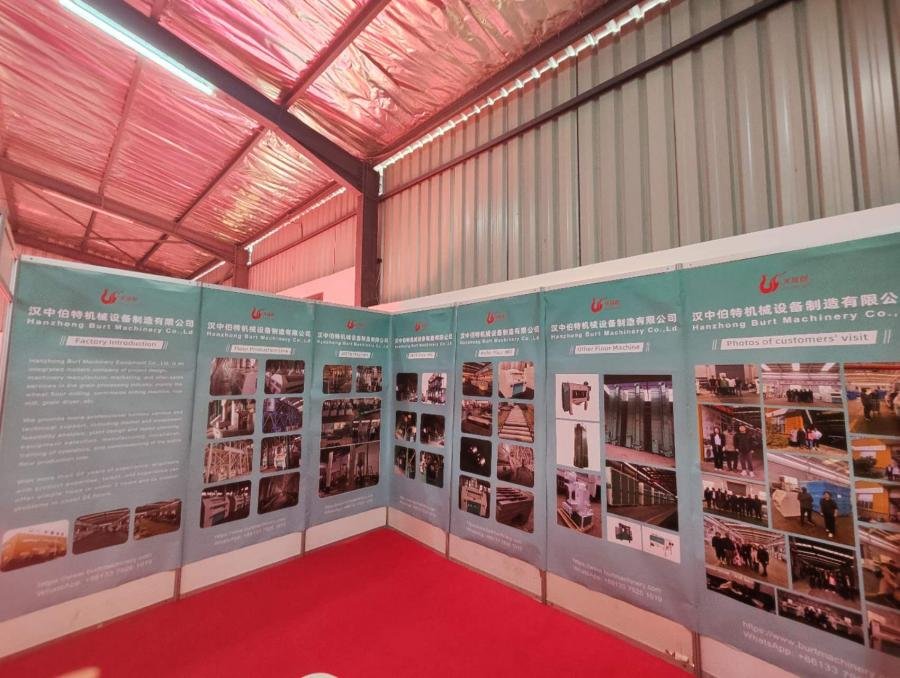
That was the focus of Burt Machinery’s showcase at Zambia’s 97th Agricultural and Commercial Show, where the Chinese machinery manufacturer presented customised maize processing plants spanning small commercial operations to automated facilities capable of processing 100 to 200 tonnes of maize per day.
The company used the exhibition to shift the conversation from equipment procurement to complete plant engineering, engaging with regional grain processors, project developers and investment groups on capacity planning, process configuration and project execution.
As a China-based supplier of customised maize processing plants, Burt Machinery positioned its solutions around a simple proposition: milling capacity needs to be designed around the operating environment rather than imposed through a standard equipment package.
That distinction is increasingly important in markets where infrastructure, electricity supply, facility dimensions and product requirements can vary substantially from one project to another. A plant designed for one operating environment may not necessarily deliver the same economics or performance elsewhere without modifications.
At the Zambia exhibition, discussions therefore focused on translating commercial objectives into technical specifications. Burt Machinery said it assesses factors including required daily capacity, desired flour fineness, finished-product mix, available workshop dimensions and local voltage standards before developing a proposed configuration.
The company’s capacity range covers systems from 5 to 50 tonnes per 24 hours, with configurations spanning 5–10 tonnes, 20–30 tonnes and 50 tonnes per day. At the larger end, its automated 100–200 tonnes-per-day lines are designed for higher-volume commercial and industrial operations.
The different capacity tiers are intended to give investors flexibility in matching processing scale with available capital, infrastructure and market demand. A smaller plant serving local or regional markets, for example, requires a fundamentally different equipment configuration and facility footprint from an industrial-scale operation supplying multiple commercial channels.
Product requirements also influence the plant design. Depending on the target market, the processing lines can be configured to produce maize meal, fine maize flour and different grades of maize grits. Behind those finished products is a continuous processing chain designed to move maize from raw-material intake to packaged output. Depending on the plant configuration, the process can include raw-material storage, cleaning, destoning, magnetic separation, dampening, peeling or degerming, milling, sifting, packing and stacking.
For larger facilities, Burt Machinery said raw maize can be stored in silos or warehouses before entering the processing line. A 50-tonne-per-day configuration, meanwhile, can incorporate equipment such as vibrating screens, destoners, magnetic separators, degermers, roller mills, sifters and automated packing systems.
The emphasis on an integrated process is significant because milling performance depends on how individual stages work together. Effective cleaning and impurity removal affect downstream processing, while degerming, milling and sifting determine the characteristics and consistency of the final product. Packaging and material handling then determine how efficiently finished products move into storage and distribution. For investors, that integration also has implications for operating costs, labour requirements, plant utilisation and future expansion.
Burt Machinery’s larger 100–200 tonnes-per-day systems are therefore positioned as engineered projects rather than off-the-shelf machinery packages. Plant layouts can be developed around the client’s raw-material characteristics, desired output, site dimensions and production targets.
The company’s approach reflects a broader shift in agricultural processing equipment markets, where buyers are increasingly evaluating machinery on the basis of total project economics rather than headline capacity alone. Power consumption, site utilisation, product recovery, automation, installation requirements and after-sales support can all influence the eventual return on investment. This makes the engineering phase particularly important. Matching equipment to local conditions before manufacturing can help reduce the need for expensive modifications once machinery reaches the site.
Burt Machinery said its involvement extends beyond equipment supply. Its project support covers feasibility analysis, plant-layout planning, equipment selection, manufacturing, installation, operator training, commissioning and after-sales service. The company also provides overseas engineering support for installation and worker training. Machinery is tested and adjusted before delivery as part of its project-preparation process, with the aim of ensuring that equipment is ready for commissioning once installed.
For projects in emerging agricultural-processing markets, such support can be as important as the equipment itself. Limited technical manpower, unfamiliarity with new processing systems and differences in local infrastructure can complicate commissioning if engineering support ends at shipment.
The Zambia showcase consequently served as more than a machinery exhibition for Burt Machinery. It provided a platform to demonstrate how processing plants can be configured around specific investment requirements, from relatively small commercial mills to high-capacity automated operations.
The broader opportunity lies in connecting maize production with more local processing capacity. For Zambia and other grain-producing markets, expanding milling infrastructure can allow a greater share of agricultural value to be captured closer to the source while creating processing capacity for differentiated maize products.
Burt Machinery’s pitch is that achieving that objective requires more than installing milling equipment. It requires a plant designed around the realities of the market—from raw-material handling and electricity supply to product specifications, facility constraints and long-term operating requirements. By bringing those considerations into the equipment-selection process, the company is seeking to turn maize-processing investment from a machinery purchase into a more structured engineering and project-development decision.