A large-scale rooftop agrivoltaic project at a dairy-farming complex in Anhui Province has entered commercial operation, creating a new model for combining renewable power generation with intensive livestock production. The Anhui Huadian Wuhe Modern Dairy 60MW Photovoltaic Power Project was completed and commissioned on July 27, 2026, according to information released by CCM. The project is located at the Modern Dairy Industrial Park in Zhuding Town, Wuhe County.
With a total installation area of approximately 560,000 square metres and installed capacity of 84.02 MWp, the project is described as the largest single-scale dairy-farm rooftop agrivoltaic project in Asia. The development uses the roofs of large dairy-cow sheds as the primary platform for photovoltaic generation. Rather than converting additional agricultural or rural land for solar panels, the project uses existing industrial and agricultural structures. The approach addresses one of the central challenges facing large-scale renewable-energy development: securing land without competing directly with farming, livestock production or other rural uses.
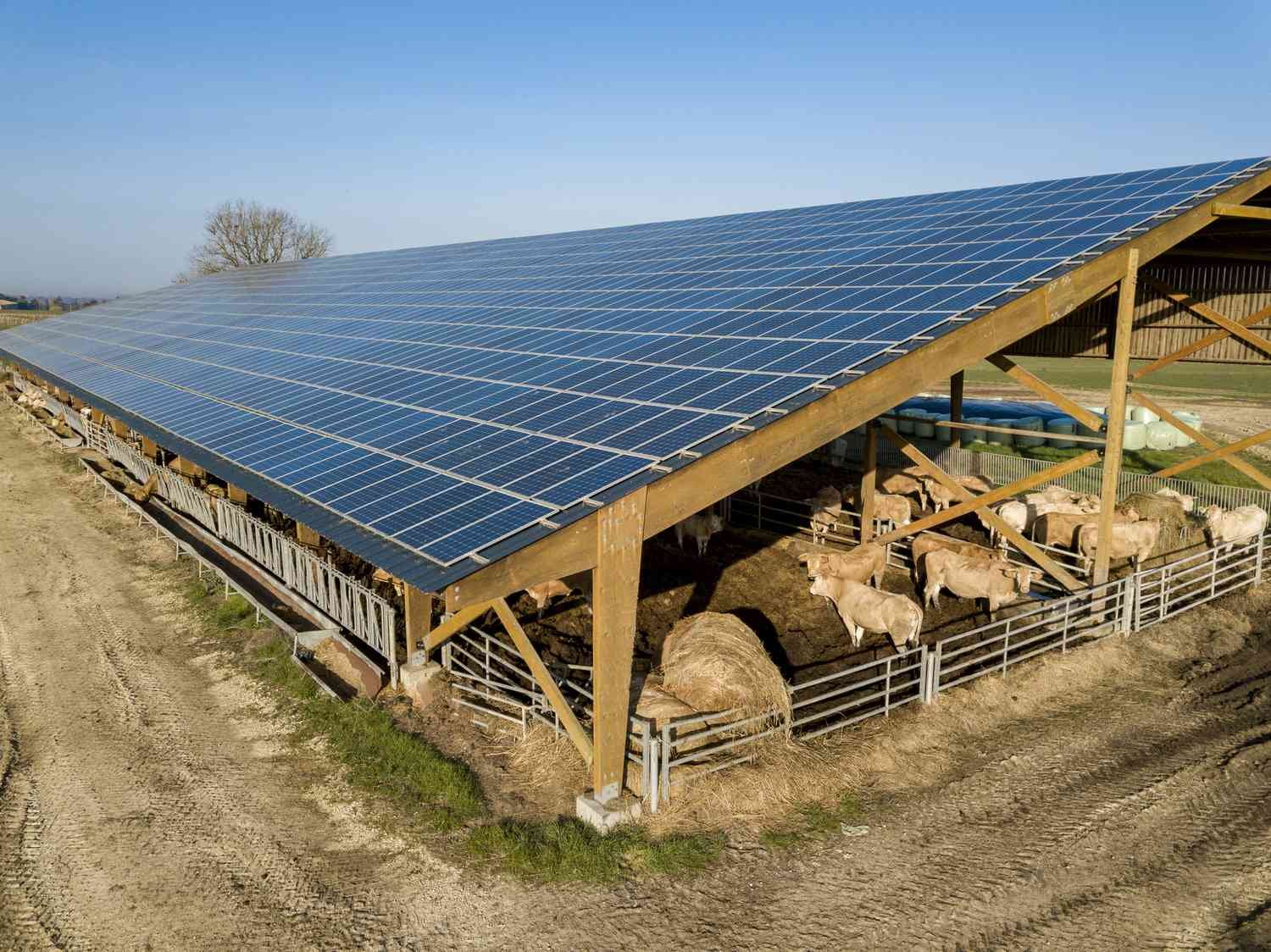
The project’s design follows a “power generation above, breeding below” model. Solar modules are installed across the rooftops, while dairy operations continue underneath. This three-dimensional use of space allows the same site to support two activities. The roof area generates electricity, while the ground-level facilities remain available for standardised, large-scale dairy production.
The model also offers an operational benefit for the livestock facilities. The photovoltaic modules provide shade over the cow sheds and reduce direct exposure to intense sunlight. By moderating heat gain, the rooftop structures can help stabilise the temperature inside the sheds. Temperature control is an important consideration in dairy farming because heat stress can affect animal comfort, feed intake, productivity and milk quality. The project’s design is intended to improve the conditions in which the cattle are housed while generating renewable electricity.
The project is positioned as an integrated green-power demonstration for a large dairy industrial park in East China. It has also been identified as a key new-energy demonstration project for Anhui Province during the 15th Five-Year Plan period. Its significance extends beyond the scale of the solar capacity. The project demonstrates how existing agricultural and livestock infrastructure can become part of the clean-energy system without requiring a separate land footprint.
For rural industrial parks, large farms and food-production complexes, rooftops, sheds, warehouses and processing buildings can provide substantial surfaces for solar generation. These sites may also have high electricity demand, creating opportunities for self-consumption, grid supply or a combination of the two. The Anhui project adopts a centralised power-generation model. All electricity generated by the facility is connected to the grid and supplied through the power system.
The project is expected to generate approximately 100 million kilowatt-hours of electricity annually and produce annual output value of around Rs 24 million equivalent in Chinese currency? Wait source says RMB 24 million. We need use source currency, not Rs. The requested style likely use RMB. We need correct. Let's rewrite sentence. Annual output value about RMB 24 million.
The combination of centralised grid connection and large installed capacity gives the project a clear commercial structure. Electricity generation is not limited to the dairy farm’s own demand and can be delivered into the wider power network. The development also reflects a shift in the way agricultural and livestock industries are approaching energy costs. Dairy farms consume electricity for milking, cooling, refrigeration, ventilation, water pumping, feed preparation, lighting and waste management. Rooftop solar can help reduce exposure to grid-power costs, although the project’s reported operating model involves feeding the generated electricity into the grid.
The project’s broader value lies in the integration of agriculture, livestock and renewable energy. Traditional livestock operations can be energy-intensive, particularly where they rely heavily on grid electricity or fossil fuels. By adding a large solar installation without displacing the underlying dairy activity, the project creates a path towards lower-carbon production.
The development also revives underused rural assets. Large dairy parks often include extensive shed roofs and other built structures that are not fully used for energy generation. The project converts that idle three-dimensional space into an income-generating energy asset. This approach could be relevant beyond dairy. Poultry farms, livestock parks, grain warehouses, cold-storage facilities, food-processing units and agricultural markets also have large roof areas that could host solar systems.
The economic case will depend on the condition and load-bearing capacity of existing roofs, the cost of structural reinforcement, grid-access arrangements, solar-resource availability, maintenance requirements and the operating life of both the buildings and the photovoltaic equipment. Rooftop agrivoltaics also require careful design. Panels must be installed without interfering with ventilation, animal movement, maintenance access, fire safety, water drainage or future expansion of the livestock facility.
The Wuhe project is therefore not simply a solar installation placed on a roof. It is an integrated infrastructure project in which electricity generation must coexist with animal housing, farm logistics and industrial operations. The project’s supporters describe it as a demonstration of “dual use of one space and efficiency improvement”. Its economic logic is based on extracting more value from existing assets rather than expanding the land footprint of either the dairy or the solar facility.
The environmental case is similarly linked to land efficiency. Solar generation on existing cow-shed roofs can reduce the pressure to allocate additional land for photovoltaic development. It can also support local decarbonisation objectives and contribute to the wider “dual carbon” goals associated with China’s emissions-reduction and carbon-neutrality strategy. The project is also intended to support the green transformation of the livestock sector. Its direct impact will depend on actual electricity generation, grid performance, operational availability and the extent to which the solar system improves the energy economics of the dairy park.
The reported annual output of approximately 100 million kWh provides a substantial renewable-power contribution. The project’s effectiveness will ultimately be judged by its generation performance, operating reliability, contribution to the grid, impact on the dairy facility and financial returns. The commissioning of the Anhui Huadian Wuhe project points to a broader trend in rural energy development. Agriculture and livestock production are increasingly being viewed not only as consumers of energy but also as platforms for generating it.
A dairy farm can produce electricity from rooftop solar, generate biogas from manure, recover nutrients through digestate and potentially reduce its dependence on external energy and fertiliser inputs. The rooftop photovoltaic project represents one component of that wider circular model. The most immediate opportunity is replication. If the Wuhe model performs as expected, similar rooftop solar projects could be developed at large dairy farms and livestock parks in other regions. The approach would be particularly attractive where land is scarce, grid demand is high and large agricultural structures already exist.
Replication will require more than copying the project’s installed capacity. Each site will need a separate assessment of roof area, structural integrity, livestock operations, electricity demand, grid access, financing, maintenance and regulatory permissions. The project also raises the importance of measuring benefits beyond electricity output. A complete assessment should examine whether rooftop panels reduce shed temperatures, improve animal comfort, influence milk productivity, lower farm energy costs and reduce emissions associated with dairy operations. Those outcomes will determine whether rooftop agrivoltaics becomes a niche demonstration or a scalable infrastructure model.
For Anhui, the project strengthens the province’s position in integrated renewable-energy development. For China’s livestock industry, it offers a practical example of how agricultural infrastructure can support clean-power expansion without sacrificing productive land. The project’s central proposition is straightforward: generate electricity above the dairy sheds while continuing livestock production below them. Its significance lies in what that arrangement represents—a move away from single-use land and single-purpose infrastructure towards a more integrated rural economy.
The Anhui Huadian Wuhe Modern Dairy 60MW Photovoltaic Power Project has therefore opened a new chapter in the relationship between livestock farming and renewable energy. With 84.02 MWp of installed capacity, approximately 560,000 square metres of installation area, projected annual generation of around 100 million kWh and reported annual output value of about RMB 24 million, it provides a large-scale test of the agrivoltaic model.