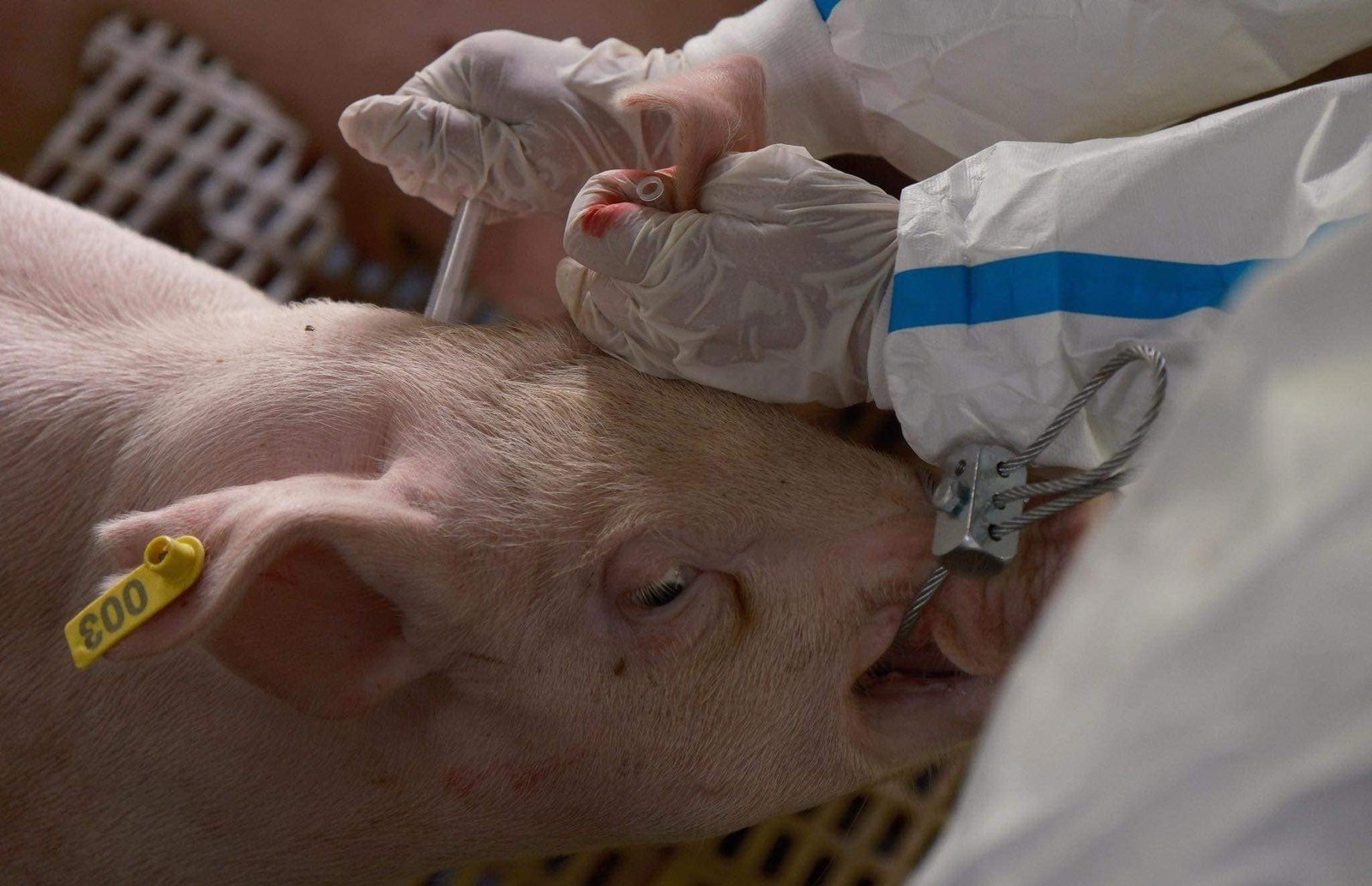
The Philippines has approved the commercial sale of its first African Swine Fever (ASF) vaccine for fattening pigs, giving hog producers a new weapon against a disease that has devastated the country’s swine industry and complicated efforts to rebuild domestic pork production. The Bureau of Animal Industry (BAI) has cleared AVAC ASF LIVE, developed by Vietnam-based AVAC Vietnam Joint Stock Company, for public sale and use. The approval marks a major step in the government’s effort to move the industry beyond years of relying primarily on outbreak containment, culling, biosecurity and restocking.
AVAC ASF LIVE is a live, attenuated, gene-deleted and freeze-dried vaccine designed to protect pigs against the African Swine Fever virus. Its commercial approval comes almost seven years after ASF was first detected in the Philippines in 2019. The outbreak has had a profound impact on the country’s hog industry. The national swine population has fallen to around 8 million heads, from approximately 13 million before ASF entered the country, leaving producers facing repeated losses, disrupted production cycles and difficulties in rebuilding their herds.
For the government, vaccination is now being positioned as an additional layer of protection within a broader national repopulation strategy. “The availability of a commercially approved ASF vaccine is crucial to our repopulation program,” Agriculture Secretary Francisco P. Tiu Laurel Jr. said. “It gives hog raisers another tool to protect healthy animals as we work to rebuild the industry and secure a more stable supply of pork.”
A second vaccine could widen producer choice
The Philippines may have another ASF vaccine option by next year. Agriculture Undersecretary for Livestock Constante J. Palabrica said a second vaccine, South Korea’s PROVAC, is currently undergoing testing by the BAI. If it clears the regulatory process, the product could potentially give hog raisers another vaccination option as early as next year. The emergence of multiple vaccine candidates is significant for an industry where ASF has remained one of the biggest barriers to herd recovery.
ASF does not infect humans, but its impact on pig production can be severe. Infected or exposed animals may have to be culled, while outbreaks can interrupt farm operations, restrict animal movement and make restocking more difficult. The disease has also changed producer behaviour. Some hog raisers have been reluctant to return to production after suffering repeated losses, particularly in areas where outbreaks have continued to recur. That hesitation has compounded the biological problem with an economic one: fewer producers willing to restock means a slower recovery in domestic pork supply.
ASF has reached almost every corner of the country
The scale of the challenge is reflected in the geographical spread of the disease. The BAI has reported ASF outbreaks in 76 of the Philippines’ 82 provinces, highlighting how deeply the disease has penetrated the country’s swine-producing landscape. The burden has been especially heavy for backyard raisers. Smaller farms often have fewer financial and technical resources to maintain stringent biosecurity systems and are less equipped to absorb the economic shock of animal losses.
For these producers, the cost of an outbreak extends beyond the value of pigs that are lost. Disease-related restrictions can delay restocking, interrupt cash flows and discourage farmers from returning to production altogether. That makes access to vaccination potentially important not only from an animal-health perspective but also from a rural-income and food-security standpoint.
Government weighs P1 billion vaccination support
The next question is whether the new vaccine can reach the producers who need it most. Palabrica said he has requested P1 billion next year from Tiu Laurel to support vaccination programmes, including ASF vaccination for backyard pig farms. The proposed funding could help lower the financial barrier to vaccination for smaller producers, who are among the most vulnerable to ASF-related losses. If implemented, such a programme would represent a shift from treating vaccination solely as a private farm-level expense toward using public funding as part of a national disease-control and herd-recovery strategy.
That approach could become increasingly important as the government attempts to bring small-scale producers back into commercial activity.
Vaccination will not replace biosecurity
The government is not treating the vaccine as a standalone solution. Instead, vaccination is being integrated into a broader repopulation framework involving disease surveillance, biosecurity, movement control and targeted restocking. That distinction is critical because vaccination cannot eliminate the need for disease monitoring and farm-level prevention measures.
The objective is to gradually rebuild the national swine herd toward its pre-ASF level while reducing the risk that new outbreaks will undermine the recovery. The challenge is particularly complex in a country where production is spread across commercial operations and large numbers of backyard farms. A vaccination programme therefore has to work alongside measures controlling animal movement, improving farm hygiene and identifying outbreaks early.
The economic stakes go beyond the farm
The consequences of the ASF crisis have extended well beyond the hog sector. The decline in the domestic swine herd has contributed to pork supply gaps and increased reliance on imports. At the same time, recurring disease outbreaks continue to threaten the ability of domestic producers to maintain consistent output.
A larger and healthier local herd could therefore have effects across the entire pork value chain. For farmers, herd recovery could restore production and income. For processors and retailers, greater domestic availability could provide a more dependable supply base. For consumers, stronger local production could eventually help ease price pressures associated with tight domestic supply and import dependence. But that recovery will not happen overnight.
Restoring a national herd that has fallen from around 13 million to approximately 8 million animals requires not only preventing further disease losses but also convincing producers that returning to hog farming is economically viable. That is where vaccination could have its greatest strategic value.
A new weapon, not a silver bullet
The approval of AVAC ASF LIVE does not mark the end of the Philippines’ ASF battle. It marks the beginning of a new phase. For years, the country’s response has centred heavily on containment, culling, surveillance and biosecurity. The commercial availability of an approved vaccine gives producers another tool with which to protect healthy animals and support restocking.
The potential arrival of PROVAC could further expand the options available to farmers, while the proposed P1 billion government support could determine how widely vaccination reaches the backyard sector. The bigger test will be execution. If vaccination can be combined effectively with surveillance, biosecurity, movement controls and targeted repopulation, the Philippines could begin rebuilding a swine industry that has spent years operating under the shadow of ASF.