The global agricultural inputs industry is undergoing a structural shift in how value is created and captured. While markets for biological products and functional inputs continue to expand, growth in treated hectares is not necessarily translating into greater profitability for manufacturers, distributors or growers.
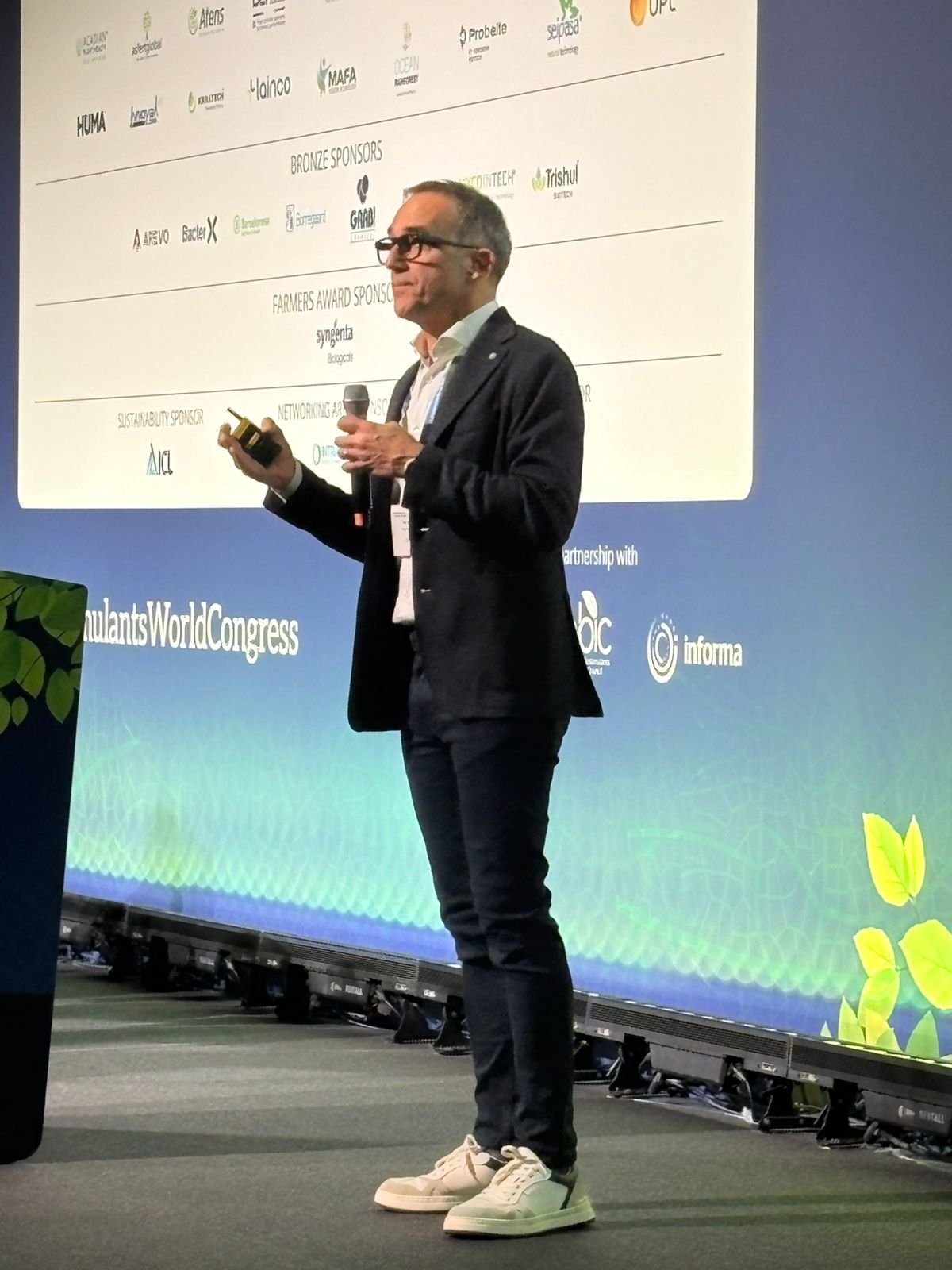
This transformation will be at the center of DunhamTrimmer Bio Intelligence's participation in the 6th Bioestimulantes Latam & Redagrícola Biocontrol 2026 Congress, to be held on September 2 and 3 at Hotel Las Dunas in Ica, Peru. On September 2, from 3:00 p.m. to 3:45 p.m. in the Main Hall, M. Sc. Manel Cervera, Managing Partner at DunhamTrimmer, will present “From Inputs to Integrated Functional Systems: How Agricultural Value Creation Is Moving Beyond Nutrition.”
The current landscape combines growing adoption of biological technologies with increasingly significant commercial barriers. According to Cervera, categories such as biofertilizers, biostimulants and biocontrol products are at different stages of maturity, but share common challenges, including price pressure, the entry of new competitors, commoditization and the difficulty of translating scientific innovation into scalable commercial advantages.
“Biofertilizers have enormous technological potential, particularly in biological nitrogen fixation and improving nutrient use efficiency. However, variable performance across environments and seasons, limited integration with conventional agronomic programs, and the need for changes in grower behavior continue to hinder their expansion as a standard agricultural tool,” Cervera said.
Biostimulants are also continuing to grow, but in an increasingly commoditized environment. Low barriers to entry, products with similar characteristics, price pressure and the arrival of new players are making differentiation more difficult.
“The challenge is to ensure that science-backed attributes become commercial advantages capable of achieving scale,” said the Managing Partner of DunhamTrimmer.
In biocontrol, growing adoption is being accompanied by signs of value erosion in major markets. Brazil stands out as an example of high utilization, but also intense competition and price pressure, while Europe and North America are showing signs of greater market maturity.
“We are seeing that growth in adoption does not necessarily mean proportional growth in the value captured by all players across the value chain. The question is no longer simply how much a category is growing, but who is able to differentiate and capture that growth,” Cervera explained.
This shift is taking place alongside a less favorable macroeconomic environment, characterized by pressure on farm margins, volatility in input costs, greater capital selectivity and geopolitical risks. At the same time, structural factors continue to support the expansion of biological products, including sustainability pressures, regulatory changes and the agronomic need for more resilient farming systems.
From nutrition to functional performance
It is within this context that the concept of functional nutrition is gaining momentum. The shift does not mean replacing nutrients, but rather expanding their role within the production system. According to Cervera, nutrients are increasingly being viewed as delivery systems, signaling platforms, stress-management tools, biological interfaces and performance stabilizers.
“We are moving away from thinking about nutrients as isolated products and toward understanding them as part of a functional architecture. Value increasingly lies in how they are integrated, how they are delivered and how they interact with the rest of the system,” he said.
This logic shifts the center of innovation. The greatest value no longer necessarily resides in the nutrient itself, but rather in the system architecture surrounding it. Formulation, compatibility, microbial interactions, delivery systems and operational fit become fundamental elements in ensuring that a technology performs under real field conditions.
The transformation is also changing performance metrics. Rather than pursuing exclusively the highest theoretical yield, growers are increasingly valuing production stability, resilience, predictability, nutrient efficiency and operational reliability—attributes that are particularly important amid growing climatic and economic volatility.
“Under conditions of greater uncertainty, stability and predictability can have as much economic value as maximum yield potential. Technology must deliver consistent performance and, above all, it must be easy to implement under the farmer's real-world conditions,” Cervera said.
The consequence is a shift in the commercial logic itself. Technically efficient products can fail to gain adoption when they introduce operational complexity, lack local validation, create compatibility issues or are difficult to implement.
“Agronomic performance alone is no longer enough. A technology must be executable under commercial conditions, which means considering operations, compatibility, local validation and the grower's ability to incorporate it into their production system,” Cervera emphasized.
DunhamTrimmer brings the integrated systems debate to Peru
This transformation will be at the center of DunhamTrimmer's participation in the 6th Bioestimulantes Latam & Redagrícola Biocontrol 2026 Congress. Organized by Redagrícola/Biologicals Latam, the event will bring together companies, researchers and international specialists to discuss biostimulants, biocontrol, innovation, biological technologies and market developments.
Since its first edition in 2021, the congress has been held in Peru, Mexico and Chile, bringing together more than 6,000 professionals from five continents. In 2026, the choice of Ica reinforces the event's connection with one of Peru's leading agricultural export hubs.
With nearly two decades of experience in the biostimulants and specialty fertilizers markets, Manel Cervera will address precisely this transition from agriculture based on categories and standalone products toward systems in which nutrition, biology, crop protection, signaling, application and compatibility operate in an integrated manner.
The central thesis is particularly relevant to Latin America: in increasingly complex agricultural systems, growers do not manage products individually, but rather the interactions between different components of their production systems.
“Growers do not farm categories; they farm the stack. And that stack includes genetics, fertility, biologicals, adjuvants, crop protection, timing, environmental conditions, analytics, logistics and labor. Value lies in how all these pieces work together,” Cervera summarized.
In this new environment, distributors are also gaining strategic importance. Rather than acting solely as logistics operators, they can take on roles as technical translators, local validators, compatibility advisors and solution integrators, helping reduce the complexity faced by growers.
“There is a very important opportunity for distributors that can move beyond selling products and help growers integrate solutions. Simplification and the ability to translate technology into tangible results will become increasingly important,” he said.
For the biostimulants and specialty fertilizers industry, the message is clear: the next competitive frontier will not lie solely in the discovery of new products, but in the ability to integrate them into agricultural systems and demonstrate their value under real-world conditions.
According to DunhamTrimmer's analysis, three areas are likely to concentrate value creation: integrated systems, operational simplicity and evidence-backed functionality.
In other words, the next market cycle may favor companies that are less focused on presenting the most ambitious standalone promises and more capable of building coherent, replicable and economically viable systems for on-farm use.
“Ultimately, the question is no longer simply whether the market is growing. The decisive issue is who will be able to capture that growth and convert innovation into sustainable value across the entire value chain,” Cervera concluded.