The International Rice Research Institute (IRRI) and BASF are expanding their research into low-emission rice production, with a new phase of the OPTIMA project set to examine an issue that has received less attention in the shift towards climate-smart rice farming: what happens to soil carbon when rice fields are managed to emit less methane.
The second phase of OPTIMA, or Optimizing Management for Reduction of GHG in Rice, will investigate how alternate wetting and drying (AWD) and other low-emission practices influence soil carbon, soil health and the long-term resilience of rice systems. The research builds on the first phase of the project, which found that direct-seeded rice and improved nutrient management combined with AWD could reduce water use and greenhouse gas emissions without compromising rice yields.
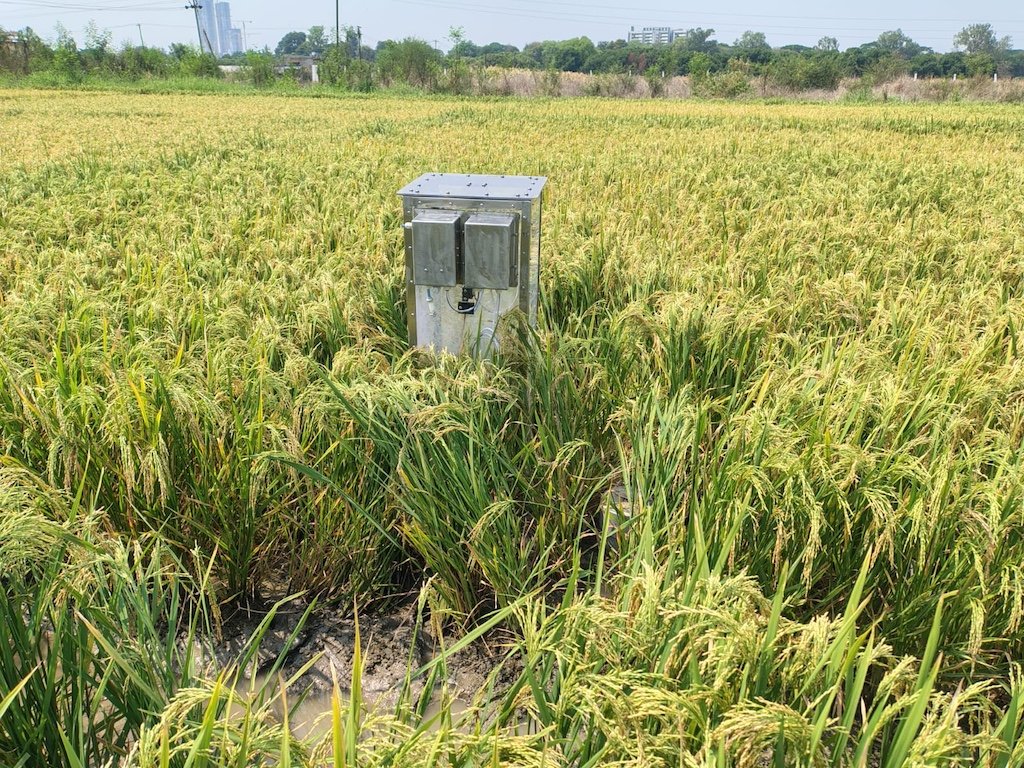
AWD is a water-management practice in which rice fields are allowed to dry periodically rather than being kept continuously flooded. The practice can substantially reduce methane emissions from flooded rice fields, making it one of the more widely studied approaches to reducing the climate footprint of rice cultivation. But lowering methane emissions can introduce another question beneath the surface. Changes in soil moisture alter the activity of microorganisms that break down soil organic matter. Under drying conditions, this can increase carbon dioxide emissions and potentially affect the stability of soil organic carbon over time.
That trade-off is at the centre of the next phase of the research. As rice production moves towards lower-emission systems, reducing methane alone may not provide a complete picture of the climate impact or the longer-term health of the soil. “OPTIMA 1 has established that the ORYZA model is a useful tool to quantify climate benefits of AWD. Our next step is to understand what its effect in the long term on system sustainability are, particularly for soil health and soil carbon dynamics,” said Ligia Bacchereti Azevedo, Senior Sustainability Manager for Agricultural Solutions at BASF.
“OPTIMA 2 will help us examine whether low-emissions practices can support long-term sustainability, while considering potential trade-offs,” she added. The two-year OPTIMA 2 project will assess different AWD practices and examine how straw and biochar interact with water management to influence rice productivity and carbon accumulation.
The project will also continue work on the ORYZA rice model, which was used during the first phase to account for water dynamics and predict patterns and variability in methane emissions across rice ecosystems. Long-term data from IRRI’s experiments will be incorporated into the modelling work to examine how soil-carbon stocks change over time and to validate the model’s simulations across different time horizons.
The modelling component could be important for efforts to move climate-smart rice practices beyond individual field trials. Better estimates of how management changes affect greenhouse gas emissions and soil carbon could support more reliable measurement of climate benefits and potentially strengthen the scientific basis for carbon-farming initiatives. For farmers, however, the question remains broader than carbon accounting. Low-emission practices must continue to deliver acceptable yields and economics while maintaining soil productivity over the long term.
“The continuation of this partnership is a testimony of the alignment of BASF and IRRI vision in ensuring transformation of rice systems towards low-emissions systems are supported by science-based evidence and farmers will be equipped with the best combinations of technologies optimized for productivity, profitability and sustainability,” said Dr Virender Kumar, Research Director, Sustainable Impact through Rice-based Systems Department, IRRI.
OPTIMA 2 began its work during the 2026 wet season. Its findings are expected to add to the evidence base on how rice systems can reduce greenhouse gas emissions while maintaining soil-carbon stocks and productivity. The research comes at a critical point for rice, one of the world’s most important food crops and a significant source of agricultural methane emissions. The challenge for the sector is increasingly shifting from simply cutting emissions to designing production systems that can balance methane reduction, soil health, carbon storage, water use and farm productivity over the longer term.