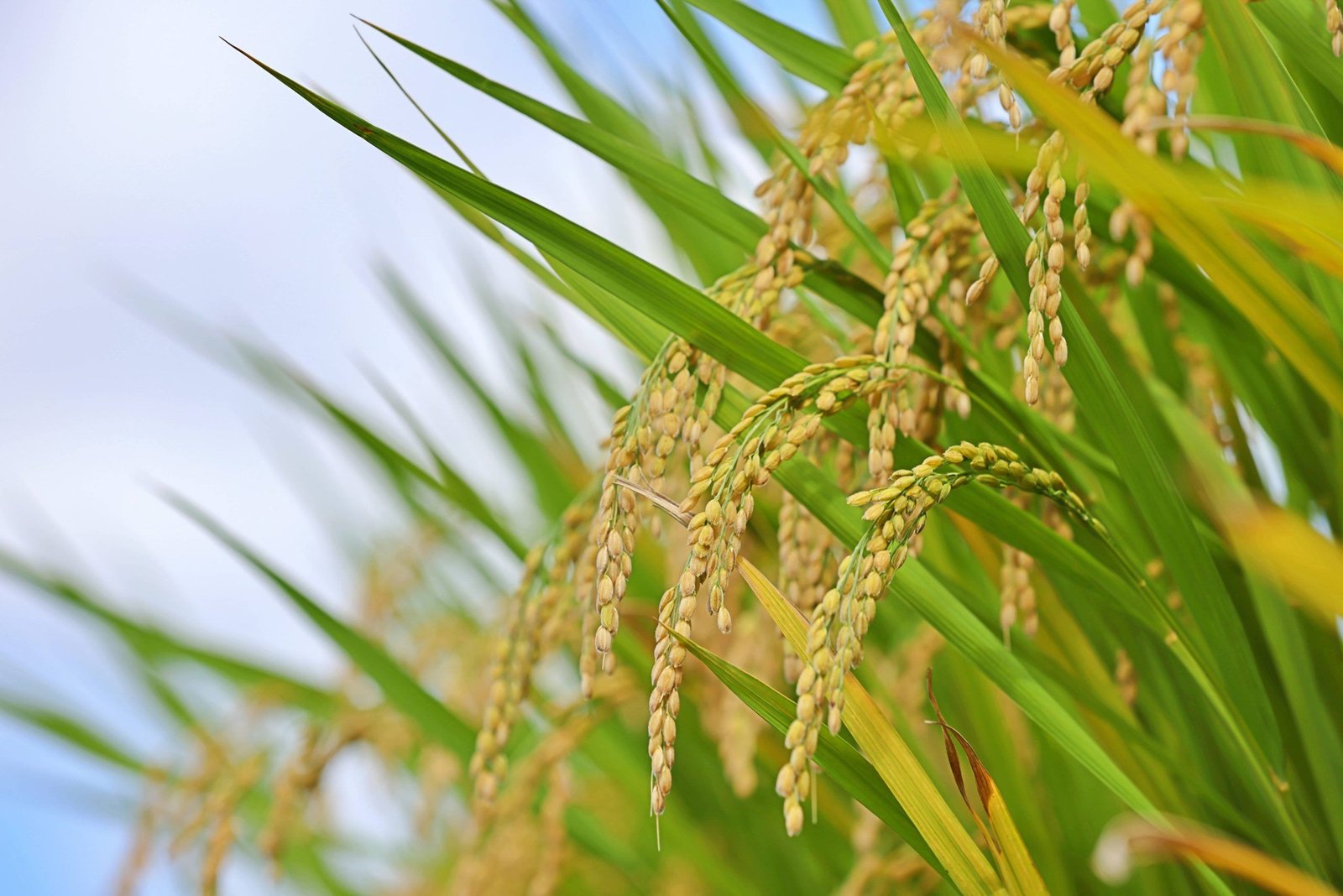
A rice variety designed to fight one of the crop’s most persistent insect threats has simultaneously set a new benchmark for super-rice yields in China. Department of Agriculture and Rural Affairs of Hunan Province conducted on-site yield acceptance monitoring at a 100-mu demonstration plot of Weiliangyou 5287, a planthopper-resistant hybrid rice variety developed by Yuan Longping High-Tech Agriculture Co., Ltd. The plot recorded an average dried-grain yield of 18,474 kg/ha, equivalent to about 18.47 tonnes per hectare, establishing a new high-yield record in super-rice acceptance monitoring, according to the company.
The result is significant not simply because of the headline yield. Weiliangyou 5287 has been developed around a breeding strategy that attempts to bring together high productivity and biological pest resistance, potentially reducing the dependence on chemical control in rice production. The hybrid rice variety was bred by the team led by Yang Yuanzhu, chief scientist at Longping High-Tech, and incorporates the Bph30 gene, which confers high resistance to brown planthopper, alongside broad-spectrum genes associated with resistance to rice blast. The variety is also positioned for premium grain quality and improved nitrogen-use efficiency.
The underlying resistance mechanism is genetic rather than pesticide-based. The Bph30 gene strengthens the cell walls of sclerenchyma tissue in rice plants, making it more difficult for brown planthoppers to penetrate plant tissues with their stylets. By restricting the pest’s ability to feed, the resistance can also reduce its reproductive capacity, providing a biological route to suppressing planthopper populations. That trait becomes particularly relevant in seasons when pest pressure and weather conditions combine to threaten yield. Longping High-Tech said the 2026 achievement came despite low temperatures and inadequate sunlight, while rice planthopper pressure was particularly severe.
Conventional crop protection can suppress pest populations, but repeated chemical intervention also raises production costs and creates concerns around resistance, residues and environmental impacts. Genetic resistance, when sufficiently durable, offers an additional layer of crop protection embedded directly into the variety. Longping High-Tech has been working on planthopper-resistant rice breeding since 2006. The company has collaborated with research groups, including Professor He Guangcun’s team at Wuhan University, to develop a molecular design breeding system focused on brown planthopper resistance.
The programme has so far produced nearly 100 insect-resistant varieties, with 49 rice planthopper-resistant varieties either approved or submitted for approval, according to Longping High-Tech. The latest yield result therefore represents more than a single demonstration-plot achievement. It provides a field-level indication of what molecular breeding can deliver when pest resistance is integrated with the broader productivity architecture of hybrid rice.
Shi Yonggan, general manager of Hunan Yahua Seeds Co., Ltd., a core subsidiary of Longping High-Tech, said the yield acceptance result represents a major breakthrough in the company's collaborative research on rice insect-resistant breeding and super-high yield. The bigger question now is whether such performance can be translated from high-performing demonstration plots into consistent commercial yields across diverse production environments. For rice-growing regions facing rising pest pressure, climate variability and growing scrutiny of input use, varieties that can combine yield, genetic pest resistance, disease resistance and nutrient-use efficiency are likely to remain an important direction for breeding programmes.
Weiliangyou 5287’s 18.47-tonne-per-hectare result puts that breeding proposition into unusually sharp focus: the next generation of rice improvement may increasingly be judged not by yield alone, but by how efficiently a variety protects and produces that yield under field-level stress.