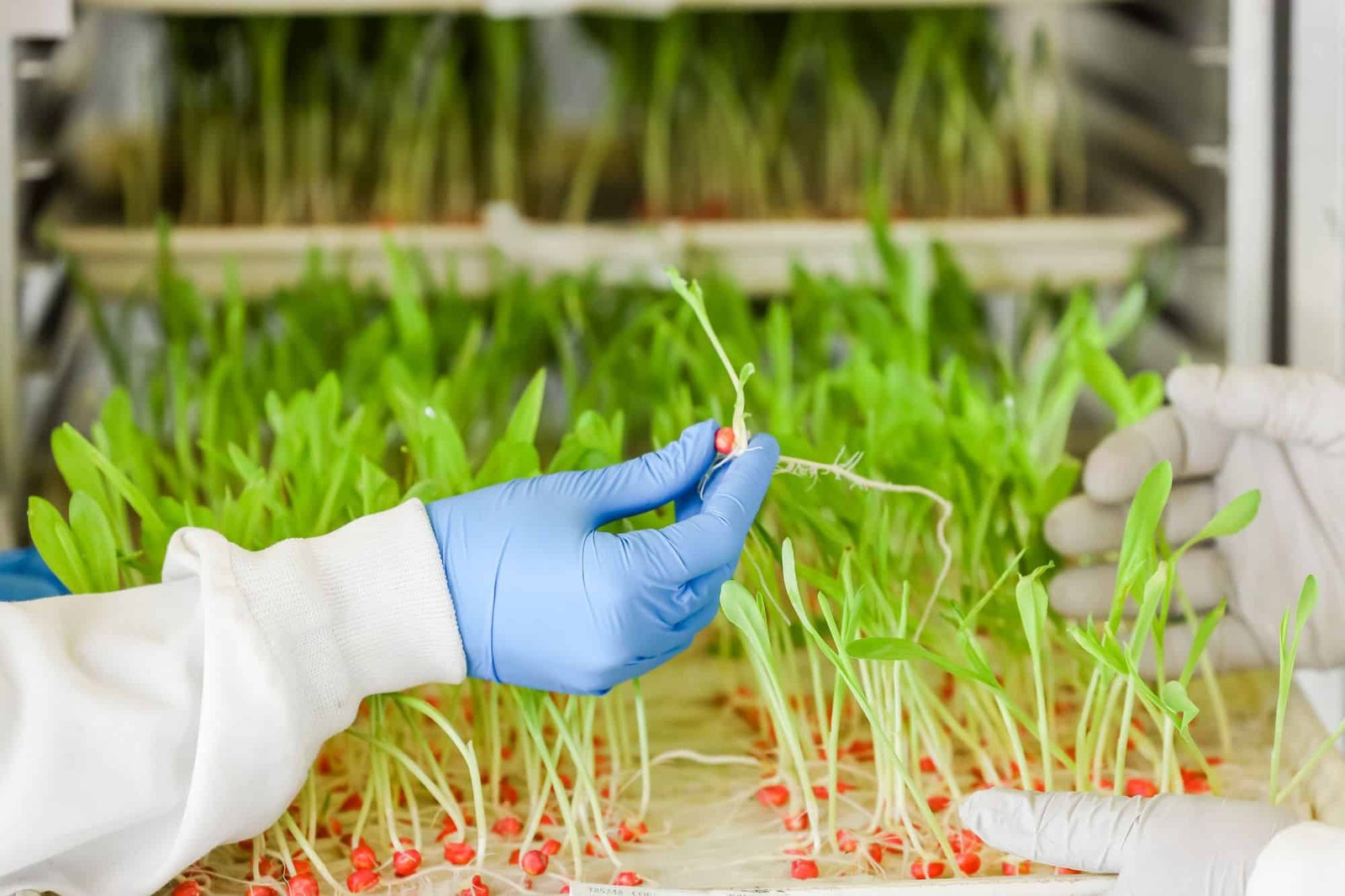
Biotechnology-based breeding could help improve crop resilience, resource-use efficiency and reduce dependence on chemical inputs, but its wider adoption in China is being constrained by institutional and market barriers, according to a recent qualitative policy analysis.
The study identified four bottlenecks across the agricultural value chain: collaboration between research and industry, biosafety approval, intellectual property governance and market acceptance. Researchers argue that institutional systems have not evolved at the same pace as advances in bio-breeding technologies.
Limited coordination between public research institutions and private companies was identified as one constraint on technology development and commercialisation. Lengthy biosafety assessment and approval processes can further delay the movement of new technologies from research into agricultural applications.
Intellectual property protection and technology transfer present another challenge. Gaps in the governance of plant varieties and the transfer of technologies from research organisations to commercial developers can make it harder for innovations to reach the market.
The researchers also highlighted consumer acceptance as a barrier. Public scepticism towards biotechnology can limit demand and complicate the commercialisation of specialised crops designed for applications beyond conventional food production, including bioplastics, bioenergy and climate-resilient agriculture.
These constraints could also prevent bio-breeding technologies from becoming more deeply integrated into circular agricultural systems, where crops and biological resources are designed to generate multiple economic and environmental benefits.
The researchers recommend an adaptive institutional framework that can evolve alongside advances in biotechnology. Among the proposed measures are more streamlined pathways for biosafety assessment, stronger legal protection for plant varieties and transparent product-labelling systems.
The study argues that greater alignment between technology development, regulation, intellectual property systems and market governance will be necessary if China is to convert advances in bio-breeding into wider agricultural and economic applications.
Rather than treating regulation, technology transfer and public acceptance as separate issues, the researchers call for a more coordinated policy approach spanning the development, approval, commercialisation and adoption of biotechnology-based breeding technologies.