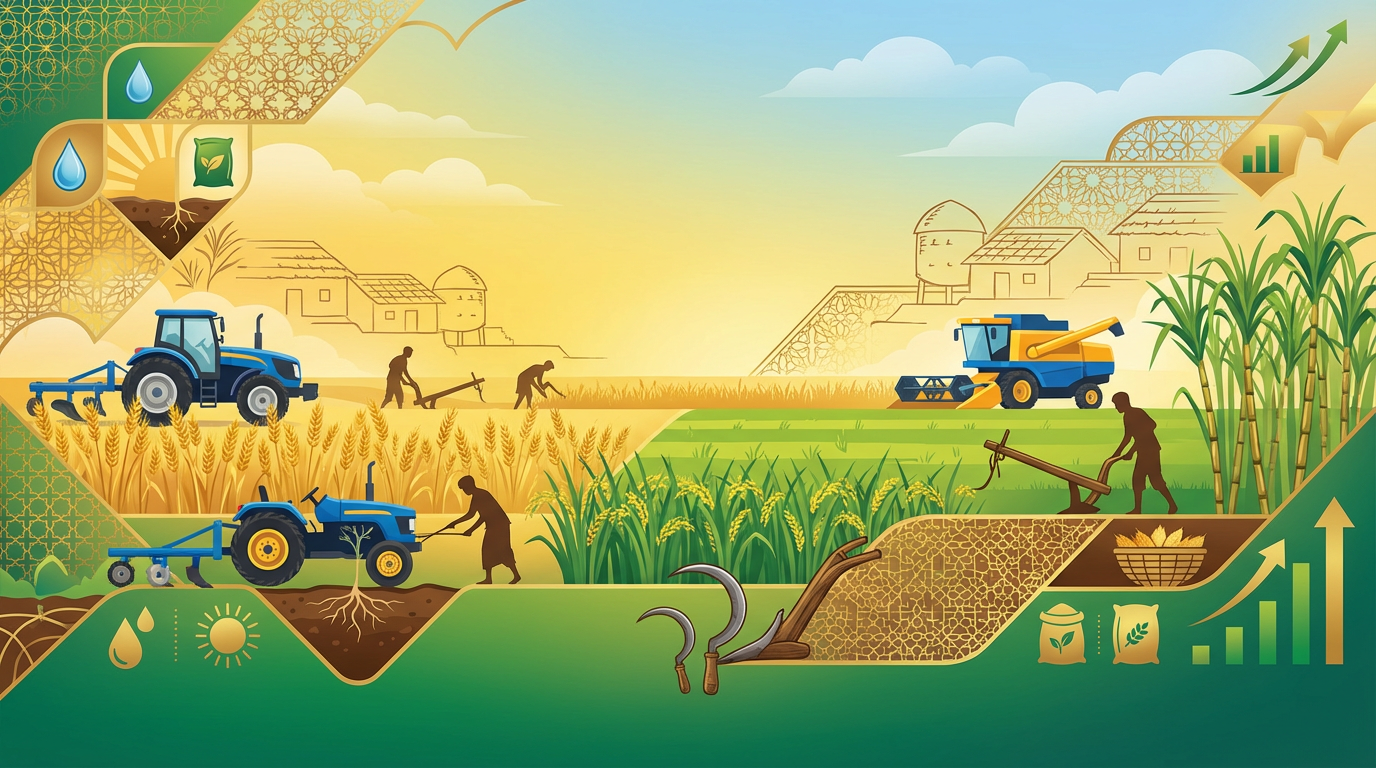
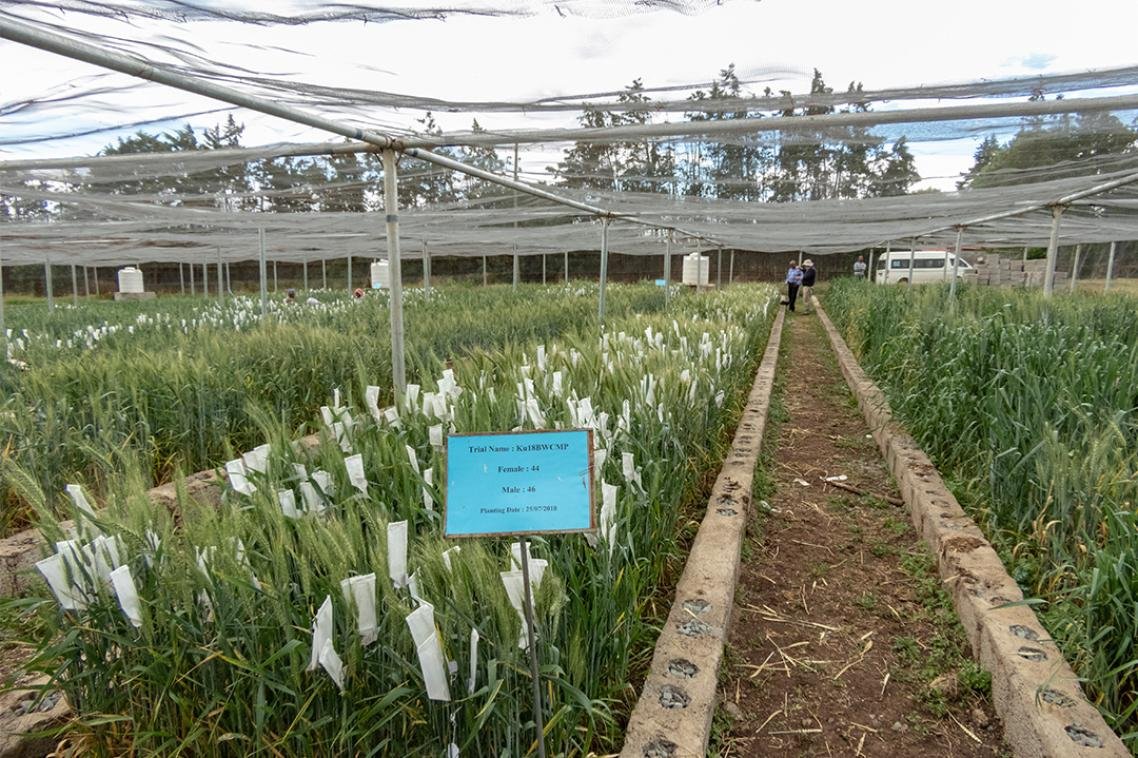
Ethiopia has strengthened its long-term agricultural research and crop improvement capabilities following the completion of a five-year breeding modernisation programme delivered in partnership with The University of Queensland (UQ). The initiative has enhanced the country's ability to develop improved crop varieties by modernising breeding systems, strengthening data-driven decision-making and accelerating the delivery of climate-resilient cultivars to farmers.
Implemented in collaboration with the Ethiopian Institute of Agricultural Research (EIAR) and supported by the Gates Foundation, the programme focused on transforming breeding pipelines for six strategically important food crops—maize, wheat, sorghum, teff, chickpea and common bean. Rather than concentrating solely on developing new varieties, the partnership sought to improve the institutional systems that guide how breeding decisions are made, how promising varieties are selected and how innovations reach farming communities.
The initiative introduced a more structured and evidence-based approach to crop improvement by integrating clearer product advancement frameworks, enhanced field performance evaluation and stronger alignment between breeding objectives, farmer priorities and evolving market demand. Digital tools and streamlined workflows were also deployed to reduce manual processes, enabling faster and more informed breeding decisions across research programmes.
According to the project partners, the collaboration was designed to create lasting institutional capacity rather than short-term productivity gains. By embedding modern breeding practices within EIAR's research systems, the programme has established a foundation capable of responding to emerging agricultural challenges, including climate variability, population growth and changing food system requirements.
Professor David Jordan of The University of Queensland said the partnership was built on complementary agricultural experiences shared by Australia and Ethiopia, particularly in tropical and subtropical production environments.
"Many of the crops and production challenges in Ethiopia are familiar to us in Queensland, particularly in tropical and sub-tropical environments. That gave us a strong foundation for collaboration, while the real expertise on local farming systems sat with EIAR scientists and breeders. Our role was to work alongside them to improve decision-making processes and support the use of modern tools and data."
Professor Emma Mace said the programme's greatest achievement lay in strengthening institutional systems capable of delivering long-term impact beyond the project's duration.
"This work was never about a single season or a single harvest. It was about building systems that can respond to future farming challenges in Ethiopia including climate variability, population growth and changing market needs. EIAR already had highly capable scientists and breeders – this partnership helped achieve stronger coordination, more transparent decision-making and better use of evidence across their breeding programs."
The project also highlighted the importance of organisational ownership in driving sustainable innovation. Researchers across EIAR increasingly adopted the new breeding approaches as they demonstrated measurable improvements in efficiency and programme outcomes, helping institutionalise modern practices across multiple research centres.
Independent evaluations conducted with EIAR scientists and leadership found that many of the new breeding methodologies have now become part of routine research operations, providing a robust platform for future investments in crop improvement and agricultural innovation.
EIAR senior researcher and maize breeder Dr Demissew Ababulgu described the initiative as one of the most impactful projects undertaken by the institute, citing its ability to deliver practical and measurable improvements to breeding operations.
Looking ahead, the partners emphasised that sustaining momentum will be critical as Ethiopia continues to modernise its agricultural research ecosystem. With improved breeding systems now firmly embedded, EIAR is positioned to accelerate the development of resilient, high-performing crop varieties capable of meeting the country's evolving food security and climate adaptation needs.
Reflecting on the collaboration, Professor Jordan said the partnership demonstrated the value of international research alliances focused on strengthening scientific capacity rather than delivering isolated technological interventions.
"Helping strengthen systems that enable others to succeed is one of the most valuable contributions research partnerships can make. This has been a genuine two-way collaboration, and we have learned a great deal ourselves through the process."