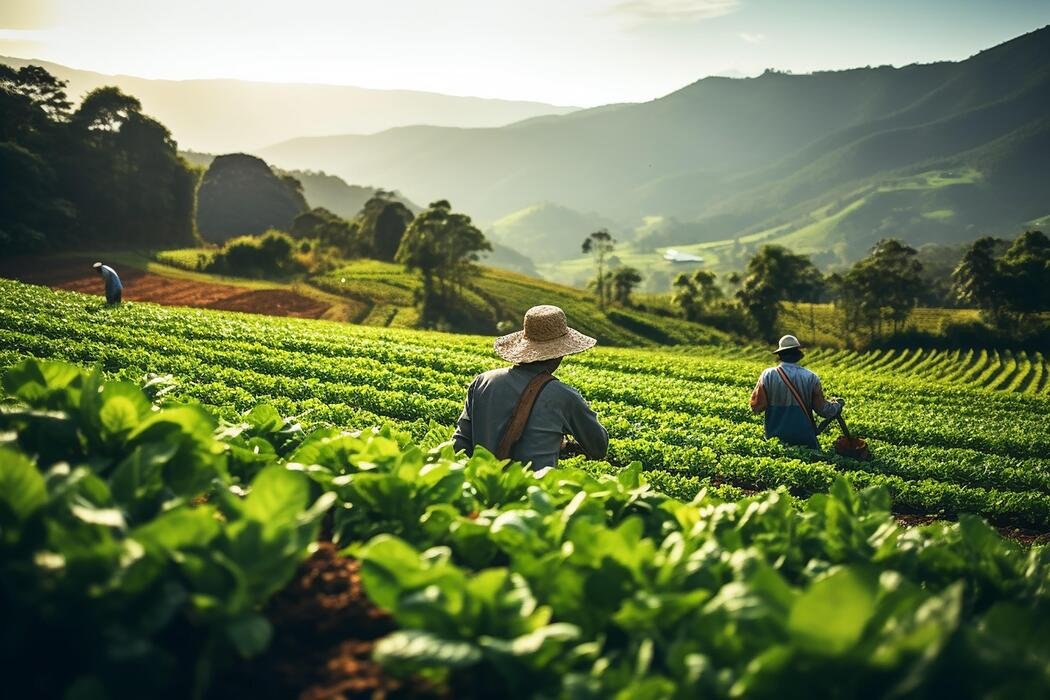
Brazil has emerged as one of the world's fastest-growing bioinputs markets, supported by favorable tropical conditions, a robust scientific base and rapid adoption of biological technologies. Yet industry experts warn that delays in implementing the country's new Bioinputs Law could undermine investment, innovation and Brazil's ambition to become a global leader in agricultural biotechnology. According to Luis Eduardo Pacifici Rangel, member of the Scientific Council for Sustainable Agriculture (CCAS) and former Secretary of Agricultural Defense at Brazil's Ministry of Agriculture, the country possesses unique structural advantages that few competitors can match.
"The combination of tropical conditions, production scale, applied science and growing adoption positions Brazil as a global leader in the development of bioinputs," Rangel said in an interview. "The sector's rapid growth and the diversity of available technologies demonstrate that Brazil already operates as a large-scale agricultural biotechnology platform."
The assessment comes as Brazil's bioinputs sector continues its rapid expansion. According to CropLife Brasil, the domestic market reached BRL 6.2 billion (approximately $1.1 billion) in 2025, representing 15 per cent year-on-year growth and the highest value recorded since the industry survey began in 2022.
Global prospects remain equally robust. Market intelligence firm DunhamTrimmer projects the worldwide biologicals market will expand by 10 per cent between 2025 and 2030, reaching $25 billion by the end of the decade. Latin America is expected to outperform the global average with projected growth of 14 per cent, while Brazil has led worldwide adoption of biological products over the past five years.
Regulatory bottleneck threatens momentum
Despite the sector's commercial and technological advances, Rangel argues that regulatory delays have become the industry's principal constraint.
Average registration timelines for biological products continue to exceed 400 days, with approval periods varying considerably among applications. More critically, companies report that product evaluations have slowed significantly while the regulatory decree implementing Brazil's Bioinputs Law (Law No. 15,070/2024) remains under revision. "The main risk today is no longer in the field or in science—it lies in governance," Rangel said. "The failure to finalize the Bioinputs Law regulation has created an environment of uncertainty that compromises investment, innovation and competitiveness."
According to Rangel, the regulatory backlog is delaying the commercialization of new technologies, increasing uncertainty for manufacturers and weakening Brazil's competitive position in one of agriculture's fastest-growing technology segments.
Industry seeks regulatory certainty
To implement the new legislation, Brazil's Ministry of Agriculture and Livestock (MAPA) established a multi-stakeholder working group responsible for drafting the regulatory decree governing the law. The discussions involve representatives from government agencies, research institutions, producer organizations and industry associations, including the Brazilian Bioinputs Industries Association (ABINBIO) and the Brazilian Confederation of Agriculture and Livestock (CNA).
Key issues under negotiation include rules governing on-farm production of microorganisms, mandatory registration of production facilities, inspection procedures, transitional regulatory provisions and registration requirements for commercial biological products. ABINBIO has represented Brazil's bioinputs industry throughout the regulatory discussions. "The current moment is extremely important for the bioinputs sector, not only because regulation is at an advanced stage, but also because the industry continues to grow rapidly despite ongoing regulatory changes and the search for greater legal certainty," said Rodrigo Souza, Legal Advisor at ABINBIO.
According to Souza, regulatory certainty is essential for sustaining industrial activity, research and development, and attracting long-term investment. "This process also aligns with several government priorities, requiring dialogue across the entire bioinputs value chain—from farmers to industry," he said. "Government agencies now have the important task of balancing these different interests to deliver an efficient regulatory framework that simultaneously promotes economic development and innovation."
Strategic opportunity beyond agriculture
Rangel believes Brazil's leadership extends beyond domestic production. Initiatives such as Renera, developed jointly by CropLife Brasil, ApexBrasil and ABINBIO, seek to position the country as an exporter of biological technologies rather than simply an agricultural commodities producer. He also argues that international organizations, including the Food and Agriculture Organization (FAO), could play an important role in promoting Brazilian expertise among other tropical agricultural economies facing similar pest, climate and sustainability challenges.
However, he cautions that the opportunity remains fragile. "If Brazil succeeds in aligning regulation, science and the market, it can consolidate its position as the global leader in tropical agricultural biotechnology," Rangel concluded. "If not, it risks seeing its competitive advantage gradually eroded—not because of a lack of scientific or technological capacity, but because of insufficient regulatory coordination."