Vietnam and Brazil are seeking to elevate their agricultural and fisheries partnership beyond traditional commodity trade, with policymakers and industry leaders identifying technology collaboration, value-chain investments and regulatory cooperation as key pillars for the next phase of bilateral economic engagement.
At a bilateral economic forum, government officials, trade representatives and industry stakeholders from both countries reviewed the progress of economic relations while outlining strategies to unlock untapped opportunities across agriculture, food processing, renewable energy, biotechnology and logistics.
Despite strong growth in bilateral trade over recent years, participants acknowledged that commercial ties have yet to fully reflect the strategic importance of the relationship. While Brazil remains Vietnam's largest trading partner in Latin America, trade continues to be concentrated in a limited range of agricultural commodities, with investment flows remaining relatively modest.
Officials identified high freight costs, long shipping transit times and regulatory complexities as major constraints limiting deeper commercial integration. They stressed that stronger institutional cooperation and improved logistics would be essential to support more diversified agricultural trade.
The discussions highlighted significant opportunities to expand collaboration in sustainable agriculture, fisheries, processed food, biofuels, biotechnology, digital agriculture and green industries—sectors where Brazil's technological capabilities and Vietnam's growing market demand present strong complementarities.
A key focus of the dialogue was the need to strengthen science-based regulatory cooperation in agriculture and food trade. Participants called for greater technical exchanges on quarantine systems, product quality standards, traceability and food safety to facilitate smoother market access while reducing non-tariff barriers.
Industry representatives also encouraged businesses in both countries to move beyond transactional export relationships and pursue long-term partnerships through joint investments in production, processing, distribution and logistics. Expanding cooperation into third-country markets was identified as another avenue for enhancing competitiveness and supply chain resilience.
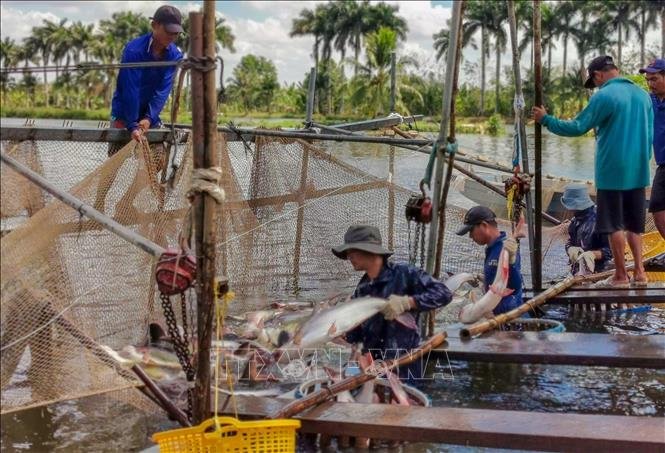
Vietnam highlighted the continued strengthening of its aquaculture governance framework, including improvements in traceability systems, food safety oversight and internationally recognised certification standards. These measures are intended to support export competitiveness as global seafood markets increasingly demand higher sustainability and quality benchmarks.
Seafood trade, particularly tilapia, emerged as one of the most sensitive areas of discussion. Brazilian industry representatives acknowledged Vietnam's growing role as an important seafood supplier but also pointed to recent legislative proposals and regulatory developments that have created uncertainty for importers and exporters. They called for sustained dialogue between governments and industry bodies to address technical concerns, preserve market access and ensure that future policy decisions remain grounded in scientific evidence.
The meeting underscored a broader shift in Vietnam-Brazil relations—from conventional commodity trade towards a more strategic partnership centred on innovation, sustainable agriculture and resilient agri-food value chains amid evolving global trade dynamics.