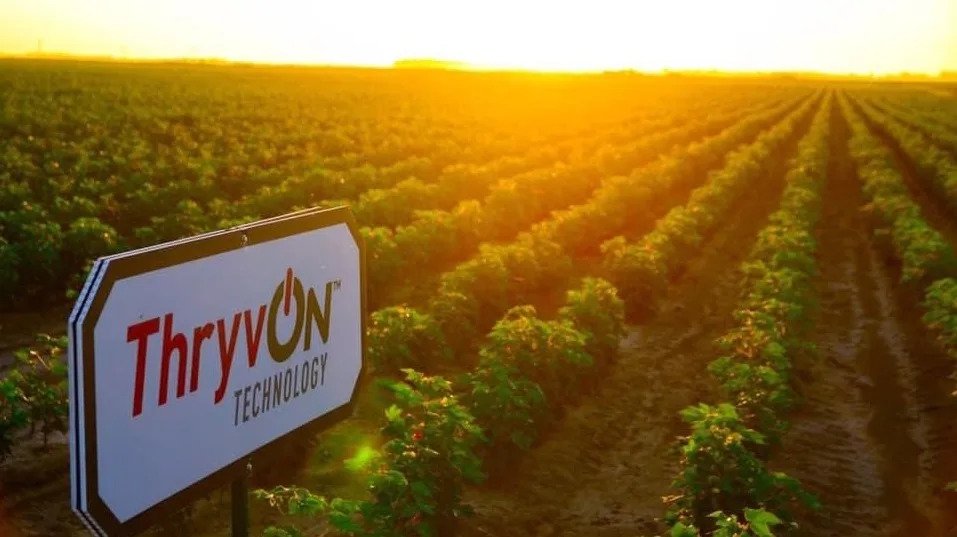
Bayer has unveiled the fourth generation of its Bollgard cotton biotechnology platform for Brazil, introducing ThryvOn, the country's first biotechnology designed to provide integrated protection against thrips in cotton. Scheduled for commercial launch by 2028, the next-generation platform will also incorporate new insect protection traits and expanded weed management flexibility, reinforcing Bayer's long-term commitment to advancing cotton productivity and sustainability.
The announcement was made during the Casa do Algodão Bayer em Campo event in Sorriso, Mato Grosso, where the company presented its latest cotton innovations to growers, researchers, textile industry representatives and exporters. The new platform builds on more than two decades of Bollgard technology by integrating additional insecticidal proteins targeting key caterpillar pests while addressing early-season thrips, one of the most economically significant insect challenges in cotton production.
Alongside the biotechnology announcement, Bayer showcased field trials at its research station in Sorriso and demonstration plots at Fazenda da Pedra featuring its existing Bollgard 3 XtendFlex (B3XF) technology and Deltapine cotton varieties. The company said the new platform is designed to improve productivity, strengthen pest management and provide greater flexibility for growers operating under increasingly complex production conditions.
The event underscored Brazil's position as the world's largest cotton exporter, with biotechnology continuing to play a critical role in improving crop productivity, fibre quality and production efficiency. Bayer noted that future innovations are expected to further enhance competitiveness while helping reduce production costs and dependence on crop protection products.
Mato Grosso was selected to host the event as the state accounts for approximately 68 percent of Brazil's cotton lint production. During the 2025/26 season, the state is expected to produce around 2.7 million tonnes of cotton lint, contributing to an estimated national production of 3.97 million tonnes. Bayer highlighted that maintaining this leadership will require effective management of difficult weeds, insect pests and diseases under evolving agronomic conditions.
The company also highlighted its commercially available Bollgard 3 XtendFlex technology, which combines caterpillar protection with tolerance to glyphosate, glufosinate-ammonium and dicamba, providing growers with greater flexibility in weed control across diverse farming systems.
Further strengthening its weed management portfolio, Bayer introduced XtendiMax 2, a dicamba-based herbicide now commercially available in Brazil. Designed for pre-plant burndown and early post-emergence applications in cotton and soybean, the product offers reduced volatility and drift potential while improving control of difficult weeds, including horseweed (Conyza spp.) and pigweed (Amaranthus spp.).
Beyond biotechnology, Bayer showcased a broader portfolio of crop protection solutions for cotton, including Bayer Guardião seed treatment, Dropp Ultra defoliant, Finish plant growth regulator, Fox Xpro fungicide and Curbix insecticide for cotton boll weevil management.
The company also highlighted several pipeline products currently under development. These include Plenexos, an insecticide under regulatory review targeting whiteflies and aphids; Iblon, a fungicide planned for launch in 2028 for the control of ramularia and target spot; and Mateno Pre, a pre-emergence herbicide currently undergoing registration.
Sustainability remained a key focus throughout the event. Bayer noted that more than 90 percent of Brazil's cotton is produced under rainfed conditions and highlighted its PRO Carbono platform, which enables growers to measure on-farm carbon emissions and identify management practices that can help reduce the environmental footprint of cotton production.