Generative AI is moving into an unexpected domain: plant biology. German agtech startup Hortiya, founded in Duisburg in 2020, is developing a generative AI model designed to understand how plants respond to environmental conditions and production inputs. The ambition is to give growers a new way to interpret plant signals and make decisions on energy, lighting, nutrients and other costly resources.
The company’s approach applies principles associated with large language models to biological data. Instead of learning patterns in human language, Hortiya wants its model to learn relationships between plant conditions, environmental variables and growth outcomes. If successful, the technology could help food producers make controlled-environment agriculture more resource-efficient, particularly in greenhouses where lighting and climate control can account for a significant share of production costs.
Teaching AI to Read Plant Signals
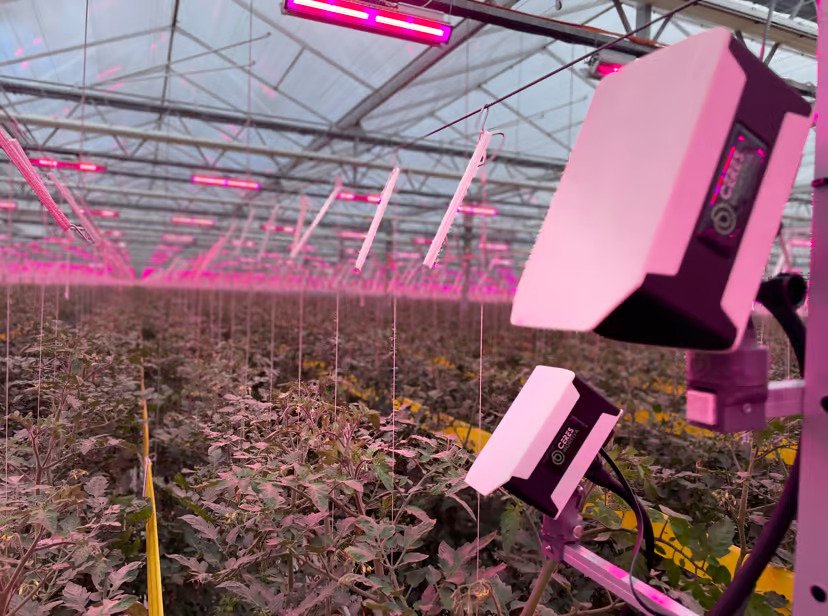
Hortiya is building a dataset that will allow its model to understand how different inputs and climatic conditions affect the internal systems and growth of plants. The data is expected to come partly from greenhouse sensors monitoring factors such as light, temperature and soil conditions. The company is also exploring less conventional biological signals, including electrical communication between plant roots and leaves and ultrasonic sounds associated with plant stress.
Adding market and weather information could eventually allow the system to move beyond monitoring plants to predicting how external events affect production decisions. For example, growers could use the model to assess how a period of drought or a change in electricity prices might alter the optimal allocation of light and nutrients.
From Sensors to Smarter Lighting
Hortiya has already developed a system combining greenhouse sensors and AI to improve the timing and efficiency of artificial lighting. The underlying idea is that plants do not continuously process energy at the same rate. Their physiological state changes, including periods of rest and stress, and neighbouring plants affected by disease can also influence performance.
Hortiya’s technology therefore aims to provide energy when plants are most receptive to using it rather than applying lighting according to a fixed schedule. The system is being used in two research pilots and by one commercial customer operating a 54,000 sq ft greenhouse.
According to CEO Marc Weimer-Hablitzel, laboratory testing has shown that the existing technology can reduce energy consumption by as much as 30 per cent while maintaining the same yield. He cautions that savings in commercial environments are likely to be lower. Even a 5–10 per cent reduction could have meaningful implications for greenhouse operators, given the large amounts of electricity required to produce crops such as tomatoes during periods when natural light is limited.
A Foundation Model for Food Production
The next stage for Hortiya is considerably more ambitious. The startup wants to develop a general-purpose model that could allow growers to test different production scenarios before making operational decisions. A grower could potentially provide information about expected weather conditions and ask the system how to manage lighting and nutrients under different scenarios, such as a prolonged period of drought or changes in electricity availability and cost.
That would shift the role of AI from automating individual greenhouse functions to supporting longer-term production strategy. The value proposition is particularly relevant as controlled-environment agriculture faces pressure to reduce its energy and resource intensity while maintaining reliable yields.
Funding and Data Remain the Hurdles
Hortiya had raised around $1 million in pre-seed funding, combining grants and convertible loan notes, as it worked towards developing its foundation model. The company sees growing investor interest in both foundation-model technology and climate-focused innovation as potential tailwinds. At the same time, building a biological foundation model presents a fundamentally different data challenge from training conventional language models.
The system requires large volumes of high-quality information connecting environmental conditions with plant physiology and growth. Collecting, standardising and interpreting that data can be expensive and technically demanding. Hortiya believes advances in AI infrastructure could make model training more efficient by the time its dataset is sufficiently mature.
Agriculture’s Next Data Layer
The company's proposition points to a broader evolution in digital agriculture. Sensors are already generating increasing volumes of information about crops and growing environments; the next challenge is turning those streams into decisions that growers can act on. If that ambition can be translated into a commercially scalable model, the technology could give greenhouse operators a more dynamic way to manage energy and inputs—moving controlled-environment farming another step towards data-driven resource optimisation.