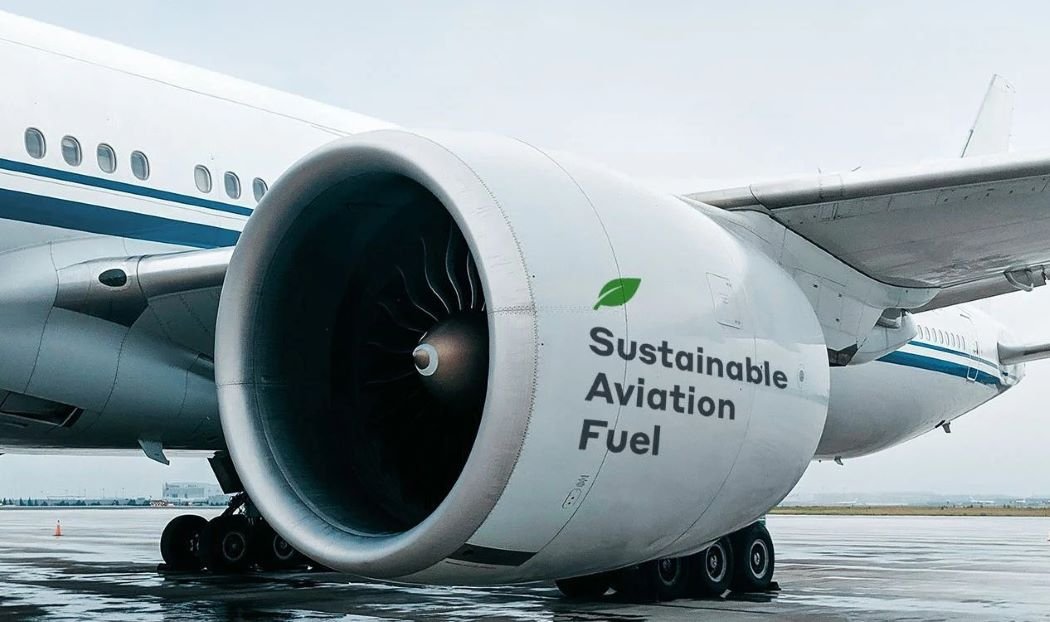
Deutsche Bank has expanded its sustainability agenda by investing in the deployment of sustainable aviation fuel (SAF) through a strategic agreement with Lufthansa Group, reinforcing the growing role of corporate demand in accelerating the aviation industry's transition towards lower-carbon operations.
The agreement covers approximately 1,600 metric tonnes of sustainable aviation fuel, enabling an estimated reduction of 5,500 metric tonnes of carbon dioxide emissions associated with the bank's business travel. The emissions savings are broadly equivalent to the CO₂ generated by approximately 520 Lufthansa-operated Airbus A320neo flights between Frankfurt and London, underscoring the tangible climate benefits of replacing conventional jet fuel with SAF.
The initiative forms part of Deutsche Bank's broader decarbonisation strategy, which seeks to substantially reduce emissions generated across its value chain while supporting the commercialization of low-carbon aviation fuels through long-term demand commitments.
The latest collaboration further strengthens the relationship between Deutsche Bank and Lufthansa Group following the launch of the Lufthansa Miles & More Credit Card by the bank in October 2025, reflecting an expanding partnership that now extends beyond financial services into sustainable mobility.
Frank Naeve, Senior Vice President, Global Sales and Distribution at Lufthansa Group, said the agreement demonstrates how corporate customers are increasingly integrating sustainable aviation fuel into their climate strategies.
"Deutsche Bank's decision to support the deployment of SAF with Lufthansa Group at this scale reflects the growing importance of sustainable aviation within corporate travel programmes. This partnership demonstrates that businesses can make a measurable contribution to reducing the climate impact of air travel through targeted investments in sustainable aviation fuel," Naeve said.
Jörg Eigendorf, Chief Sustainability Officer at Deutsche Bank, said sustainable aviation fuel represents a critical lever in achieving the bank's objective of nearly halving supply chain emissions by 2030 compared with its 2019 baseline.
"Equally important is the market signal this sends. Predictable corporate demand is essential to encourage investment in SAF production capacity and improve the long-term competitiveness of alternative aviation fuels. Expanding demand is fundamental to accelerating the scale-up of the sustainable aviation fuel market," Eigendorf said.
The agreement reflects a broader shift among multinational corporations toward using sustainable aviation fuel as a practical decarbonisation tool for business travel, complementing operational efficiencies, emissions reduction strategies and carbon management initiatives. As airlines, fuel producers and corporate customers increasingly collaborate to stimulate market demand, such partnerships are expected to play a pivotal role in scaling SAF production and advancing the aviation sector's net-zero ambitions.