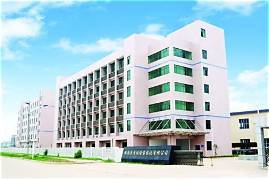
Jiangsu Tenglong Biological & Medicinal Co., Ltd. has completed the environmental-impact assessment process for a project covering annual production of 5,000 tonnes of malathion technical, 4,000 tonnes of malathion emulsifiable concentrate and 40,000 tonnes of glyphosate formulations. The project was accepted and publicised at the end of July, according to information released through the relevant environmental-review process. The project is located in the Dafenggang Petrochemical New Materials Industrial Park in Yancheng City, Jiangsu Province.
The total investment is approximately RMB 35 million, equivalent to around $5.15 million based on the project information. Environmental-protection expenditure is estimated at RMB 550,000, or approximately $81,004, accounting for 1.57 per cent of total investment. The project is classified as a technical transformation and expansion programme rather than an entirely new production site. Its implementation will involve the replacement of existing equipment, the installation of a malathion-synthesis process in an idle area and the establishment of an additional emulsifiable-concentrate formulation line.
The construction period is expected to be six months.
Production expansion
The project will expand Tenglong Biological’s malathion manufacturing capabilities through changes to three production areas.
In Workshop 406, the company plans to replace 12 existing 1,500-litre vulcanisation kettles with 12 units of 2,000-litre capacity. The equipment replacement is intended to increase processing capacity and improve the operating configuration of the existing production system. Workshop 405, which currently contains an idle area, will be fitted with a malathion-synthesis process. This will allow the company to add 5,000 tonnes per year of malathion technical production capacity.
Workshop 407 will house the new malathion emulsifiable-concentrate formulation process. Packaging will be carried out through the company’s existing packaging line rather than through a separate new packaging facility. The planned annual malathion EC capacity will be 4,000 tonnes. This will comprise 2,000 tonnes of 1,000-gram-per-litre malathion EC, 1,000 tonnes of 480-gram-per-litre malathion EC and 1,000 tonnes of 820-gram-per-litre malathion EC.
The project information also includes a 40,000-tonne annual glyphosate formulation technical-transformation component. The reported pesticide-construction details specifically describe the malathion technical and EC facilities, while the glyphosate capacity is identified as part of the broader formulation transformation programme. The expansion is intended to respond to market demand and strengthen the company’s ability to supply both technical-grade pesticide ingredients and formulated products. It also allows Tenglong Biological to use existing assets and production infrastructure rather than relying entirely on a greenfield investment model.
Founded in December 1992, Jiangsu Tenglong Biological & Medicinal Co., Ltd. is the core enterprise of Jiangsu Tenglong Industrial Group. The company has registered capital of approximately RMB 30 million, equivalent to around $4.42 million based on the information provided. Its business covers the production and sale of pesticides, as well as the development of and consultancy on new pesticide technologies. The company’s existing product portfolio includes 5,000 tonnes per year of dimethoate technical and 2,000 tonnes per year of phenthoate technical. Its wider portfolio also includes herbicide products such as glyphosate, acetochlor, machete, tribenuron-methyl and thifensulfuron-methyl.agfunder
Tenglong Biological is located in the Dafenggang Petrochemical New Materials Industrial Park, a specialised chemical-manufacturing cluster that hosts pesticide and related chemical-production activities. The company said it passed Jiangsu Province’s special safety and environmental-protection improvement acceptance process in 2020. It was also recognised as a specialised and innovative small and medium-sized enterprise in Jiangsu Province in 2024.goodtechgo
Strategic significance
The project strengthens Tenglong Biological’s position in organophosphorus pesticide production while expanding its formulated-product capacity. Malathion is an organophosphate insecticide used in agricultural, public-health and pest-control applications in markets where its use is permitted and registered. Technical-grade malathion is used as an active ingredient in the manufacture of formulated products, including emulsifiable concentrates.
The addition of multiple EC concentrations gives the company greater flexibility in serving different application requirements and market specifications. Formulation capacity can also improve control over product packaging, customer specifications and downstream distribution. The glyphosate-formulation component broadens the project beyond malathion. Glyphosate is a widely used herbicide, but the market is highly competitive and subject to regulatory scrutiny, pricing pressure and changing requirements concerning residues, environmental impact and product registration.
A larger formulation platform may allow the company to serve domestic and export customers with finished products rather than limiting its business to technical materials.
Environmental and compliance considerations
The project’s environmental-protection investment is estimated at RMB 550,000, representing 1.57 per cent of total project investment. The figure covers the environmental-protection facilities and measures associated with the proposed transformation. As the project involves pesticide synthesis and formulation, the environmental review is particularly important. Relevant concerns may include process wastewater, volatile organic compounds, odour, hazardous waste, solid residues, wastewater-treatment capacity, accident risk and the safe handling of raw materials and intermediates.
The project’s location within a designated petrochemical and new-materials industrial park provides access to shared infrastructure and environmental-management systems. However, the company remains responsible for ensuring that its own production and pollution-control facilities operate as required. The environmental-review process is intended to assess whether the project can comply with applicable standards and whether the proposed pollution-control measures are adequate. The project must also obtain the necessary permits and complete the required inspection and acceptance procedures before commercial operation.
The company’s previous environmental documentation indicates that its facilities have been assessed for wastewater, atmospheric emissions, noise and hazardous-material management. The relevant standards and control requirements will depend on the specific process, pollutants and regulatory conditions applicable to the new project. The project comes at a time when the global pesticide industry is adjusting to changes in agricultural demand, inventory levels, product pricing and regulatory expectations.
Pesticide manufacturers are facing pressure to provide products that are effective at lower application rates, comply with residue requirements and meet increasingly stringent environmental and safety standards. Product registration and market access are becoming more important as regulators evaluate active ingredients and formulations.
For Tenglong Biological, the expansion can create additional capacity, but capacity alone does not guarantee utilisation or profitability. The commercial outcome will depend on raw-material prices, production efficiency, customer demand, export conditions, product registrations and competition from other Chinese and international manufacturers. The malathion business may benefit from the company’s existing technical capabilities and customer relationships. However, organophosphate pesticides remain subject to regulatory and market scrutiny, and demand may differ across countries and applications.
The glyphosate-formulation capacity may provide a larger potential market, but it also exposes the company to intense competition and price volatility. The formulation business will need to compete on product quality, reliability, regulatory compliance, delivery and cost.
Investment and execution
The reported investment of RMB 35 million is relatively modest compared with the capacity figures because the project relies partly on existing facilities, equipment replacement and the use of an existing packaging line. The transformation approach can reduce construction time and capital requirements. The planned six-month construction period is also shorter than that typically associated with a large greenfield chemical complex.
At the same time, brownfield transformation projects require careful coordination. Construction must be integrated with existing production, equipment replacement must be completed safely and the new synthesis and formulation systems must be connected to utilities, storage, environmental-protection facilities and quality-control systems.
The company will also need to manage safety risks during equipment installation and commissioning. Malathion synthesis and pesticide formulation involve hazardous chemicals and require appropriate process controls, emergency systems, operator training and maintenance procedures.
The project’s commercial success will ultimately depend on whether the additional capacity is supported by actual orders and sustainable margins. If market conditions weaken, new capacity could increase fixed costs and intensify competition. If demand improves, the project could strengthen Tenglong Biological’s position in both technical-grade and formulated pesticide products.
The environmental-review acceptance marks an important regulatory step, but it does not itself represent the completion of construction or the start of commercial production. The company will still need to complete the six-month implementation programme, commission the facilities, obtain applicable approvals and demonstrate compliance with environmental and safety requirements.
Jiangsu Tenglong’s expansion reflects the continuing consolidation and upgrading of China’s pesticide-manufacturing base. By combining malathion technical production, malathion EC formulation and glyphosate formulation capacity, the company is seeking to build a broader and more flexible product platform. The project’s long-term value will depend on the quality of execution, process efficiency, environmental performance and the company’s ability to convert additional capacity into stable market demand.