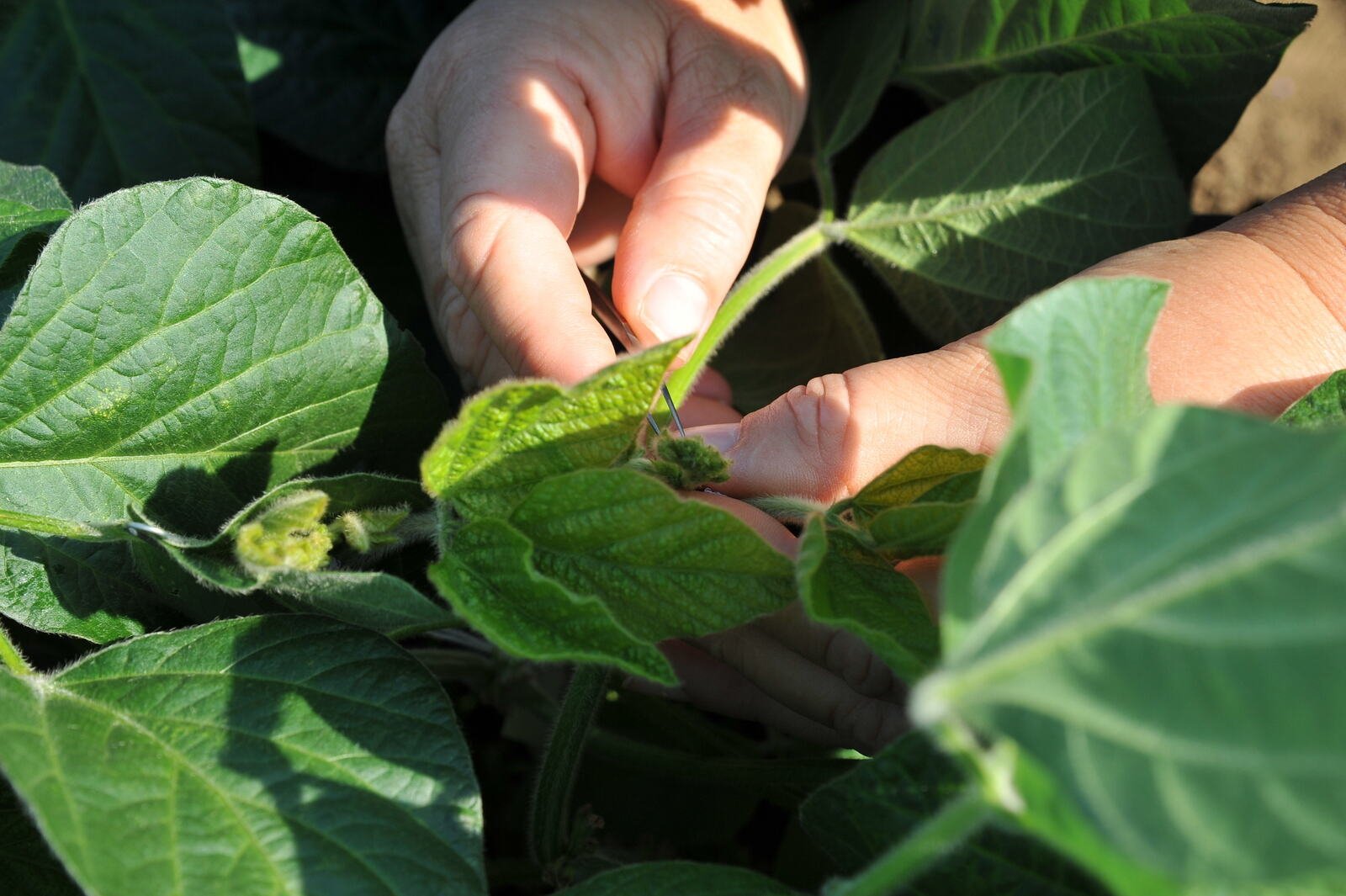
A research team led by Anhui Agricultural University has unveiled “Fengshu” 2.0, a vertical large AI model designed specifically for the soybean sector, marking a step towards using artificial intelligence to support breeding, disease diagnosis and precision decision-making in one of the world's most important crop value chains. The model was officially released at the 32nd National Soybean Scientific Research and Production Symposium in Nanning, Guangxi Zhuang Autonomous Region. Professor Wang Xiaobo of Anhui Agricultural University represented the research and development team at the launch.
“Fengshu” 2.0 was jointly developed by the Soybean Intelligent Design Breeding Innovation Team of Anhui Agricultural University and the Institute of Crop Sciences under the Chinese Academy of Agricultural Sciences. The platform brings together six major functional modules covering a soybean encyclopedia, soybean molecules, scientific literature, diseases, phenotyping and breeding. Its underlying knowledge system aggregates more than 10 million characters of specialised text, over 10,000 scientific papers and patents, approximately 40,000 germplasm resource records, 8,000 genome resequencing datasets and more than 3,000 varietal phenotypic datasets.
The scale of the database is only part of the upgrade. The defining feature of version 2.0 is a newly introduced multi-model collaborative analysis mechanism. Multiple general-purpose large models independently analyse the same question before the “Fengshu” summarisation module conducts a comprehensive assessment, an approach designed to reduce the risk of bias associated with relying on a single model. According to the development team, data cleaning and annotation accuracy has reached 98 per cent, while prediction accuracy for key soybean traits—including lodging resistance, disease resistance and protein content—has exceeded 90 per cent.
The platform is intended to support a range of practical applications across the soybean research and breeding cycle. These include disease diagnosis, parental selection, virtual cross design, phenotypic analysis, molecular marker-assisted breeding and candidate gene analysis. A mobile version of the platform also features a “snap-and-diagnose” function, enabling users to access diagnostic capabilities through images while synchronising data across mobile and PC platforms.
Compared with version 1.0, “Fengshu” 2.0 represents a shift from a system primarily focused on knowledge retrieval towards what its developers describe as intelligent decision-making. The change reflects a broader ambition to move soybean breeding away from predominantly experience-driven approaches and towards more data-assisted precision decisions. The next phase of development will focus on integrating climate, soil and planting-pattern data from major soybean production regions. The research team plans to use these additional datasets to strengthen field validation and refine the model's algorithms.
The launch comes as agricultural research increasingly explores how large AI models can organise complex biological, genomic and field-level data into tools that researchers and breeders can use more directly. For the “Fengshu” team, the immediate challenge will be translating a vast structured knowledge base and high prediction accuracy into decisions that perform consistently under real-world field conditions.