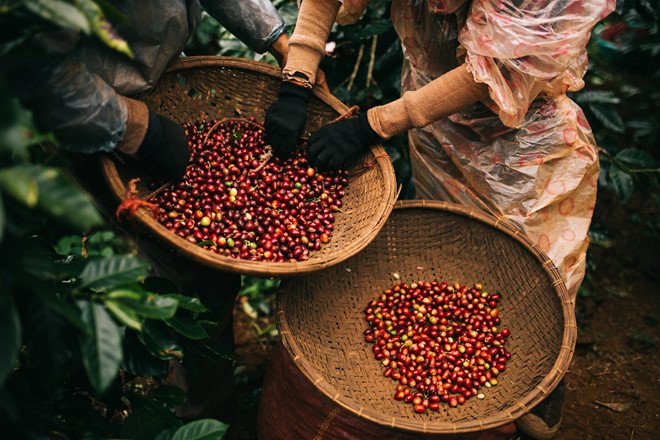
Vietnam is gaining ground in Japan’s coffee market, with shipments rising 5% in volume during the first half of 2026 even as Japan’s overall coffee imports declined. The shift is giving Vietnamese suppliers a larger share of one of Asia’s most quality-sensitive coffee markets, while also exposing the limits of competing primarily on price.
Japan imported 173,000 tonnes of coffee worth nearly $ 1.2 billion in the first six months of 2026, according to Japan Customs data cited by Vietnam’s Agency of Foreign Trade under the Ministry of Industry and Trade. Import volume fell 9.3 per cent from the corresponding period in 2025, while import value increased 2.4 per cent, reflecting the impact of elevated global coffee prices, a weaker yen and persistent inflationary pressure.
Against that backdrop, Vietnam’s performance stands out. Japan imported 55,500 tonnes of coffee from Vietnam worth $ 247.8 million, up 5 per cent in volume but down 12.2 per cent in value from the first half of 2025. Vietnam’s share of Japan’s total coffee import volume consequently increased from 27.74 per cent to 32.1 per cent.
Brazil remained Japan’s largest coffee supplier, shipping 63,200 tonnes valued at $ 471.6 million. Brazilian volumes declined 15.3 per cent year-on-year, although the value of shipments increased 11.9 per cent. Colombia ranked third with 15,300 tonnes worth $ 131.3 million, with volumes falling 12.9 per cent while export value rose 3.3 per cent.
The numbers reveal a significant change in the economics of Japan’s coffee sourcing. Japan’s average coffee import price increased 12.9 per cent to $ 6,922 per tonne during the period. Yet its average import price for Vietnamese coffee fell 16.4 per cent to $ 4,462 per tonne. Vietnam is therefore gaining physical market share at a time when Japanese buyers are becoming more selective about inventory, sourcing and price.
That price advantage is particularly relevant for Robusta, where Vietnam has a strong supply base. Japanese importers are increasingly looking for reliable supplies, consistent quality and competitive pricing as high global coffee prices and currency pressures raise the cost of procurement. Vietnam’s ability to offer scale and relatively competitive pricing has helped it capture additional demand even as overall Japanese imports contracted.
The opportunity, however, comes with a more demanding set of requirements. Japan maintains stringent expectations around quality, food safety, packaging and traceability, making consistency as important as volume. For Vietnamese exporters, the next phase of growth will depend on whether increased shipments can translate into greater value per tonne.
Quality control and traceability are therefore becoming central to the competitiveness equation. Vietnamese suppliers seeking to expand in Japan will need stronger controls over residues, production processes and origin information, alongside greater consistency between batches and harvests.
The opportunity also extends beyond green coffee. Roasted and ground coffee, instant coffee and other convenient formats could allow Vietnamese companies to participate further up the value chain and capture more of the spending generated by Japanese coffee consumption.
Dr Nguyen Hong Son, president of the Union of Vietnamese Associations in Japan, said Vietnamese coffee faces several challenges in consolidating its position, including quality and supply consistency, traceability, stronger competition in specialty coffee and access to Japanese distribution networks. He also highlighted the need for greater deep processing and stronger product identity.
That shift could become increasingly important as competition intensifies. Brazil, Colombia and Ethiopia are seeking to strengthen their presence in Japan through specialty coffee and differentiated origin stories, raising the bar for suppliers that have traditionally competed on availability and price.