The Philippines is laying the groundwork for a larger forest carbon market as it seeks to mobilise private investment for forest protection and restoration under a more ambitious climate strategy. The government has adopted a 2026–2030 roadmap for the voluntary forest carbon market, setting out the policy, monitoring and financing architecture needed to develop a pipeline of investable forest projects.
The move comes alongside the Philippines’ updated 2026 Nationally Determined Contribution, which retains a 75 per cent emissions reduction and avoidance target but extends its coverage to 2025–2035 and gives forestry and other land use a more prominent role. Of the overall target, 7 per cent is unconditional, while 68 per cent is conditional on international support, making access to climate finance central to implementation.
Forestry and other land use is already projected to be a net carbon sink in the Philippines. Government modelling indicates that policies covering the sector could reduce cumulative emissions by about 2.3 billion tonnes of CO2 equivalent between 2025 and 2035 compared with the business-as-usual pathway. The country plans to strengthen that sink through forest protection, reforestation and sustainable land management.
The Department of Environment and Natural Resources has formalised the Roadmap to Readiness in the Voluntary Forest Carbon Market 2026–2030 through Administrative Order No. 2026-02. The framework focuses on four areas: policy and regulatory frameworks; data, monitoring, reporting and verification; institutional capacity; and sustainable financing and market development.
A key element will be the development of a DENR Forest Carbon Credit Database to track projects and credits and connect with the broader national carbon registry being developed under the Philippines’ Article 6 framework. The infrastructure is intended to strengthen transparency and help address issues such as carbon ownership, additionality, benefit sharing and the risk of double counting.
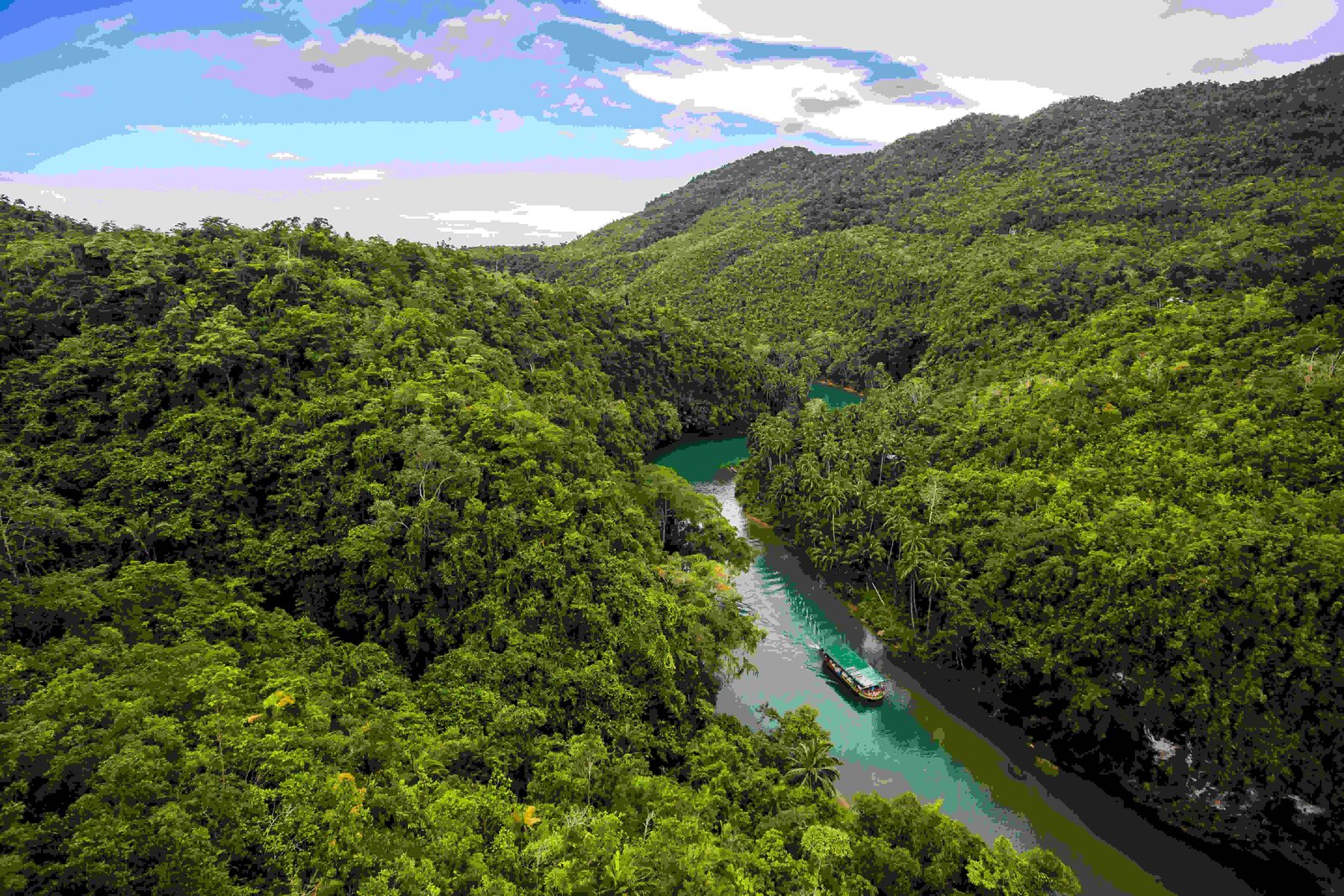
The scale of the underlying resource is significant. The DENR roadmap estimates that the Philippines has about 7.23 million hectares of remaining forest, equivalent to roughly 24 per cent of the country’s land area. These forests provide services extending beyond carbon storage, including watershed protection, erosion control, biodiversity conservation and livelihoods for local communities.
Yet converting that natural asset into a sustainable source of finance remains a challenge. The roadmap estimates global investment in forests at around $2.2 billion a year, against a requirement of more than $450 billion annually to meet global forest and climate objectives. The gap highlights the potential role of carbon finance in supplementing public and development funding for conservation and restoration.
The Philippine forest carbon market remains at an early stage. The DENR roadmap found no nationally issued forest carbon credits at the time of its stocktake, although projects have been developed under international standards. Two projects were registered under Verra’s Verified Carbon Standard, with four additional projects in the pipeline, while at least nine other forest carbon projects had been identified outside the Verra system.
The government has identified about 1.2 million hectares of classified forest land as potential investment areas for reforestation, agroforestry and other forest-based activities. Another 1.5 million hectares are being assessed for possible future development. Unlocking that potential, however, will depend heavily on resolving land tenure, carbon ownership and revenue-sharing questions.
Community participation is therefore emerging as a central requirement for market development. The roadmap calls for stronger benefit-sharing mechanisms and safeguards, including Free, Prior and Informed Consent where projects affect ancestral lands and domains. For investors and carbon buyers, the credibility of projects will increasingly depend not only on the carbon outcome but also on the transparency of how economic benefits reach communities and forest tenure holders.
The government is also looking to strengthen the regional dimension of the opportunity. Through initiatives such as the CarbonPH Coalition, the Philippines is seeking greater engagement between government, businesses and the emerging carbon market ecosystem. DENR is working on project registration, carbon baselines and monitoring, including the use of satellite-based systems to improve verification.
The Philippines is also seeking closer engagement with the ASEAN Common Carbon Framework as regional economies develop their own carbon market infrastructure. Malaysia has established a government-supported carbon exchange, while Indonesia and Thailand are developing their respective carbon market systems. Greater interoperability could eventually provide Philippine forest projects with access to a broader pool of regional buyers.
Demand for nature-based carbon credits is increasingly focused on projects with robust scientific measurement, credible monitoring, transparent governance and demonstrable community benefits. Forest protection, reforestation and mangrove restoration could provide important sources of supply if the country's regulatory and market infrastructure matures.
Carbon markets, however, are only one component of the country’s broader climate-finance strategy. The updated NDC identifies accessible, predictable and adequate international support as critical to implementation, while Article 6 mechanisms could provide another channel for international cooperation and resource mobilisation. Such transactions will require robust governance, monitoring and safeguards against double counting.
The Philippines now has the foundations of a potentially significant forest-finance market: a large forest resource, a formal five-year market-readiness roadmap and a climate target that places the forest sink directly within its emissions strategy. The next test will be whether the country can convert that framework into credible, investable projects while establishing clear carbon rights, reliable monitoring systems and transparent benefit-sharing mechanisms.